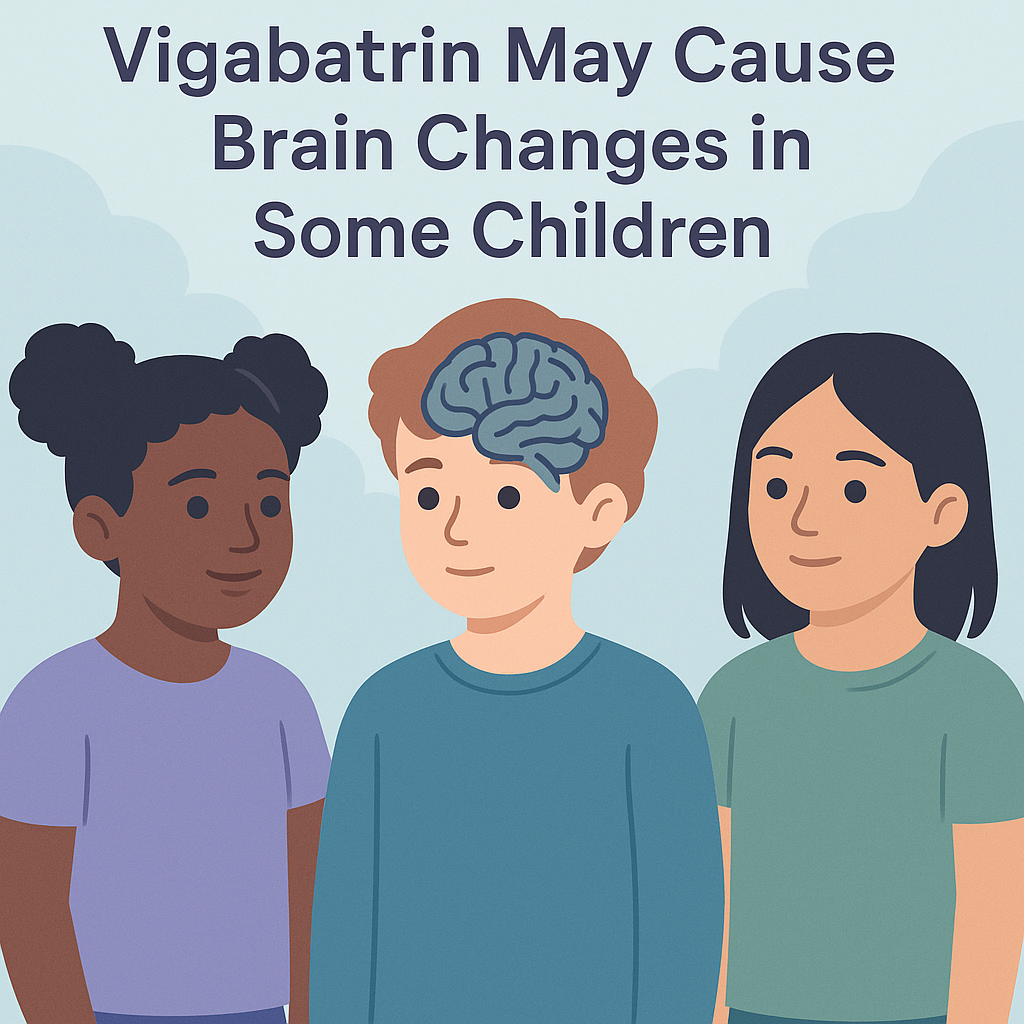
Vigabatrin May Cause Brain Changes in Some Children
⚠️ Infant dosing/safety: medication and diet decisions for infants require individualized medical guidance.
Source: Pediatric neurology
Summary
Researchers studied two children with a rare type of epilepsy caused by changes in the WWOX gene. These children had severe developmental delays, trouble swallowing, and other health issues. The study focused on how a medication called vigabatrin, used to treat their epilepsy, affected their brains as seen through MRI scans.
The key findings showed that while the children were taking vigabatrin, their brain scans revealed new changes in specific areas of the brain, known as the globus pallidi and thalami. These changes are referred to as vigabatrin-associated brain abnormalities (VABAM). The initial scans had already shown some brain shrinkage and loss of white matter, but the new findings during treatment raised concerns about the medication's impact on their brain health.
This research is important because it highlights potential risks of vigabatrin in children with certain genetic types of epilepsy. Understanding these risks can help doctors make better treatment decisions. However, the study involved only two children, so more research is needed to see if these findings apply to other children with similar conditions.
Free: Seizure First Aid Quick Guide (PDF)
Plus one plain-language weekly digest of new epilepsy research.
Unsubscribe anytime. No medical advice.