Aphasic Status Epilepticus: A Stroke Mimic in a Literature Review
This literature review examined 87 previously reported cases of aphasic status epilepticus, covering 92 attacks.
This hub covers epilepsy EEG and MRI: how EEGs and brain imaging help doctors understand seizure patterns and possible causes. Clear explanations of common findings and what research suggests.
Yes. EEGs are a snapshot. Some people need repeat EEGs, sleep-deprived EEGs, or long-term monitoring.
Not always. It raises suspicion and risk, but diagnosis still depends on the full story.
To look for structural causes like scars, malformations, tumors, and stroke-related changes, which can guide treatment.
An inpatient or extended study that records EEG and video together to match symptoms to brain activity.

This literature review examined 87 previously reported cases of aphasic status epilepticus, covering 92 attacks.

This was a critical narrative review of research on combining several brain-imaging methods before surgery for drug-resistant epilepsy.

This review examined how home video-only recordings can support epilepsy diagnosis and care alongside video-EEG monitoring.

Researchers reviewed records from 27 children with epilepsy with eyelid myoclonia who were followed between April 2020 and March 2026.
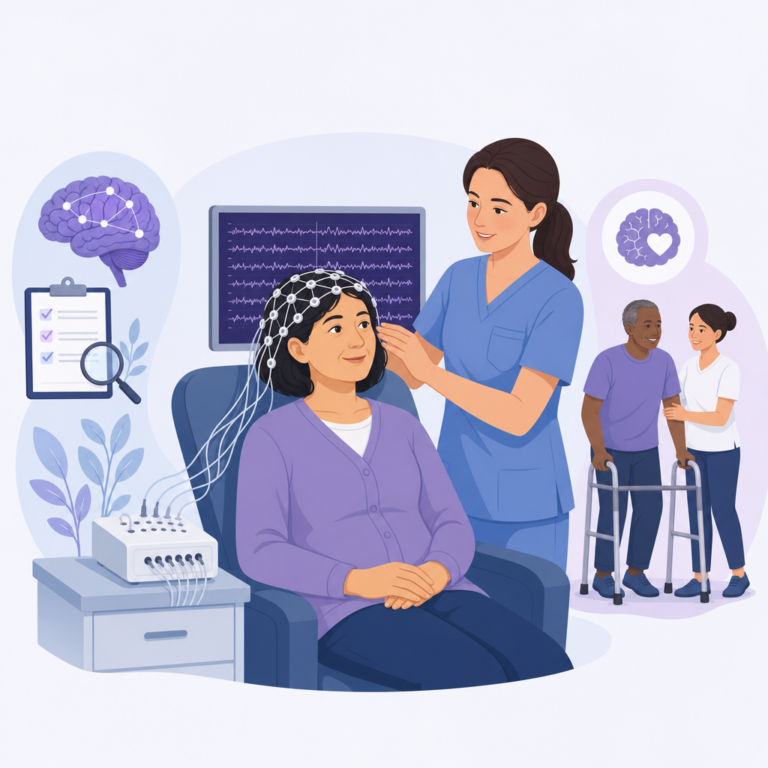
This was a review of available research on the use of electroencephalography (EEG) in adults during acute stroke care and later recovery.

This systematic review examined how often neurocysticercosis was found among people with epileptic seizures from 1990 through May 2023.

Researchers examined mortality among 17,515 people with epilepsy enrolled in a nationwide prevention and management project in rural China from January 2018 through December 2020.

Researchers conducted a multicentre, observational, longitudinal study of 4,804 adults with Down syndrome from seven international cohorts.

This systematic review and meta-analysis compared two procedures for drug-resistant epilepsy caused by MRI-positive focal cortical dysplasia type II (FCD II) or tuberous sclerosis complex (TSC).