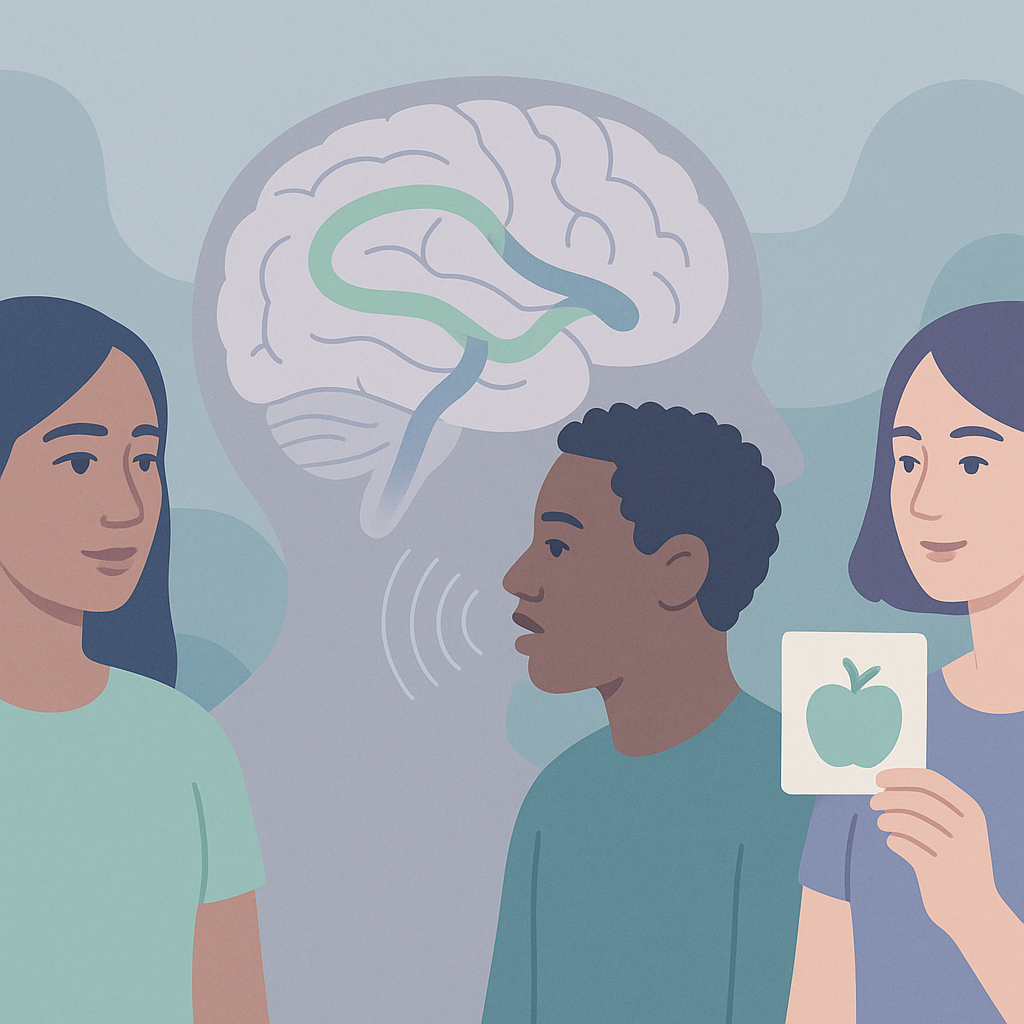
New Atlas Reveals Brain Pathways for Speech and Naming
Source: Neurology
Summary
Researchers studied how different parts of the brain work together during speech tasks, focusing on patients with drug-resistant epilepsy who were preparing for surgery. They used a technique called intracranial EEG to measure brain activity while these patients named objects or responded to sounds. A total of 125 patients, ranging from young children to middle-aged adults, participated in the study.
The key findings showed that different brain pathways are involved in quickly naming things versus taking longer to name them. For example, when patients named objects quickly, certain areas of the brain became less active while others worked together more. In contrast, when naming took longer, there was increased activity in both sides of the front part of the brain. The study also found that how well these pathways functioned could vary based on factors like handedness and where the epilepsy originated in the brain.
These findings are important because they help us understand the specific brain connections that support speech, which can be useful for training medical professionals and planning surgeries for epilepsy patients. However, the study has limitations, such as focusing only on patients with drug-resistant epilepsy, which means the results may not apply to everyone with speech difficulties. Overall, this research provides valuable insights into the brain's role in speech and could improve treatment approaches for individuals with communication challenges.
Free: Seizure First Aid Quick Guide (PDF)
Plus one plain-language weekly digest of new epilepsy research.
Unsubscribe anytime. No medical advice.