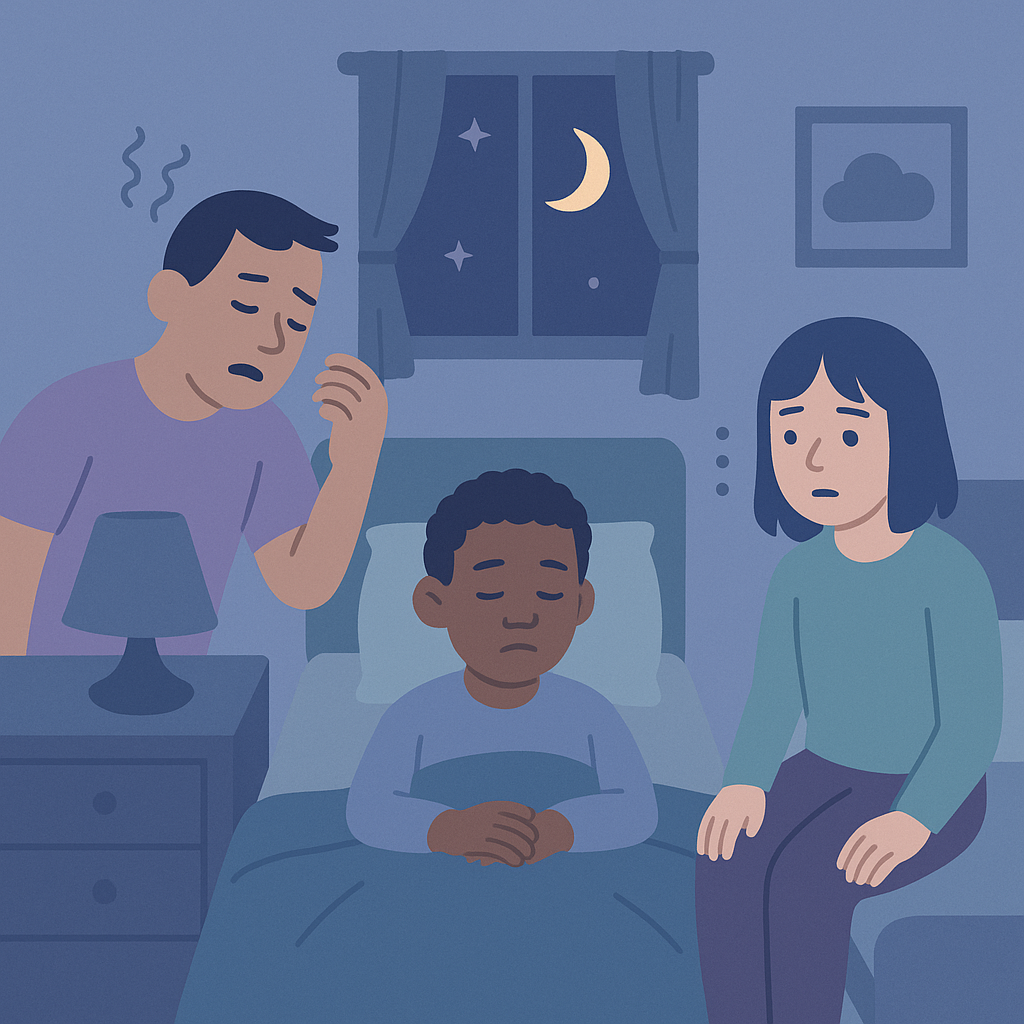
Understanding Sleep Issues in Lennox-Gastaut Syndrome
⚠️ SUDEP: If you have concerns, speak with your clinician about risk and safety planning.
Source: Children (Basel, Switzerland)
Summary
Researchers studied sleep patterns in people with Lennox-Gastaut syndrome (LGS), a severe form of epilepsy that affects development and causes multiple types of seizures. They reviewed existing studies to understand how sleep is impacted in individuals with LGS. The review included data from various sources and focused on different aspects of sleep, such as sleep structure, breathing problems during sleep, and how the body’s internal clock functions.
The key findings showed that sleep in individuals with LGS is significantly disrupted. Many participants had little to no REM sleep, which is important for restorative rest, and their non-REM sleep was often fragmented. Additionally, sleep-disordered breathing was common, especially in adults, and there were signs of problems with the body’s circadian rhythms. The studies also suggested that using wearable devices to monitor sleep could be helpful for children with LGS.
Understanding these sleep issues is important because they may worsen seizures and cognitive challenges, potentially increasing the risk of serious complications. However, the review had limitations, such as the small number of studies and participants involved. More extensive research is needed to explore how improving sleep might help manage seizures and cognitive problems in people with LGS.
Free: Seizure First Aid Quick Guide (PDF)
Plus one plain-language weekly digest of new epilepsy research.
Unsubscribe anytime. No medical advice.


