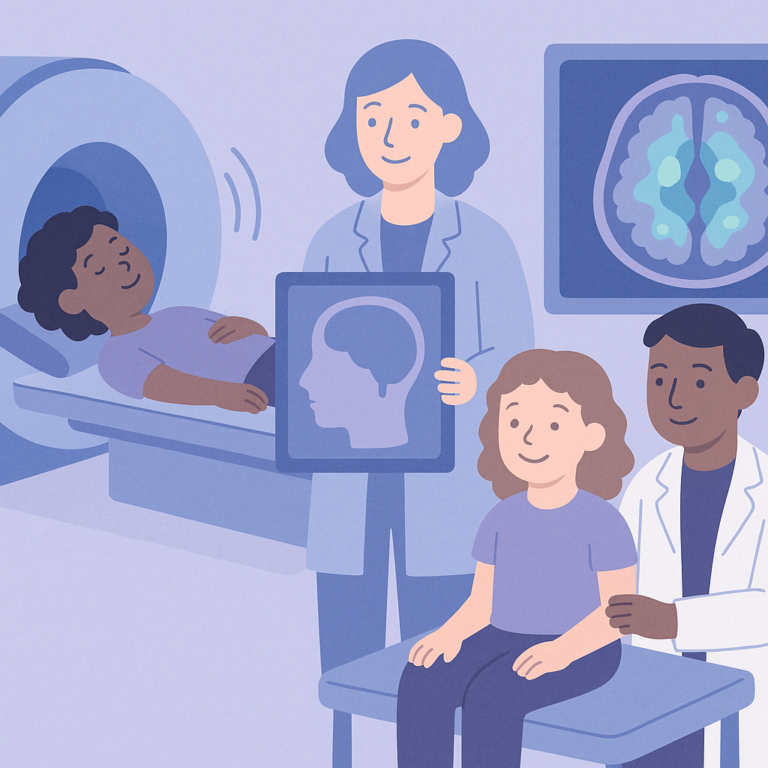
MRI Abnormalities Common in Genetic Epilepsies
Source: Frontiers in neurology
Summary
Researchers studied brain MRI scans of 139 children with specific genetic types of epilepsy linked to four genes: SCN1A, SCN2A, SCN3A, and SCN8A. These children were evaluated at a single center between 2010 and 2023. The goal was to find out how often and what types of structural brain abnormalities were present in these patients.
The study found that about 37% of the children had some form of brain abnormality visible on their MRIs. The most common issues included brain shrinkage (atrophy), problems with the hippocampus (a part of the brain important for memory), and changes in white matter. Children with SCN2A-related epilepsy had the highest rate of abnormalities, while those with SCN1A-related epilepsy had fewer but still notable findings.
This research is important because it shows that brain abnormalities are more common in these genetic epilepsies than previously thought. Understanding these patterns can help doctors make better diagnoses and treatment plans for children with these conditions. However, the study was done at one center, so more research is needed to see if these findings apply to other groups of patients.
Free: Seizure First Aid Quick Guide (PDF)
Plus one plain-language weekly digest of new epilepsy research.
Unsubscribe anytime. No medical advice.