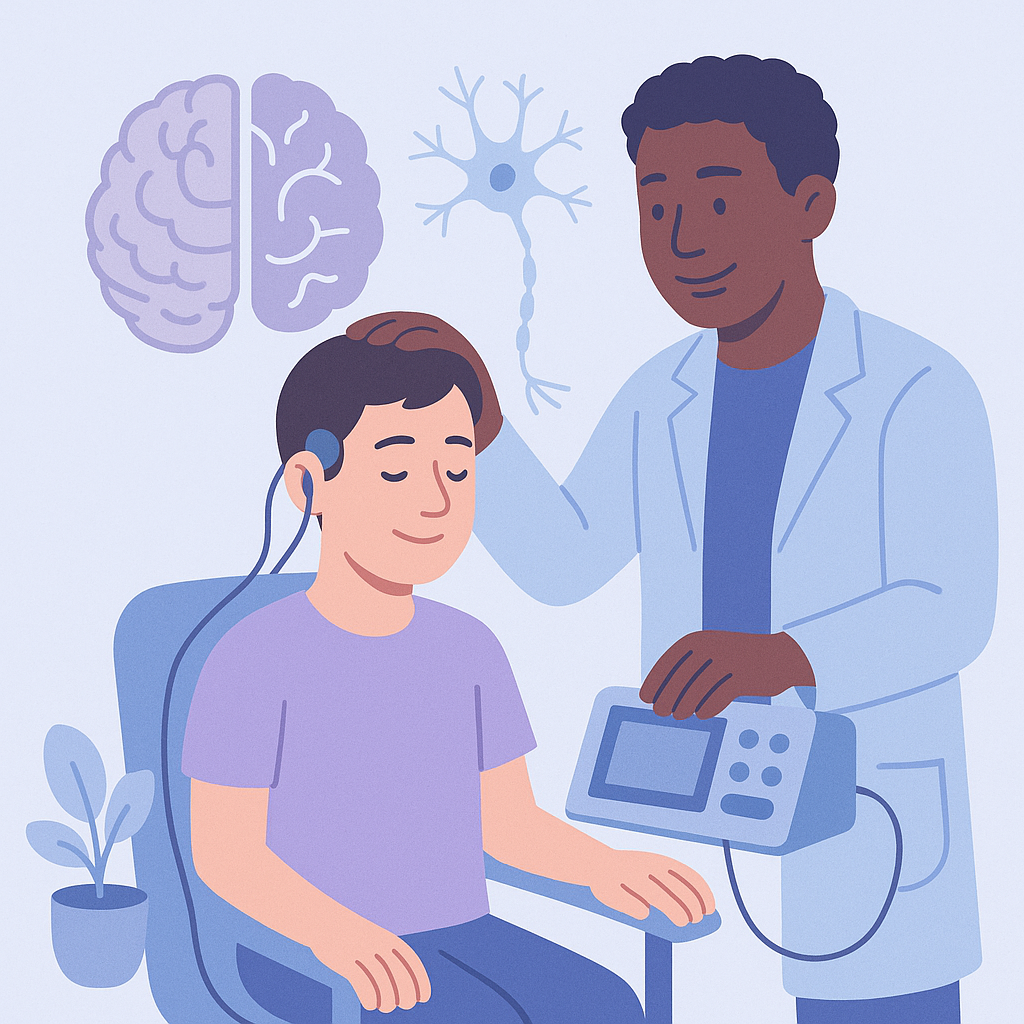
Enhancing Motor Recovery After Hemispherectomy with Neuromodulation
Source: Journal of child neurology
Summary
Researchers studied children with severe epilepsy who underwent a procedure called hemispherectomy, where one side of the brain is removed or disconnected to control seizures. This treatment is usually a last option for those whose epilepsy does not respond to other treatments. The focus was on understanding how motor skills, especially movement recovery, can be affected after this surgery and how new techniques might help improve these skills.
The study found that while some children may regain some movement in their legs or upper arms over time, finer hand movements typically do not recover well. However, there are new methods, called neuromodulation, that could help enhance motor recovery. These methods include techniques like vagal nerve stimulation and spinal cord stimulation, which could be combined with rehabilitation to support better movement outcomes for these children.
This research is important because it explores ways to improve the quality of life for children who have undergone hemispherectomy by potentially restoring some of their lost motor skills. However, the study also notes that while some neuromodulation techniques show promise, more research is needed, especially in animal models, to fully understand their effectiveness before they can be widely used in clinical settings.
Free: Seizure First Aid Quick Guide (PDF)
Plus one plain-language weekly digest of new epilepsy research.
Unsubscribe anytime. No medical advice.