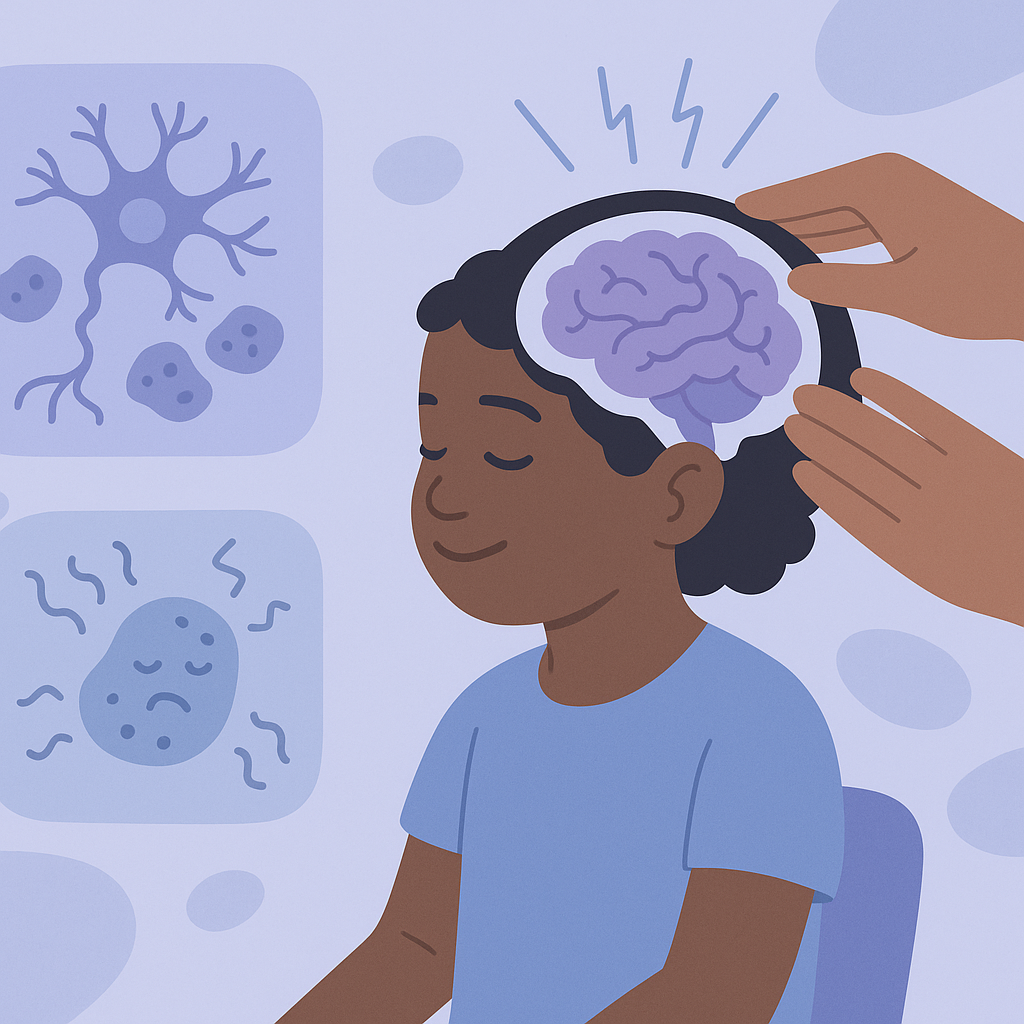
Seizures May Trigger Cellular Stress in Children with Epilepsy
Source: Brain & development
Summary
This study looked at children under 12 years old who have epilepsy that does not respond to medication, specifically those with malformations of cortical development (MCD). Researchers wanted to see if the stress from frequent seizures leads to changes in certain blood cells called peripheral blood mononuclear cells (PBMC). They compared these changes in children with drug-resistant epilepsy to those with epilepsy that responds to treatment and to healthy children.
The key findings showed that while the overall levels of a specific marker for cellular aging (SA-βgal) were similar across all groups, there were some differences in the immune cells of children with drug-resistant epilepsy. These children had longer telomeres, which are protective caps on the ends of chromosomes, and higher levels of certain proteins that are linked to cell growth and inflammation. Notably, children with drug-resistant epilepsy had higher levels of inflammatory markers (IL-6 and TNF-alpha) compared to the other groups, suggesting that ongoing seizures may be causing stress in their cells.
Understanding these findings is important because they suggest that while there is no clear evidence of accelerated aging in the cells of children with drug-resistant epilepsy, there are signs of stress that could lead to problems over time. However, the study has limitations, such as a small number of participants, which means more research is needed to confirm these results and understand their implications fully.
Free: Seizure First Aid Quick Guide (PDF)
Plus one plain-language weekly digest of new epilepsy research.
Unsubscribe anytime. No medical advice.


