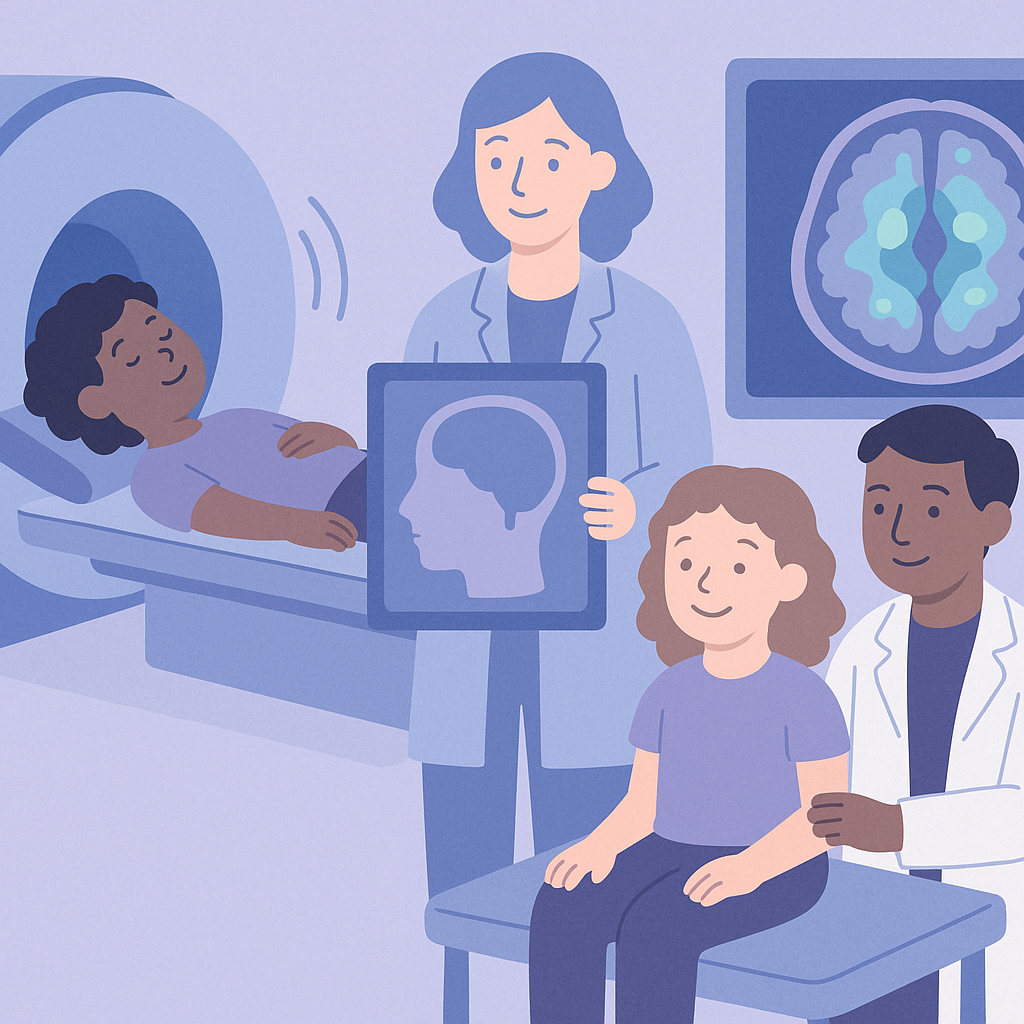
MRI and PET Scans Help Identify Epilepsy in Children
Source: Neurological sciences : official journal of the Italian Neurological Society and of the Italian Society of Clinical Neurophysiology
Summary
This study looked at two brain imaging techniques, Arterial Spin Labelling MRI and [18F]FDG-PET, to see how well they can identify the area of the brain causing seizures in children with epilepsy. The researchers focused on 28 children with focal onset drug-resistant epilepsy, meaning their seizures come from a specific part of the brain and do not respond to medication. The children underwent both imaging tests as part of their evaluation before possible surgery to treat their epilepsy.
The key finding was that, initially, the Arterial Spin Labelling MRI showed a lower agreement with the identified seizure area compared to the [18F]FDG-PET. However, when the researchers used a special analysis called voxel-based asymmetry index analysis, the accuracy of the Arterial Spin Labelling MRI improved significantly. After this analysis, the results from the MRI were similar to those from the PET scan, suggesting that this method can be effective in identifying the seizure source in children.
This research is important because it suggests that Arterial Spin Labelling MRI can be a useful tool in evaluating children with epilepsy, especially when combined with the asymmetry index analysis. However, the study had a small number of participants, and more research is needed to confirm these findings and understand how they can be applied in clinical practice.
Free: Seizure First Aid Quick Guide (PDF)
Plus one plain-language weekly digest of new epilepsy research.
Unsubscribe anytime. No medical advice.