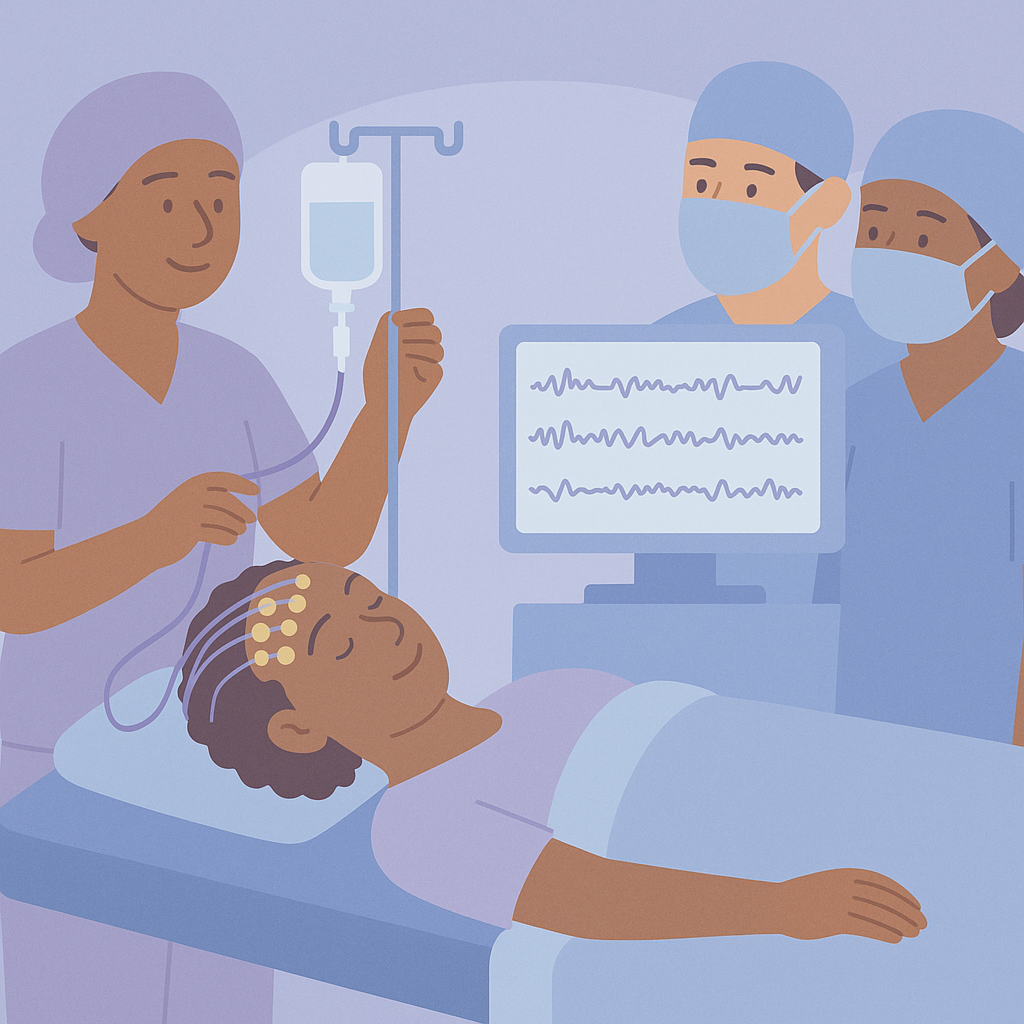
Dexmedetomidine Safe for ECoG During Epilepsy Surgery
Source: Asian journal of neurosurgery
Summary
This study looked at how a medication called dexmedetomidine affects brain activity readings during epilepsy surgery. The researchers focused on 30 patients who were undergoing surgery to remove areas of the brain causing seizures. These patients were divided into two groups: one received dexmedetomidine with isoflurane anesthesia, while the other received it with propofol anesthesia. The goal was to see how dexmedetomidine influenced the readings from electrocorticography (ECoG), which helps doctors identify the areas of the brain that need to be removed.
The key findings showed that dexmedetomidine did not suppress the ECoG signals in either group, which is important because clear readings are crucial for successful surgery. In the group using isoflurane, the ECoG scores actually increased after administering dexmedetomidine, while there was no change in the group using propofol. Both groups had normal recovery times from anesthesia, but those using isoflurane took a bit longer to wake up compared to those using propofol. Importantly, there were no reports of patients being aware during surgery, which is a concern with anesthesia.
These results are significant because they suggest that dexmedetomidine can be safely used during epilepsy surgeries without negatively affecting brain activity readings. However, the increase in ECoG scores with isoflurane anesthesia raises questions that need further investigation to understand its potential benefits or risks. Overall, while the study provides useful insights, more research is needed to confirm these findings and explore their implications for future surgeries.
Free: Seizure First Aid Quick Guide (PDF)
Plus one plain-language weekly digest of new epilepsy research.
Unsubscribe anytime. No medical advice.