Brain Region May Help Slow Seizures In Mice
Source: Nature communications
Summary
What was studied
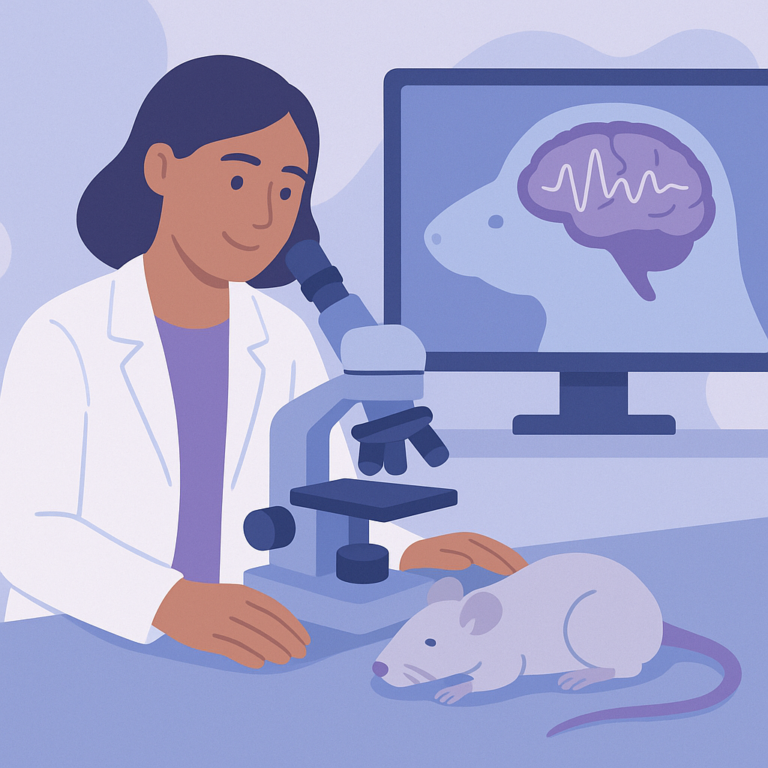
This study looked at how a brain area called the perirhinal cortex (PRh) is involved in seizure progression in male mouse models of epilepsy. The researchers focused on how the PRh connects with another brain area called the fasciola cinerea (FC), which has recently been identified as a node and potential therapeutic target in temporal lobe epilepsy.
The researchers examined brain connections and tested what happened during seizures when they increased or decreased activity in PRh excitatory neurons or in specific PRh output pathways. They also examined several PRh downstream routes, including pathways to the FC, infralimbic cortex, and lateral entorhinal cortex.
What they found
The study found that the PRh provides the principal excitatory input to the FC in these male mouse epilepsy models. Activity in the PRh-to-FC pathway was strongly increased during seizures, and inhibiting this pathway delayed seizure progression.
More broadly, changing activity in PRh excitatory neurons bidirectionally regulated seizure development, consistent with increased activity promoting seizure development and suppressed activity reducing it. The PRh appeared to engage several downstream pathways, not just one. Suppressing the whole PRh produced greater seizure attenuation than targeting any single PRh output pathway alone. This suggests the PRh may act as a hub that helps coordinate distributed circuits involved in seizure progression.
Limits of the evidence
This was an animal study in male mice, so the results may not fully apply to people, to females, or to all types of epilepsy. The abstract does not give details about how many mice were studied, how large the effects were, or how findings compared across the mouse epilepsy models.
The study shows that PRh circuits are involved in seizure progression in mice, but it does not prove that targeting the PRh would be safe or effective as a treatment in humans. It also does not show long-term outcomes, side effects, or whether this approach would help prevent seizures outside the experimental setting.
For families and caregivers
For families, this study adds to research on how seizures involve brain networks rather than only a single spot. It suggests that the perirhinal cortex may be an important control point in seizure progression, at least in male mice.
This could matter in the future if researchers develop treatments that target seizure networks more precisely. But this is still early-stage research, and it does not change current care or show that a new treatment is ready for patients.
What to watch next
Stronger evidence would come from studies in both female and male animals, clearer effect sizes, and eventually human research testing whether this brain network can be targeted safely.
Terms in this summary
- perirhinal cortex (PRh)
- A brain region in the temporal lobe that has many connections with memory- and limbic-related areas.
- hippocampal seizures
- Seizures involving the hippocampus, a brain area important for memory and often involved in temporal lobe epilepsy.
- fasciola cinerea (FC)
- A recently identified brain region connected with limbic structures that researchers are studying as part of seizure networks.
- excitatory input
- Signals from nerve cells that make other nerve cells more likely to become active.
- temporal lobe epilepsy
- A type of epilepsy in which seizures start in or involve structures in the temporal lobe.
- downstream pathways
- Brain connections that carry signals from one area to other connected areas.
Free: Seizure First Aid Quick Guide (PDF)
Plus one plain-language weekly digest of new epilepsy research.
Unsubscribe anytime. No medical advice.