Understanding Newborn Seizures Causes Signs And Treatment
⚠️ Infant dosing/safety: medication and diet decisions for infants require individualized medical guidance.
Source: Turkish archives of pediatrics
Summary
What was studied
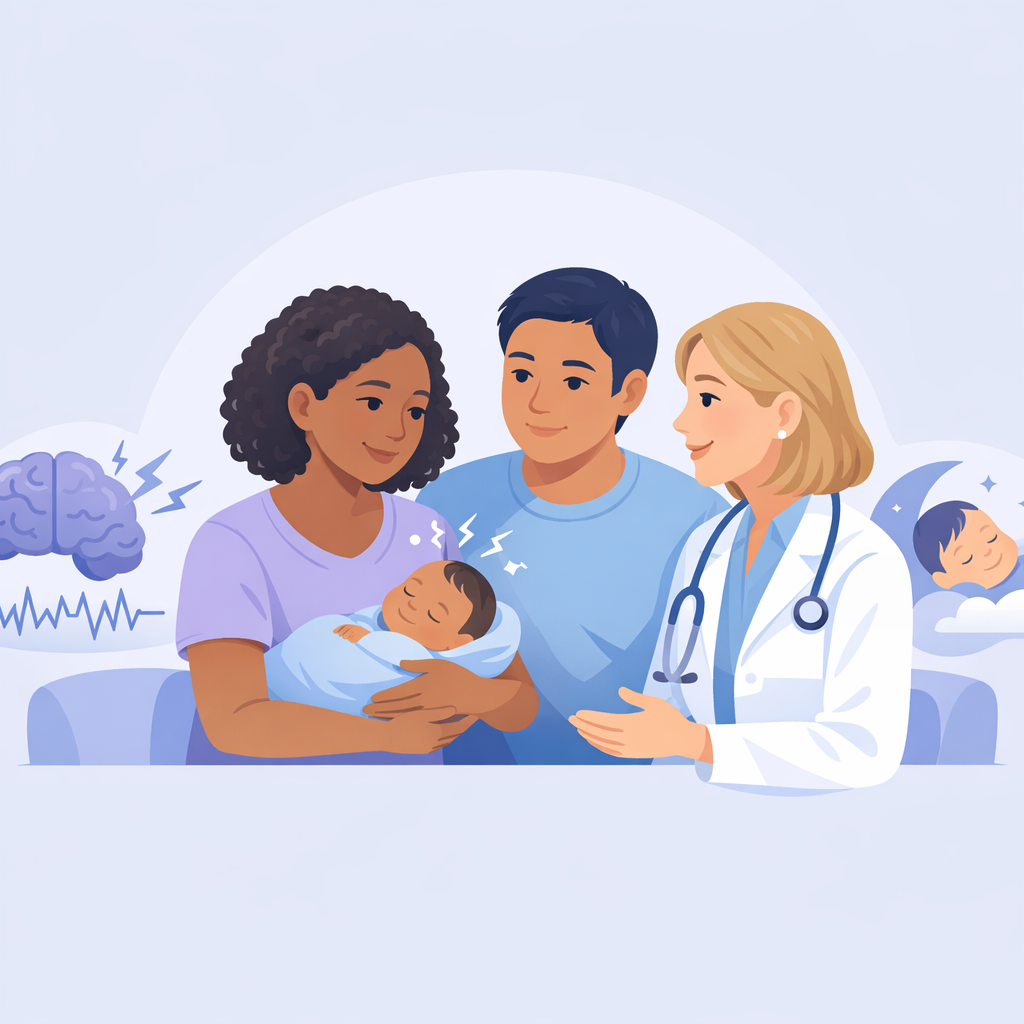
This article is a review of neonatal seizures, which are seizures that happen in newborn babies. It summarizes clinical features, classification, evaluation, and current approaches to diagnosis and treatment.
It does not describe one new experiment with a specific group of babies. Instead, it gives an overview of what clinicians currently consider in newborns with suspected seizures, including EEG monitoring, physical and neurological exams, history, and brain imaging.
What they found
The review says neonatal seizures are a neurological emergency because they may reflect significant underlying central nervous system damage. They are more common in preterm babies than in full-term babies. Some neonatal seizures may have no clinical signs and can only be detected with EEG monitoring.
The article describes seizure categories including motor and non-motor types. It says clinicians should consider hypoglycemia or electrolyte disturbances first, while also evaluating prenatal, natal, and postnatal history, physical and neurological examination, and brain imaging to understand the underlying cause. Phenobarbital is described as the current first-line treatment. Levetiracetam and phenytoin are recommended as second-line options, although phenytoin is not recommended for babies with cardiac disease. Midazolam and lidocaine should be considered in later steps. If seizures do not respond to anti-seizure medicines, inborn errors of metabolism and neonatal epilepsy should be considered. The review also states that prognosis is related to the underlying cause, and that increased seizure burden is associated with adverse neurodevelopmental and neuroimaging outcomes and increased risk of epilepsy and death.
Limits of the evidence
Because this is a review, it does not by itself show that one treatment is best or that one approach improves outcomes. The abstract does not give details about how the evidence was gathered, how many studies were included, or the quality of those studies.
The abstract also does not provide numbers for treatment success, side effects, or long-term outcomes. It gives a broad summary, so there is uncertainty about how strongly each recommendation is supported and how well it applies to every newborn.
For families and caregivers
For families, this review highlights that seizures in newborns can be hard to spot and may need EEG monitoring to confirm. It also shows why doctors move quickly to look for causes that may need urgent treatment, such as low blood sugar or electrolyte problems.
It may also help families understand that treatment often starts with phenobarbital, but other medicines may be considered if seizures continue. The article suggests that outlook is related to the underlying cause, and that greater seizure burden is associated with poorer outcomes.
What to watch next
Studies that compare treatments directly and follow long-term development in newborns with different seizure causes would help strengthen the evidence base.
Terms in this summary
- neonatal seizures
- Seizures that happen in a newborn baby.
- EEG
- A test that records the brain's electrical activity and can detect seizures that are not visible.
- electrographic seizures
- Seizures seen on EEG that may not cause obvious physical signs.
- preterm
- Born before the usual full length of pregnancy.
- electrolyte disturbances
- Abnormal levels of body salts and minerals that can affect the brain.
- phenobarbital
- A medicine used to treat seizures in newborns.
- inborn errors of metabolism
- Inherited metabolic conditions that can cause seizures.
- seizure burden
- The amount of seizure activity a person has.
Free: Seizure First Aid Quick Guide (PDF)
Plus one plain-language weekly digest of new epilepsy research.
Unsubscribe anytime. No medical advice.