Dog Epilepsy May Offer Clues Beyond The Brain
Source: Nutrients
Summary
What was studied
This paper was a scoping review, which means the authors gathered and summarized earlier studies rather than testing a treatment themselves. They looked at research on client-owned dogs with canine idiopathic epilepsy, a naturally occurring epilepsy in dogs, and compared findings with healthy dogs. The review focused on changes in body systems linked to metabolism, immune function, neurochemistry, and gut-brain axis-related pathways.
The authors searched medical databases for original studies in dogs diagnosed using accepted veterinary criteria. They grouped the findings into areas such as amino acids and fats, micronutrients, neurotransmitters, oxidative stress, inflammation, endocannabinoid signaling, microRNAs, and gut-brain pathways. They then compared these dog findings with what has been reported in human epilepsy to assess possible cross-species parallels.
What they found
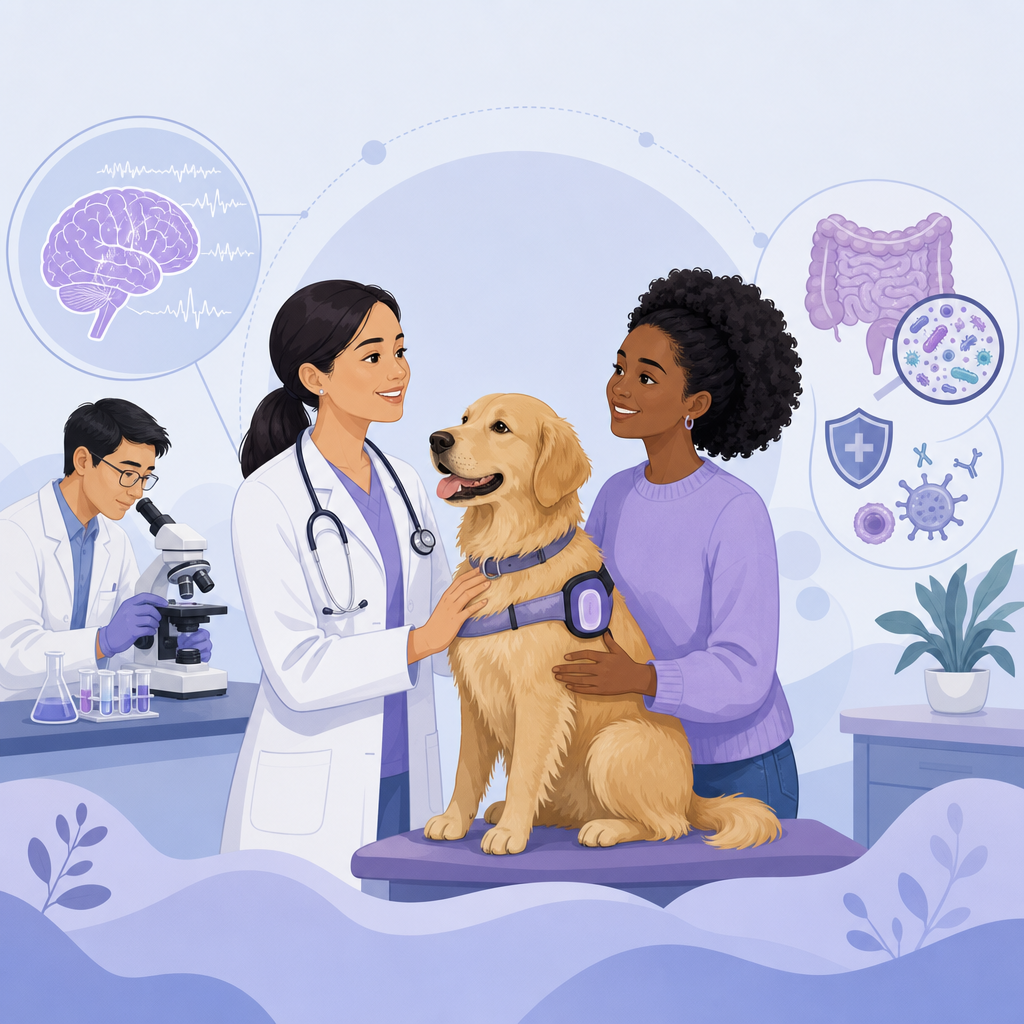
The review found that dogs with idiopathic epilepsy show reported alterations in several connected body systems, not just the brain. These included metabolic pathways, immune and inflammatory pathways, and gut-brain axis-related pathways. The authors say these patterns are in agreement with findings reported in people with epilepsy.
Based on this, the review suggests that epilepsy may involve whole-body dysfunction beyond the central nervous system. The authors highlight possible future uses such as biomarker development, patient stratification, and studying mechanism-based interventions aimed at metabolism, diet, the microbiome, or immunometabolic pathways.
Limits of the evidence
This review does not prove that these body changes cause epilepsy or seizures. Most of the included dog studies were small and varied a lot in design, which makes firm conclusions harder.
The results may also be affected by other factors, including antiseizure medicines, differences in diet or fasting before testing, and breed-related differences in dogs. The comparison with human epilepsy was a targeted, non-systematic narrative summary, not a full systematic review, so it may not capture all human evidence.
For families and caregivers
For families, this review supports the idea that epilepsy may involve more than abnormal brain activity alone. It may help explain why researchers are studying diet, inflammation, and the gut microbiome as possible parts of epilepsy research and care.
Still, this paper is mainly about using naturally occurring epilepsy in dogs as a translational research model for human epilepsy. It does not show that any specific diet, supplement, microbiome approach, or immune treatment works for people. The main value is that it may help guide future studies toward better tests and more personalized treatment strategies.
What to watch next
Stronger evidence would come from larger, well-controlled studies in dogs and people that examine whether these metabolic or immune changes are useful for predicting disease features or treatment response, and whether targeting them improves outcomes.
Terms in this summary
- scoping review
- A study that maps and summarizes existing research on a topic rather than doing a new experiment.
- idiopathic epilepsy
- Epilepsy with no clear structural cause found, often thought to involve inherited or complex biological factors.
- metabolism
- The body's chemical processes that turn food into energy and building blocks for cells.
- microbiome
- The community of bacteria and other microbes living in the body, especially in the gut.
- biomarker
- A measurable sign in the body that may help detect a disease or predict how it will behave.
- epileptogenesis
- The process by which epilepsy develops.
- oxidative stress
- A state in which harmful molecules and the body's defenses against them are out of balance.
- endocannabinoid signaling
- A natural body signaling system involved in brain activity and other functions.
Free: Seizure First Aid Quick Guide (PDF)
Plus one plain-language weekly digest of new epilepsy research.
Unsubscribe anytime. No medical advice.