Similar Epilepsy Care But Communication Gaps For Spanish Speakers
Source: Journal of child neurology
Summary
What was studied
This study looked at pediatric epilepsy patients at one medical center and compared those from English-speaking families with those from Spanish-speaking families. The researchers reviewed past medical records rather than following families forward in time.
They included 118 English-speaking patients and 112 Spanish-speaking patients. They reviewed initial encounters and the first 6 months of care, including seizure type, epilepsy classification, where the first visit happened, medicines prescribed, communication with the clinic, and whether seizures were reported to improve.
What they found
The two language groups were similar in many ways. The study did not find differences in epilepsy classification, presenting seizure type, initial encounter location, medications prescribed, or subjective seizure improvement rates over 6 months.
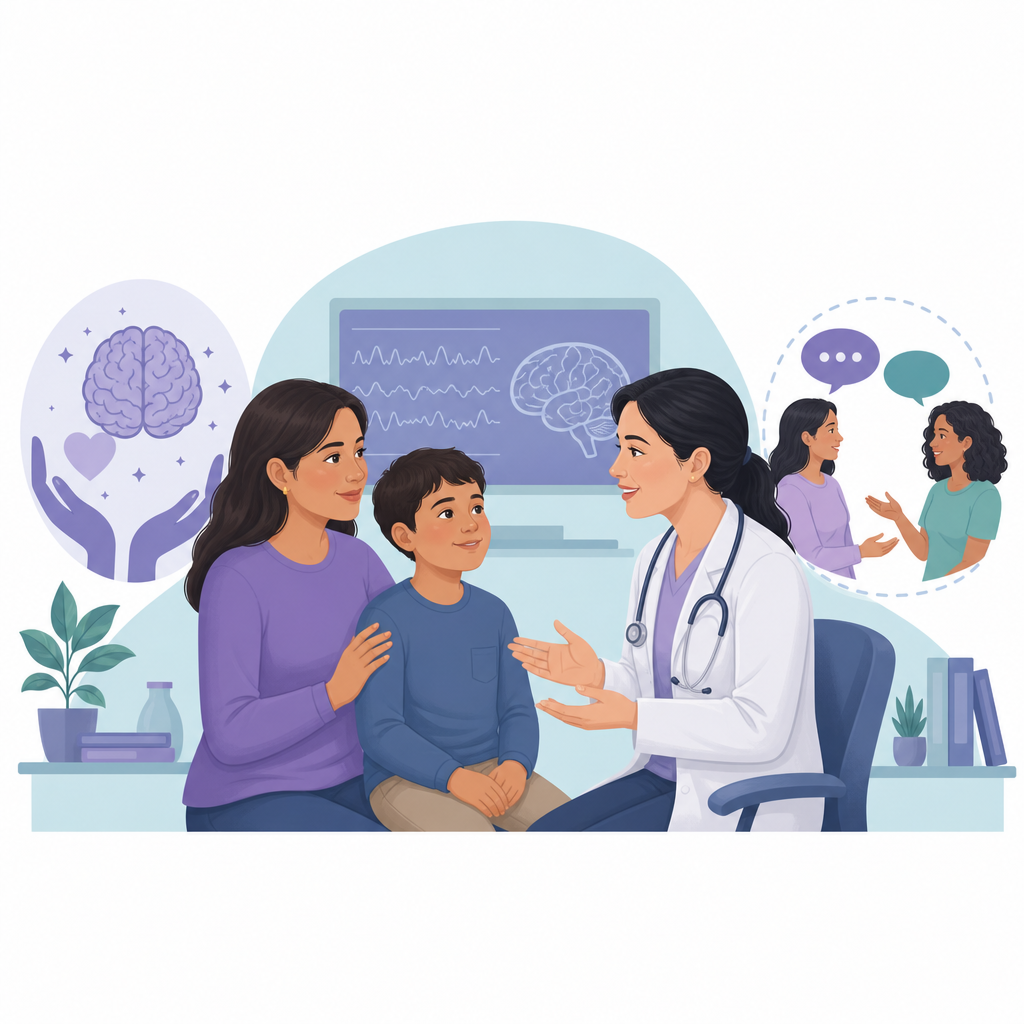
Differences between the language groups were seen in communication rates and medication trials. The authors state that institutional processes, specifically triage differences for English- and Spanish-speaking patients, may explain these differences despite similar rates of seizure improvement. They also found some differences by race within the Spanish-speaking group.
Limits of the evidence
This was a retrospective study from only one center, so it can show patterns but cannot prove that language caused the differences. The results may not apply to other hospitals or regions.
The abstract does not give details about how large the communication or medication-trial differences were, or which race-related differences were seen. The follow-up was only 6 months, and seizure improvement was described as subjective, which adds uncertainty.
For families and caregivers
For families, this study may be somewhat reassuring because seizure type, early treatment measures, and short-term seizure improvement looked similar between English- and Spanish-speaking children in this clinic. At the same time, it suggests that language-related care processes may affect how often families connect with the care team or how treatment is adjusted.
The study does not show worse seizure improvement rates for Spanish-speaking patients in the first 6 months, but it suggests that health systems should look closely at language access and care processes.
What to watch next
Larger studies at multiple centers could help clarify whether similar patterns are seen elsewhere and could examine interpreter use, communication barriers, and longer-term seizure outcomes.
Terms in this summary
- epilepsy
- A brain condition that causes repeated seizures.
- seizure
- A sudden burst of abnormal electrical activity in the brain that can change movement, awareness, feelings, or behavior.
- retrospective study
- A study that looks back at existing medical records instead of following patients forward over time.
- triage
- The process a clinic or hospital uses to decide how patients are directed, scheduled, or prioritized for care.
- medication trial
- A period of trying a medicine as part of treatment.
Free: Seizure First Aid Quick Guide (PDF)
Plus one plain-language weekly digest of new epilepsy research.
Unsubscribe anytime. No medical advice.