Sleep Apnea May Raise Risks For People With Epilepsy
⚠️ SUDEP: If you have concerns, speak with your clinician about risk and safety planning.
Source: Epilepsia
Summary
What was studied
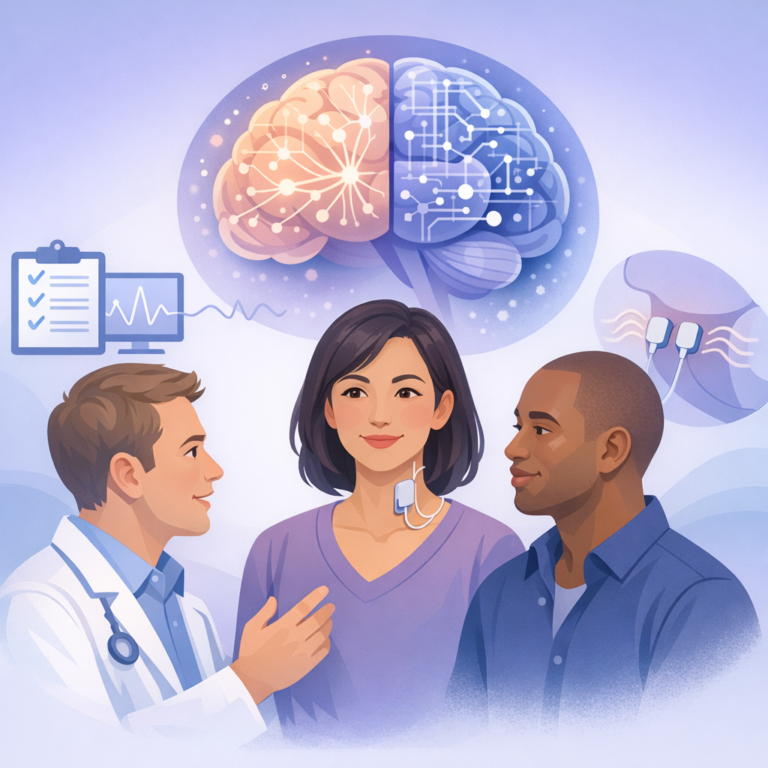
This paper was a critical review of past research, not a new experiment. It looked at obstructive sleep apnea (OSA) in people with epilepsy and asked whether OSA may do more than just happen alongside epilepsy. The authors reviewed evidence linking OSA with higher seizure burden, interictal epileptiform discharges, late-onset epilepsy, and markers linked to sudden unexpected death in epilepsy (SUDEP).
The authors used the Bradford Hill criteria, a framework researchers use to judge whether a risk factor may play a causal role. Based on the studies they reviewed, they posit that OSA may be a modifiable risk factor in epilepsy and that systematic screening and evidence-based treatment for OSA should be integrated into epilepsy care.
What they found
The review says OSA is common, often underdiagnosed, and often undertreated in people with epilepsy. Across the studies reviewed, OSA was associated with higher seizure burden, interictal epileptiform discharges, late-onset epilepsy, and increased SUDEP risk markers. The authors also say there is emerging evidence that treating OSA with continuous positive airway pressure (CPAP) may improve seizure control.
Using the Bradford Hill framework, the authors judged that the evidence supported 8 of 9 criteria to varying degrees. This supports the idea that OSA may be a modifiable risk factor related to epilepsy outcomes, although it does not prove this with certainty.
Limits of the evidence
This was a review, so its conclusions depend on the quality of earlier studies. The abstract notes important problems in the evidence, including confounding, selection bias, adherence bias, and limited randomized evidence. That means other factors could partly explain the links seen.
The review suggests OSA may be linked to seizure severity, incident late-onset epilepsy, and SUDEP risk, but it cannot prove that OSA directly causes these outcomes. The abstract also does not give details about how many studies or patients were included, so the strength of the evidence is hard to judge from the abstract alone.
For families and caregivers
For families, this review suggests that sleep apnea may be an important and treatable issue in people with epilepsy. If OSA is present, finding and treating it might help with seizure control and could be relevant to overall safety, but the current evidence is not strong enough to promise a benefit for every person.
The main takeaway is that sleep problems should not be ignored in epilepsy care. This review supports asking about symptoms of sleep apnea and discussing whether screening or treatment makes sense as part of routine care.
What to watch next
Future research should prioritize randomized trials to test whether treating OSA affects epilepsy incidence, seizure severity, and SUDEP risk markers.
Terms in this summary
- obstructive sleep apnea (OSA)
- A sleep disorder in which breathing repeatedly partly or fully stops during sleep because the airway becomes blocked.
- comorbid condition
- A health problem that happens at the same time as another condition.
- interictal epileptiform discharges
- Abnormal brain-wave patterns seen between seizures on an EEG.
- late-onset epilepsy (LOE)
- Epilepsy that starts later in life, often in older adulthood.
- SUDEP
- Sudden unexpected death in epilepsy, a rare death in someone with epilepsy without another clear cause found.
- continuous positive airway pressure (CPAP)
- A treatment for sleep apnea that uses a machine to gently blow air through a mask to keep the airway open during sleep.
- Bradford Hill criteria
- A set of research principles used to judge whether a risk factor may have a causal role.
- randomized trial
- A study that assigns people by chance to different treatments to better test cause and effect.
Free: Seizure First Aid Quick Guide (PDF)
Plus one plain-language weekly digest of new epilepsy research.
Unsubscribe anytime. No medical advice.