Non-Invasive Treatments Show Promise for Drug-Resistant Epilepsy
Source: Journal of neurology
Summary
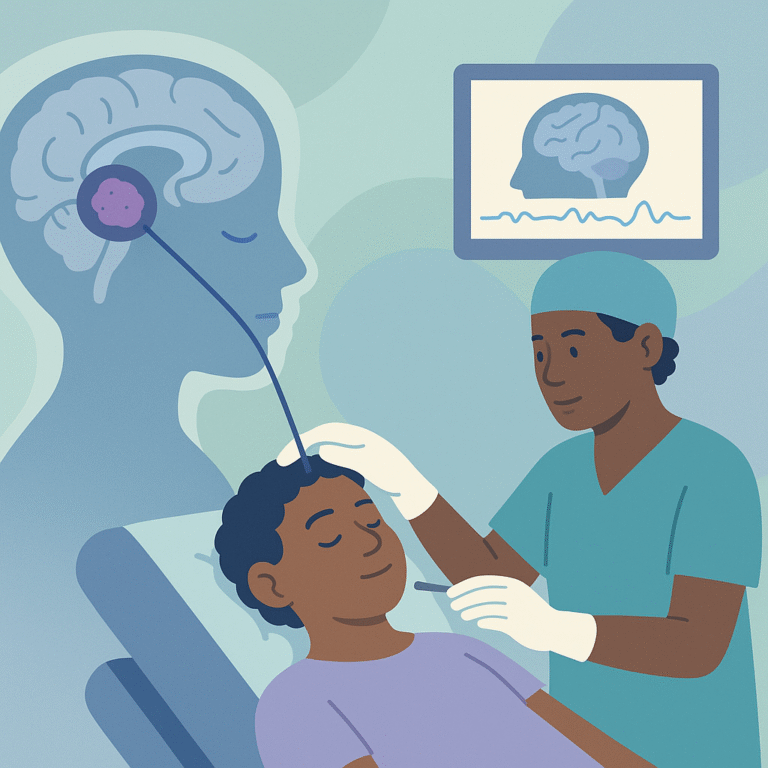
Researchers studied different non-invasive neurostimulation treatments for people with drug-resistant epilepsy, which is a type of epilepsy that does not respond well to medications. They looked at six types of treatments: repetitive transcranial magnetic stimulation (rTMS), transcranial direct current stimulation (tDCS), transcranial alternating current stimulation (tACS), low-intensity focused ultrasound (LI-FUS), transcutaneous vagus nerve stimulation (tVNS), and trigeminal nerve stimulation (TNS). The review included 63 studies with a total of 1,342 participants who received these treatments and 505 who did not.
The key findings showed that tDCS and tVNS were the most effective in reducing seizure frequency, with tDCS leading to a 46.9% reduction and tVNS a 49.2% reduction. rTMS also showed some effectiveness with a 30.2% reduction. About 38% of participants using rTMS, 49% using tDCS, and 29% using tVNS experienced a significant decrease in their seizures. Importantly, no serious side effects were reported, and only a few people experienced worsened seizures.
These findings are important because they suggest that non-invasive neurostimulation could be a helpful option for people with drug-resistant epilepsy, especially when traditional medications fail. However, the researchers noted that the studies varied in quality and methods, which makes it hard to draw strong conclusions. More research is needed to better understand the best ways to use these treatments and to explore the other methods that had insufficient data.
Free: Seizure First Aid Quick Guide (PDF)
Plus one plain-language weekly digest of new epilepsy research.
Unsubscribe anytime. No medical advice.