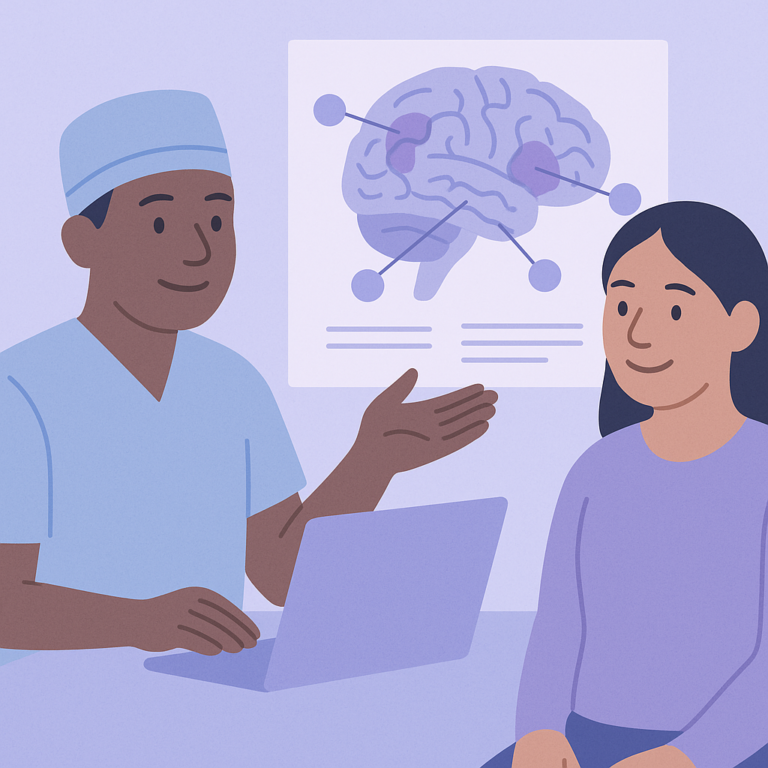
Deep Brain Stimulation May Help Patients with Drug-Resistant Epilepsy
Source: Epilepsia
Summary
This study looked at the effects of deep brain stimulation (DBS) on adults with drug-resistant epilepsy (DRE) who had not found relief from other treatments, including vagus nerve stimulation (VNS). Conducted at 14 specialized centers, the research involved 61 participants who were randomly assigned to either receive DBS or continue with their best medical treatment for 12 months. The main goal was to see how much the number of severe seizures changed in each group over that time.
The results showed that patients receiving DBS had a greater reduction in their seizure frequency compared to those on medical treatment alone. Specifically, the DBS group experienced a 44% decrease in seizures, while the medical treatment group had only a 6% decrease. Additionally, 44.5% of the DBS patients achieved at least a 50% reduction in their seizures, compared to 27% in the medical treatment group. Importantly, there were no major safety issues reported with the DBS procedure.
This study is significant because it suggests that DBS may help reduce seizures in patients who have not responded to other treatments. However, it is important to note that while the DBS group showed improvements, the study did not prove that DBS is better than medical treatment overall. The findings support considering DBS as an option for patients with difficult-to-treat epilepsy, but more research is needed to fully understand its benefits and limitations.
Free: Seizure First Aid Quick Guide (PDF)
Plus one plain-language weekly digest of new epilepsy research.
Unsubscribe anytime. No medical advice.