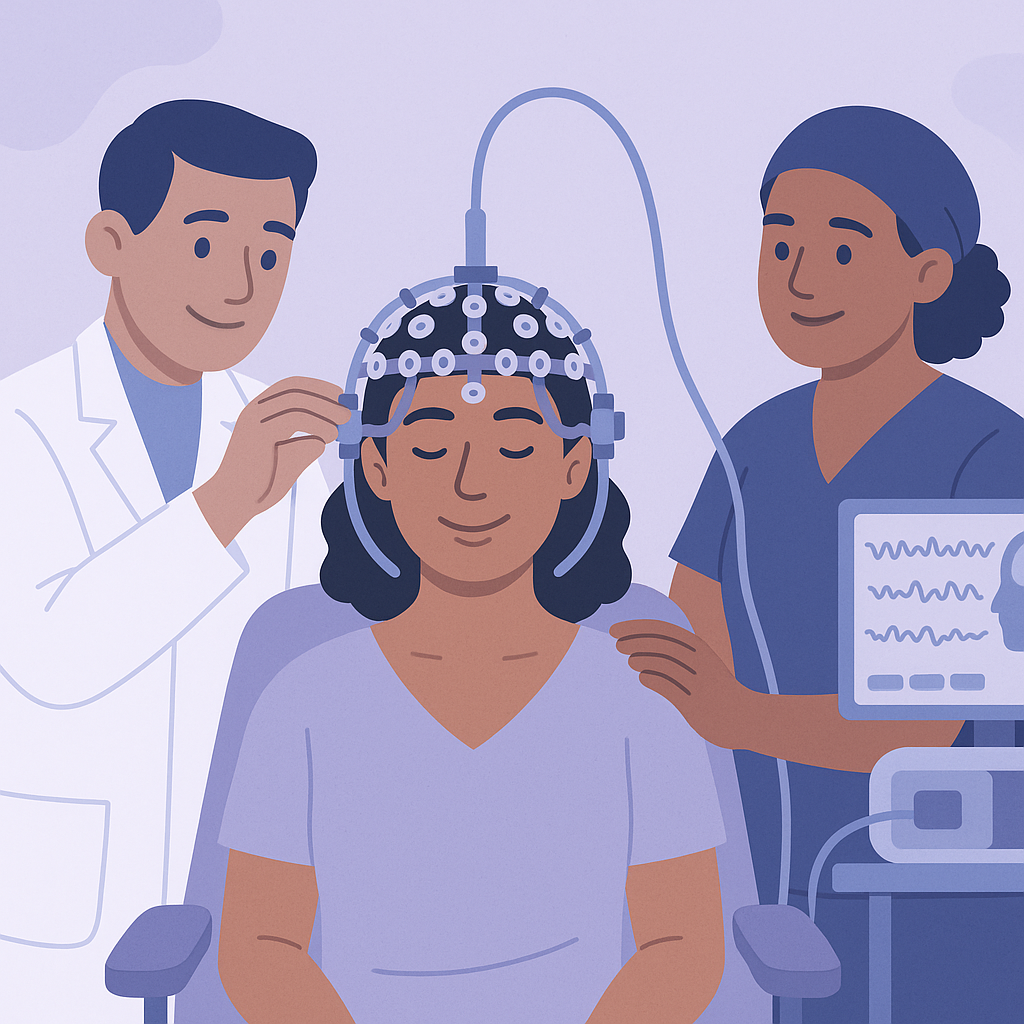
Improving Accuracy in Stereoelectroencephalography Procedures
Source: Frontiers in neurology
Summary
This study looked at how well a procedure called stereoelectroencephalography (sEEG) works for patients with epilepsy who do not respond to medication. Researchers analyzed 59 sEEG procedures at a single medical center, focusing on how accurately electrodes were placed in the brain. They compared procedures that used a special tool called a slotted guiding cannula with those that did not, examining the results from September 2021 to May 2025.
The key findings showed that the accuracy of electrode placement was generally high, with only a small percentage of electrodes having significant placement errors. Most deviations were minor, meaning they were unlikely to cause problems. The study found that the experience of the surgeon and how the procedure was organized played a big role in achieving better accuracy. Interestingly, using the slotted cannula did not significantly improve the overall accuracy of the electrode placements.
These findings are important because they suggest that the skills and experience of the surgical team are more critical for successful sEEG procedures than the use of additional tools. While the study showed that sEEG is safe and effective, it also noted some limitations, such as the small number of patients and the fact that it was conducted at just one center. This means that more research is needed to confirm these results in different settings and with larger groups of patients.
Free: Seizure First Aid Quick Guide (PDF)
Plus one plain-language weekly digest of new epilepsy research.
Unsubscribe anytime. No medical advice.