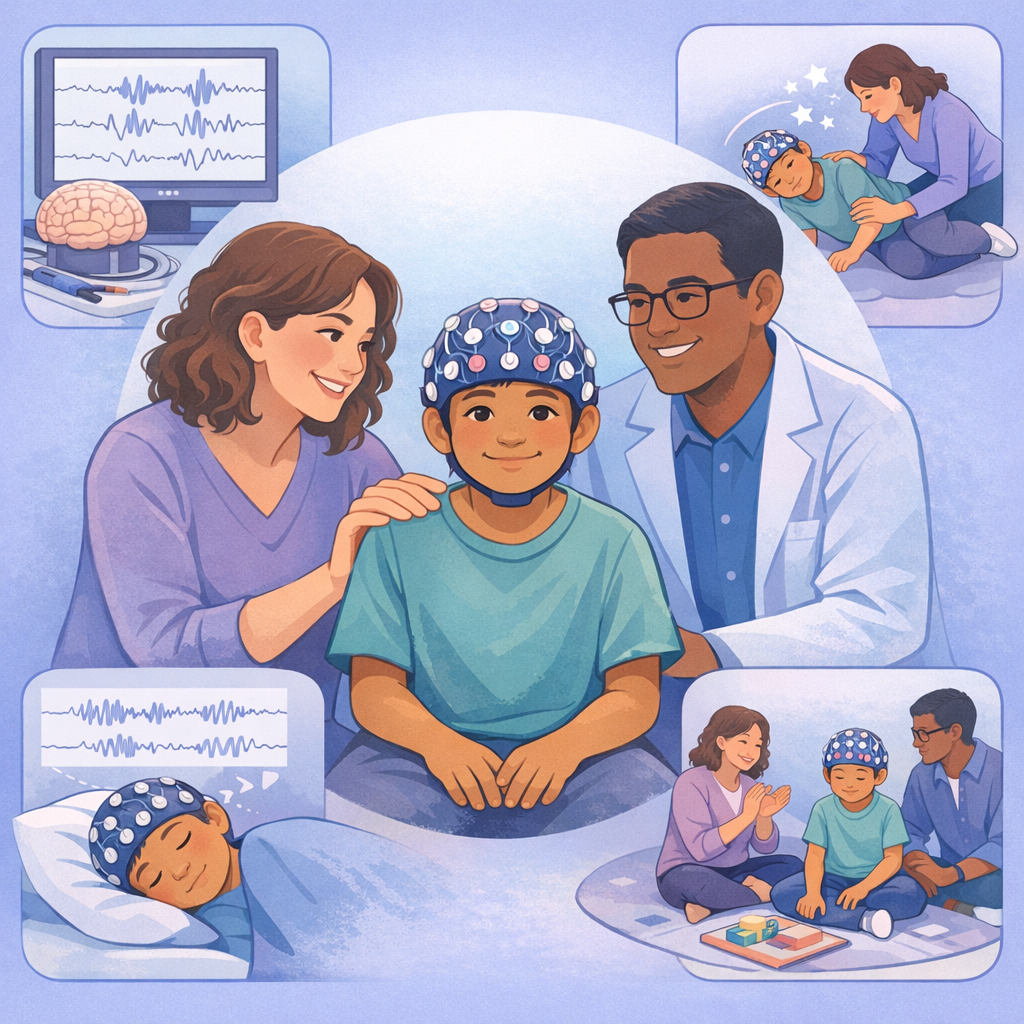
How EEG Patterns Change In Lennox-Gastaut Syndrome
⚠️ Infant dosing/safety: medication and diet decisions for infants require individualized medical guidance.
Source: Seminars in pediatric neurology
Summary
What was studied
This paper is a review about Lennox-Gastaut syndrome (LGS), not a new experiment. It focuses on how ictal and interictal EEG findings and seizure types in LGS may evolve over the course of the syndrome.
The review is about people with LGS, a developmental epileptic encephalopathy that the abstract describes as life-long and drug-resistant, developing in young children between 18 and 24 months of age and up to 18 years of age.
What they found
The main point of the review is that EEG findings and seizure types in LGS develop over the course of the syndrome. The abstract also notes that published estimates of how often LGS occurs have varied partly because definitions have changed over time, including age of inclusion, mandatory seizure types, and mandatory EEG findings.
Limits of the evidence
Because this is a review abstract, it does not give detailed results from one specific group of patients. The abstract does not provide numbers about how often EEG patterns change, which changes are most common, or how these findings affect treatment or long-term outcomes. Since definitions of LGS have changed over time, comparing older and newer studies may be difficult.
For families and caregivers
This may matter to families because it helps explain why diagnosing LGS can be complex and why EEG results may not look exactly the same at every stage of the condition. Seizure types and EEG patterns may evolve over time, so doctors may need to reassess how the syndrome is presenting. The abstract also highlights that LGS can have a considerable impact on daily life because of its chronic nature, seizure-related injuries, need for close medical supervision, and effects on cognitive and neurologic development.
What to watch next
Helpful next steps would include long-term studies that follow children with LGS over time and examine how changing EEG patterns relate to symptoms, diagnosis, and treatment decisions.
Terms in this summary
- EEG
- A test that records the brain’s electrical activity, often called brain waves.
- Lennox-Gastaut syndrome
- A developmental epileptic encephalopathy that begins in childhood and is often drug-resistant.
- ictal
- Happening during a seizure.
- interictal
- Happening between seizures.
- developmental epileptic encephalopathy
- A group of epilepsy conditions associated with seizures, abnormal brain activity, and developmental effects.
- drug-resistant
- Difficult to control with medicine.
- incidence
- The number of new cases that occur in a population over a certain time.
- prevalence
- The total number of people in a population who have a condition at a given time.
Free: Seizure First Aid Quick Guide (PDF)
Plus one plain-language weekly digest of new epilepsy research.
Unsubscribe anytime. No medical advice.


