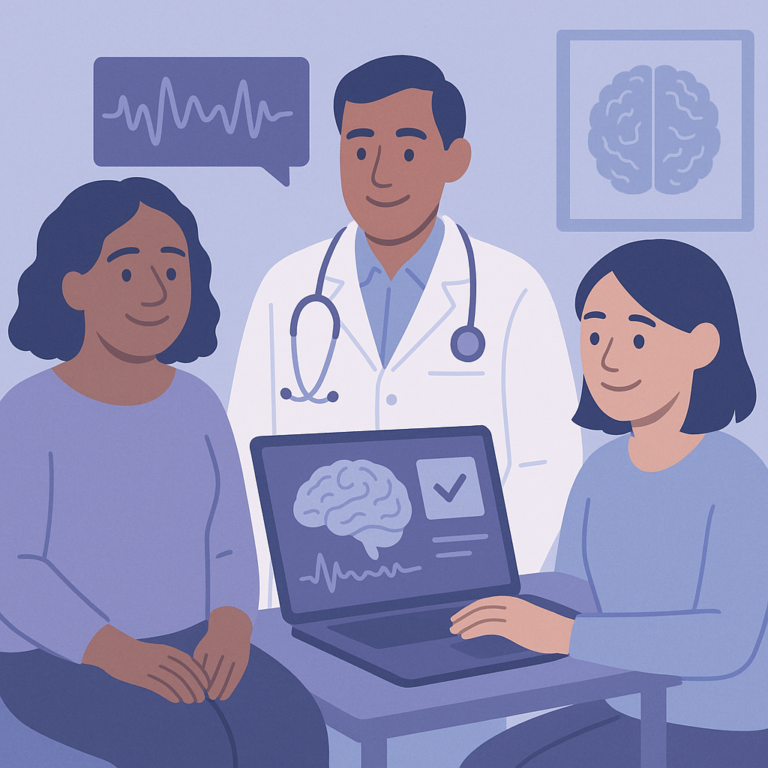
Better Epilepsy Care Closer To Home In The UK
Source: Epilepsia open
Summary
What was studied
This article is a roadmap or policy-style review about epilepsy care in the United Kingdom. It does not describe a clinical trial or a study where a group of patients was enrolled and tested. Instead, it discusses current problems in epilepsy care across the UK and proposes a redesign of services using newer technologies.
The paper focuses on people with epilepsy in the UK as a whole, including groups who often face worse care, such as people in rural areas, ethnic minority groups, and people with intellectual disabilities. It also discusses the NHS and how community-based, technology-enabled care might fit with the UK government's broader healthcare plans.
What they found
The article says current UK epilepsy care is often too slow, fragmented, and centered on hospitals. It highlights long waits for tests like EEG, repeated inconclusive testing, heavy reliance on occasional clinic visits, and seizure tracking that often depends on patient recall.
The authors suggest that newer tools, such as point-of-care EEG, AI-powered diagnostics, wearable devices, and digital therapeutics, could help move care into the community and may support faster diagnosis, ongoing monitoring, and reduced illness burden. They also stress that any digital shift must address digital exclusion so it does not worsen health inequalities.
Limits of the evidence
This is not a controlled research study, so it cannot show from direct trial evidence that these technologies improve outcomes in real-world NHS care. It mainly presents a case for change rather than direct evidence comparing old and new care models.
The abstract does not give detailed data on how well specific tools work, how much they cost, which patients benefit most, or how they would be implemented in different communities. It also does not report long-term results for safety, seizure control, quality of life, or fairness of access.
For families and caregivers
For families, this paper suggests that epilepsy care could become faster, more local, and more continuous instead of depending mostly on hospital visits. In theory, that could mean quicker testing, better seizure tracking, and care that fits daily life better.
But this article is a proposal, not proof that the system has already improved. Families may see it as a sign of where UK epilepsy care may be heading, while remembering that real benefits will depend on access, evidence, and making sure people are not left behind by digital tools.
What to watch next
Stronger evidence would come from NHS studies showing whether these technologies improve diagnosis speed, seizure control, safety, cost, and equal access in everyday care.
Terms in this summary
- EEG
- A test that records the brain's electrical activity and can help support an epilepsy diagnosis.
- AI-powered diagnostics
- Computer tools intended to help doctors interpret tests or identify patterns in clinical data.
- point-of-care EEG
- An EEG system designed to be used closer to where the patient is seen, such as in community settings, rather than only in specialist hospital departments.
- digital therapeutics
- Treatment or support delivered through digital tools, such as software or apps.
- hospital-centric care
- A care model that depends mainly on hospital visits and hospital-based services.
- digital exclusion
- When people cannot fully use digital healthcare because of barriers like cost, internet access, language, disability, or low confidence with technology.
Free: Seizure First Aid Quick Guide (PDF)
Plus one plain-language weekly digest of new epilepsy research.
Unsubscribe anytime. No medical advice.