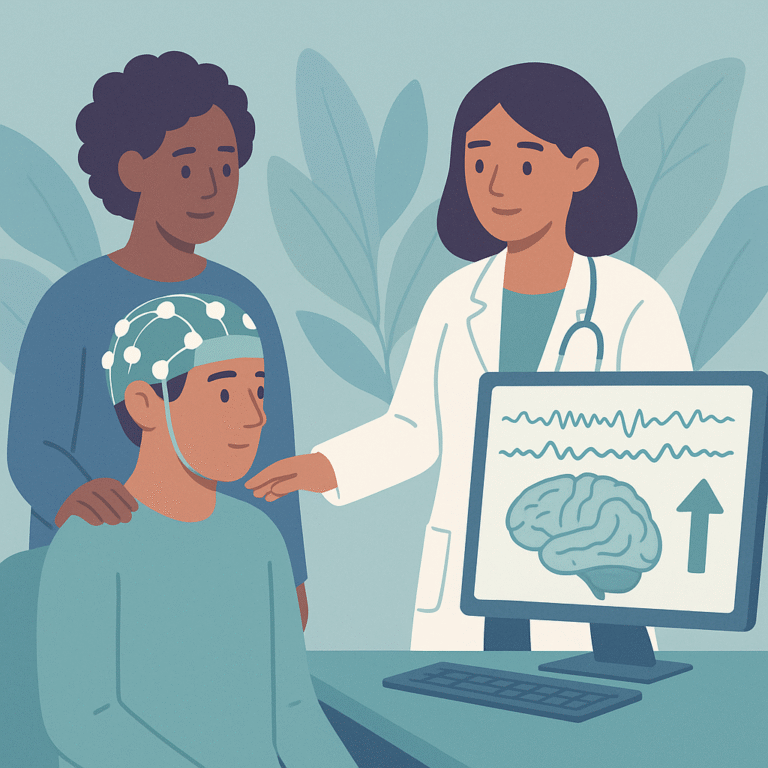
New Guidance For Treating Epilepsy In Infants
⚠️ Infant dosing/safety: medication and diet decisions for infants require individualized medical guidance.
Source: Epilepsy currents
Summary
What was studied
This was a clinical practice guideline, not a single experiment. It reviewed and updated research on treatments for epilepsy in infants and young children from 1 month of age to younger than 36 months. The guideline looked at medicine treatments, diet treatments, and epilepsy surgery.
A multidisciplinary expert panel updated an earlier systematic review by adding studies from August 2021 through September 2025 and using the same methods to judge evidence quality. The guideline did not include West syndrome or infantile spasms, because separate treatment guidance already exists for infantile epileptic spasms.
What they found
The guideline says the evidence for treating epilepsy in this age group is often limited, so many recommendations are conditional. Even so, the panel made two strong recommendations for surgery in certain children younger than 36 months with drug-resistant epilepsy. First, hemispherectomy or hemispherotomy is recommended for selected children with drug-resistant epilepsy related to certain underlying lesional pathologies, including hemimegaloencephaly, Rasmussen's encephalitis, Sturge-Weber syndrome, perinatal stroke, and hemispheric cortical dysplasia. Second, intralobar, multilobar, or focal resections, or posterior disconnections, are recommended for drug-resistant focal or lesional epilepsy in this age group. The guideline also developed a treatment algorithm, based on evidence and expert opinion, to help place medicine, diet, and surgery options into clinical context.
Limits of the evidence
Because this is a guideline based on available studies, its conclusions are only as strong as the research it reviewed. The abstract says there were only a limited number of studies, and the certainty of evidence was low for many questions. That means the guideline cannot determine the best treatment for every infant or every cause of epilepsy. It also does not cover infantile spasms/West syndrome, so its recommendations do not apply to those conditions. The abstract does not give detailed results for specific medicines or diets.
For families and caregivers
For families, this guideline suggests that surgery may be an important treatment option in some very young children with drug-resistant epilepsy related to certain brain lesions. It also shows that treatment decisions in infants often must be made with limited evidence, so care may depend on the child’s seizure type, cause of epilepsy, and evaluation by specialists. The guideline may help families ask how medicine, diet, and surgery fit into the treatment plan for a child under 3 years old.
What to watch next
More high-quality studies are needed in infants, especially studies that evaluate therapies by epilepsy cause and examine long-term developmental and mortality outcomes.
Terms in this summary
- drug-resistant epilepsy
- Epilepsy that continues despite trying appropriate seizure medicines.
- lesional epilepsy
- Epilepsy linked to a visible brain abnormality or injury.
- hemispherectomy
- A surgery that removes or disconnects much of one side of the brain to treat severe seizures.
- hemispherotomy
- A surgery that mainly disconnects one side of the brain rather than removing large amounts of tissue.
- focal resection
- Surgery to remove a small area of brain where seizures start.
- systematic review
- A structured summary of many studies on a topic using planned methods.
- conditional recommendation
- Advice based on limited or less certain evidence, so it may not fit every patient.
- certainty of evidence
- How confident experts are that the research findings are reliable.
Free: Seizure First Aid Quick Guide (PDF)
Plus one plain-language weekly digest of new epilepsy research.
Unsubscribe anytime. No medical advice.