Brain Stimulation Seizures May Help Guide Child Epilepsy Surgery
Source: Epilepsia
Summary
What was studied
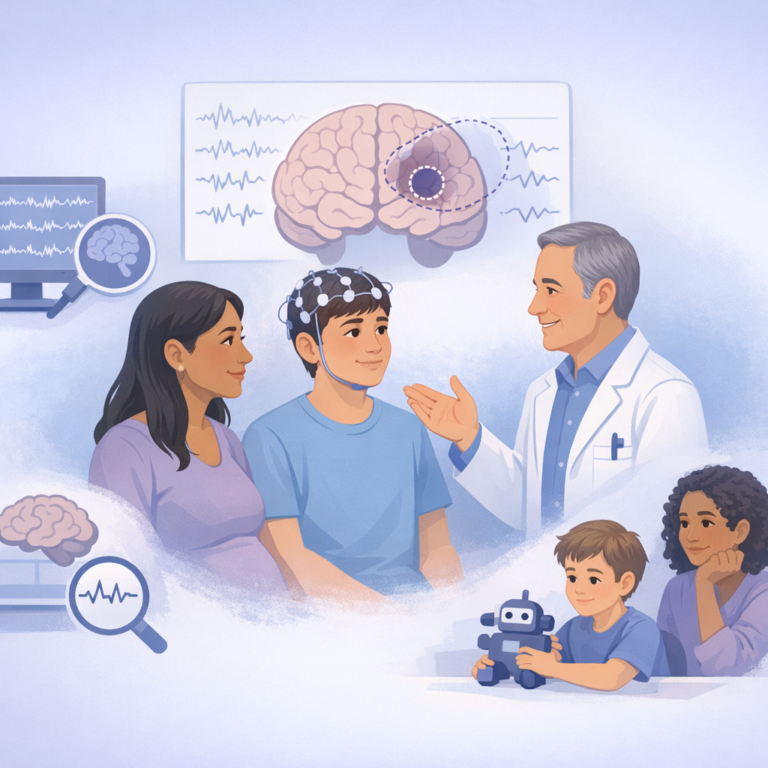
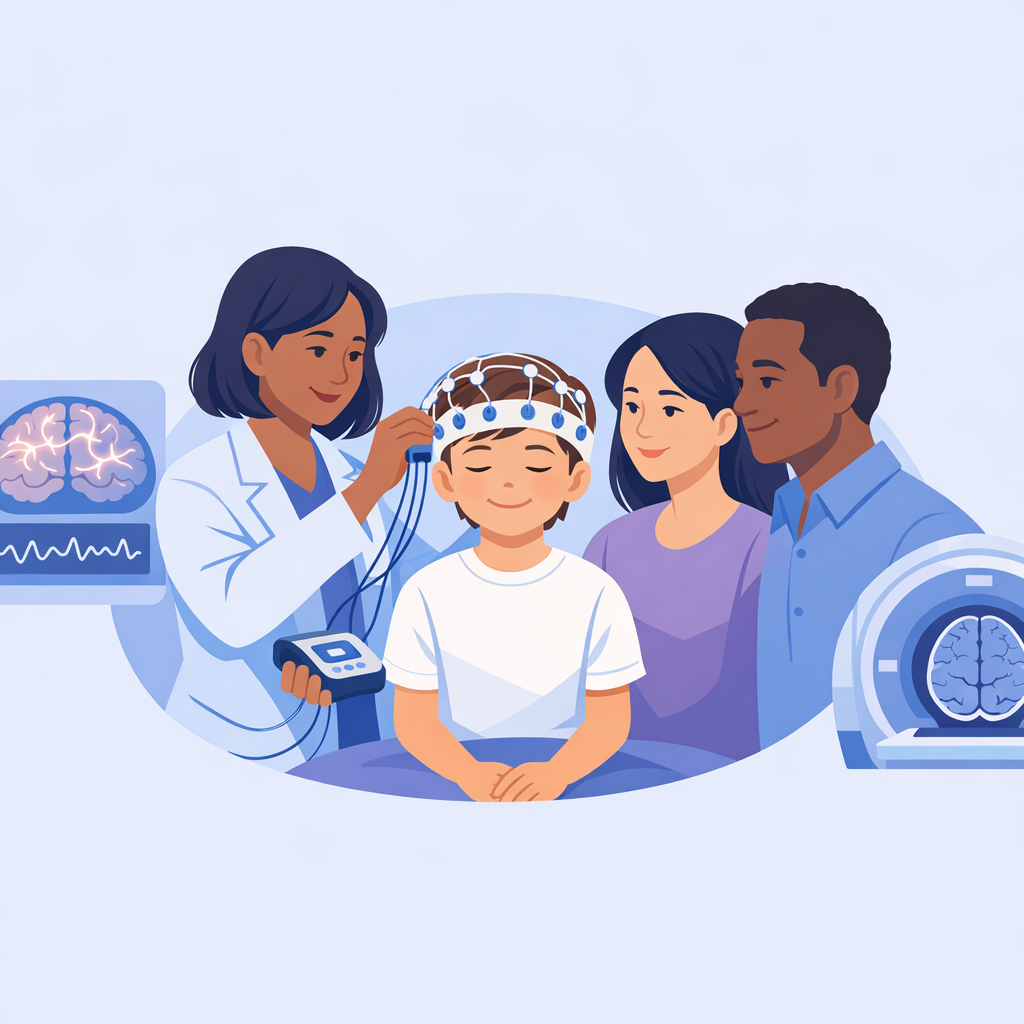
This study looked at seizures triggered by electrical stimulation during stereo-EEG (SEEG) in children being evaluated for epilepsy surgery. SEEG is a test that places thin electrodes in the brain to record seizures and sometimes uses electrical stimulation to map brain function or try to trigger a seizure. The researchers retrospectively reviewed records from 78 children with drug-resistant focal epilepsy.
They examined how often stimulation-induced seizures happened with low-frequency stimulation (1-3 Hz) or high-frequency stimulation (50 Hz). They also looked at whether these seizures were associated with the brain area stimulated, cortical architecture and hierarchy, epilepsy etiology, certain SEEG signal patterns seen between seizures, and how children did after surgery using the Engel outcome scale.
What they found
Stimulation-induced seizures happened in 43.6% of the children. About 21.8% had seizures with low-frequency stimulation, and 32.1% had seizures with high-frequency stimulation.
These seizures were significantly associated with focal cortical dysplasia type II, especially type IIb. Certain SEEG patterns seen between seizures, called brushes and suppression, were associated with stimulation-induced seizures. Low-frequency stimulation-induced seizures were seen more often in the orbitofrontal and insular regions, while high-frequency stimulation-induced seizures clustered more in the cingulate and central regions. The type of stimulation was linked to cortical hierarchy, but not to cytoarchitecture. The study also found a marginal statistical association between having stimulation-induced seizures and a very good surgery outcome (Engel class Ia).
Limits of the evidence
This was a retrospective study, meaning the researchers looked back at existing records rather than planning the study in advance. That kind of study can show associations but cannot prove that stimulation-induced seizures cause better or worse outcomes.
The study included 78 children from a surgical evaluation group, so the results may not apply to all children with epilepsy. The abstract does not give full details about how many children had each brain condition or brain region involved, and some findings were only marginally statistically significant. Because this is the first study to systematically assess stimulation-induced seizures in a pediatric cohort, the results need confirmation in larger future studies.
For families and caregivers
For families, this study suggests that seizures triggered during SEEG may give doctors extra clues about where seizures start, especially in children with focal cortical dysplasia type II and in heteromodal cortical areas. That could help with planning and interpreting epilepsy surgery evaluations.
Still, these findings do not mean that a stimulation-induced seizure guarantees a good surgery result, or that every child will have the same pattern. The results are best understood as one piece of information among many used in surgical decision-making.
What to watch next
Larger, prospective studies could help clarify whether stimulation-induced seizures can reliably serve as biomarkers of epileptogenicity and whether they are associated with surgical outcomes in children.
Terms in this summary
- stereo-EEG (SEEG)
- A test that places thin electrodes in the brain to record seizure activity and sometimes stimulate brain areas.
- stimulation-induced seizure
- A seizure that happens during electrical stimulation of the brain during testing.
- drug-resistant focal epilepsy
- Epilepsy that starts in one area of the brain and does not respond well to medicines.
- focal cortical dysplasia (FCD) type II
- A brain development problem where part of the brain cortex formed abnormally and can cause seizures.
- interictal
- The time between seizures.
- cytoarchitecture
- The microscopic structure and arrangement of brain cells in a brain region.
- Engel class Ia
- A surgery outcome category meaning completely seizure-free after surgery.
- epileptogenicity
- How likely a brain area is to generate seizures.
Free: Seizure First Aid Quick Guide (PDF)
Plus one plain-language weekly digest of new epilepsy research.
Unsubscribe anytime. No medical advice.