Dual Brain Stimulation Helped Child With Dystonia And Seizures
Source: Child's nervous system : ChNS : official journal of the International Society for Pediatric Neurosurgery
Summary
What was studied
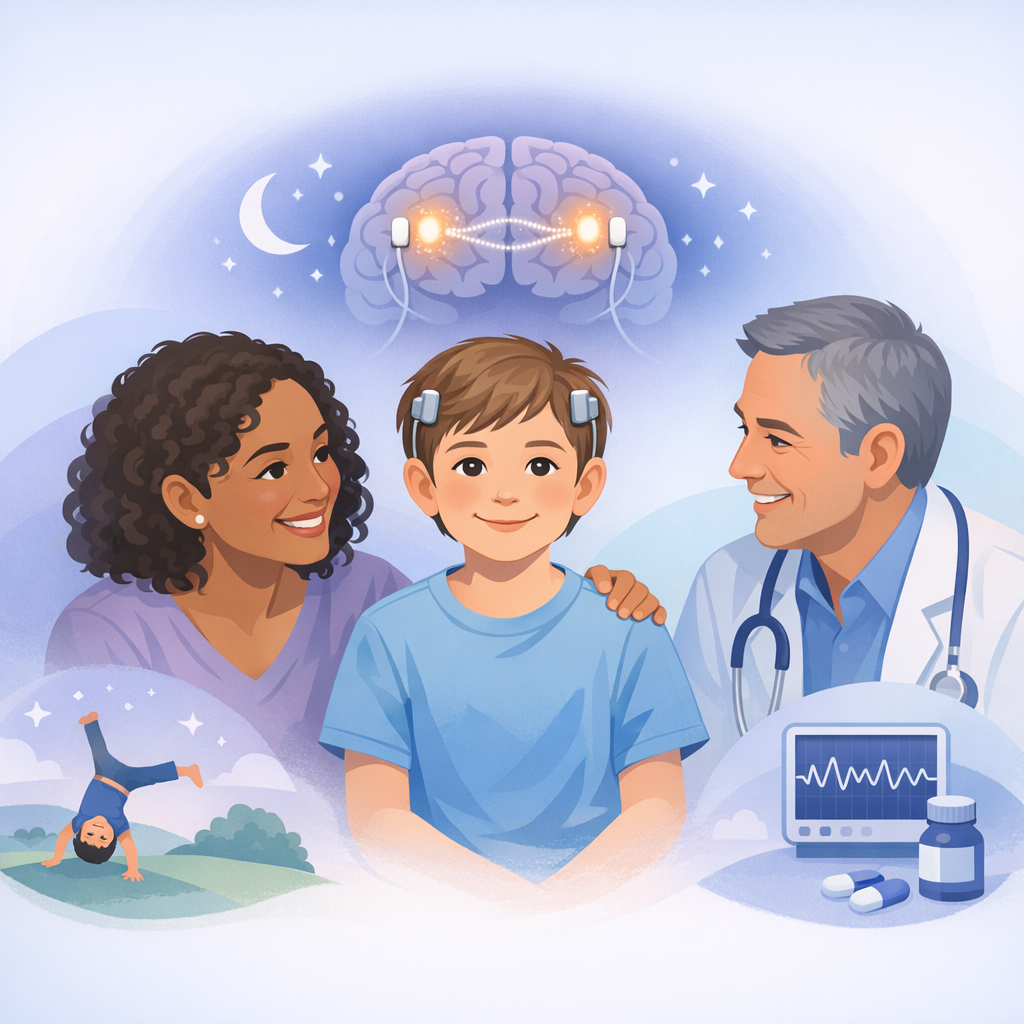
The study looked at an 8-year-old boy with hypoxic-ischemic encephalopathy (HIE) who had both dystonia and drug-resistant generalized epilepsy. The researchers focused on the technical feasibility of using dual brain stimulation, specifically targeting two areas in the brain: the globus pallidus internus (GPi) and the centromedian nucleus (CMN).
The boy underwent surgery where four leads for deep brain stimulation (DBS) were implanted in one session using robotic technology. The study detailed the surgical process, early recovery, and initial programming of the stimulation devices.
What they found
The results indicated that the surgery was successful, with the leads placed accurately in the brain. The GPi leads were activated the day after surgery without causing any side effects. Three weeks later, the boy had healed well and reported improvements in muscle tone in his legs. The CMN system was also successfully activated during the first follow-up visit.
Limits of the evidence
The study cannot establish that this treatment will work for all children with similar conditions, as it is based on a single case. More research is needed to understand the long-term effects and effectiveness of this dual-target approach in a larger group of patients.
For families and caregivers
This study might be important for families with children who have dystonia and epilepsy, as it shows that a new treatment option is possible. It suggests that combining brain stimulation techniques could help manage these conditions safely in children.
What to watch next
Future studies could explore more patients to see how well this treatment works over time.
Free: Seizure First Aid Quick Guide (PDF)
Plus one plain-language weekly digest of new epilepsy research.
Unsubscribe anytime. No medical advice.