New Seizure Medicines May Better Target Brain Receptors
Source: Chemistry & biodiversity
Summary
What was studied
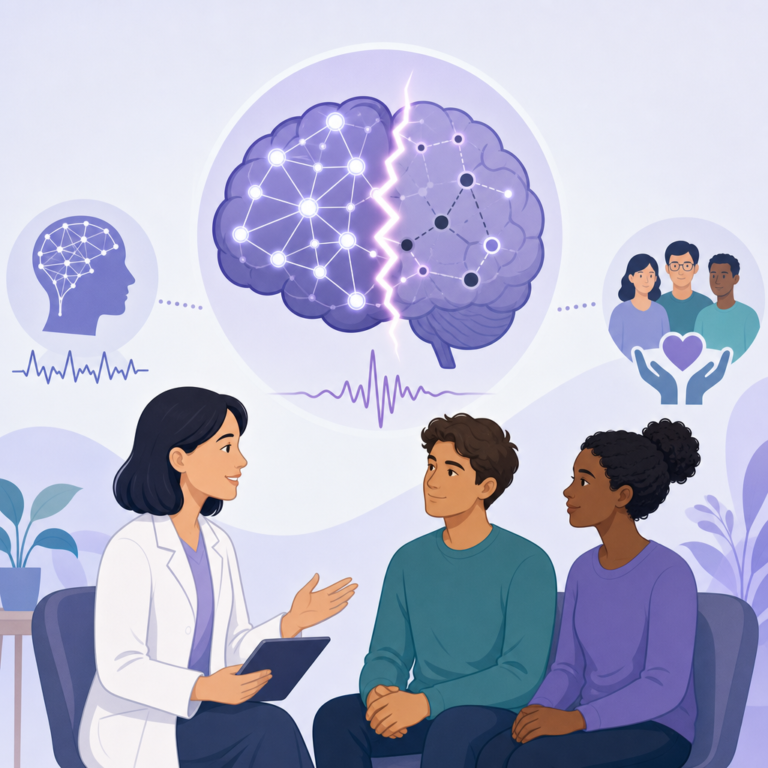
This review focused on new medications for epilepsy that target the GABAA receptor in the brain. It analyzed various studies and research findings from 2018 to 2024, looking at how these new drugs work and their potential benefits.
The review included information on different types of chemical structures that could be used to create these medications, such as benzodiazepines and imidazoles, and how they might be more effective at reducing seizures with fewer side effects.
What they found
The review highlighted that new drugs targeting the GABAA receptor could have improved receptor binding and potentially fewer side effects compared to older medications.
Limits of the evidence
The study cannot confirm that these new drugs are ready for use in patients, as it is a review of existing research rather than new clinical trials. There is also uncertainty about how these findings will translate into actual treatments for patients with epilepsy.
For families and caregivers
This information might be important for families because it suggests that there are new options being developed for treating epilepsy, especially for those who do not respond well to current medications.
What to watch next
Future studies should focus on testing these new drugs in clinical trials to evaluate their effectiveness in real patients.
Free: Seizure First Aid Quick Guide (PDF)
Plus one plain-language weekly digest of new epilepsy research.
Unsubscribe anytime. No medical advice.