Rare ASAH1 Disorder Causes Seizures Weakness And Joint Problems
Source: Journal of child neurology
Summary
What was studied
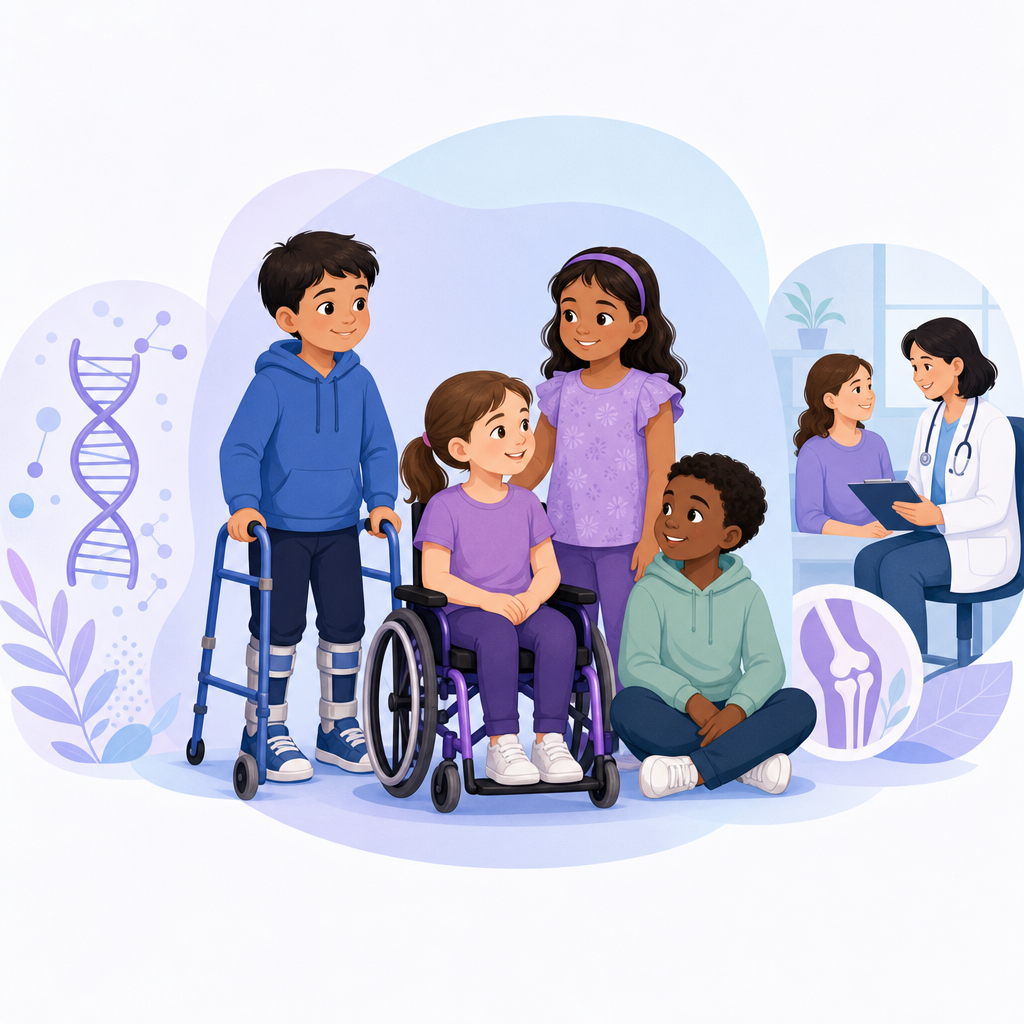
This report described 4 children from 3 families who had a rare inherited condition linked to pathogenic variations in the ASAH1 gene. All 4 had genetically proven Farber lipogranulomatosis with spinal muscular atrophy and progressive myoclonic epilepsy (FL-SMA-PME).
The children were girls ages 3 to 6 years. Doctors described their symptoms, exam findings, nerve testing, eye findings, bone changes, and genetic test results. Some came from consanguineous marriages, and in one family 2 siblings were affected.
What they found
All 4 children had developmental regression and progressive myoclonic epilepsy. Shared features included frontal bossing, central hypotonia, contractures and flexion deformities of the wrists, fingers, and feet, fasciculations, generalized osteopenia, and swelling at multiple joints. Nerve testing showed axonal motor type polyneuropathy in all 4 children. Some also had eye findings: corneal clouding in 3 of 4, nystagmus in 2 of 4, and cherry-red spots in 2 of 4. The authors state that ASAH1-related disorders are multifaceted, with features of a storage disorder, neurodegeneration, and peripheral nervous system involvement.
Limits of the evidence
This was a very small case series of only 4 children, so it cannot show how common these features are in all patients with ASAH1-related disease. There was no comparison group, so the study cannot show which findings are unique to this condition or how the disease changes over time in a typical patient. Because the report focused on a few families, the results may not apply to everyone with the disorder. The abstract also does not give detailed information about treatment or long-term outcomes.
For families and caregivers
For families, this study may help explain why this rare condition can be hard to recognize. Children may have a mix of seizures, loss of skills, low muscle tone, joint problems, and eye findings, which can look like more than one disease. The report notes that misdiagnosis can be common because of the many different presentations, but this study alone does not tell us the best treatment or predict exactly what will happen for an individual child.
What to watch next
Larger studies that follow more children over time could help clarify the range of symptoms, genetic changes, and outcomes in ASAH1-related disease.
Terms in this summary
- autosomal recessive
- A genetic condition that happens when a child inherits one nonworking copy of a gene from each parent.
- ASAH1 gene
- A gene linked to this disorder.
- progressive myoclonic epilepsy
- A condition with myoclonic jerks and epilepsy that can worsen over time.
- developmental regression
- Losing skills a child had already learned, such as movement, speech, or thinking abilities.
- hypotonia
- Low muscle tone, sometimes called being "floppy."
- contractures
- Joints that become stiff and cannot fully straighten or bend because muscles or tissues tighten.
- polyneuropathy
- Damage to many nerves, which can affect movement or feeling.
- corneal clouding
- A hazy appearance of the clear front part of the eye.
Free: Seizure First Aid Quick Guide (PDF)
Plus one plain-language weekly digest of new epilepsy research.
Unsubscribe anytime. No medical advice.