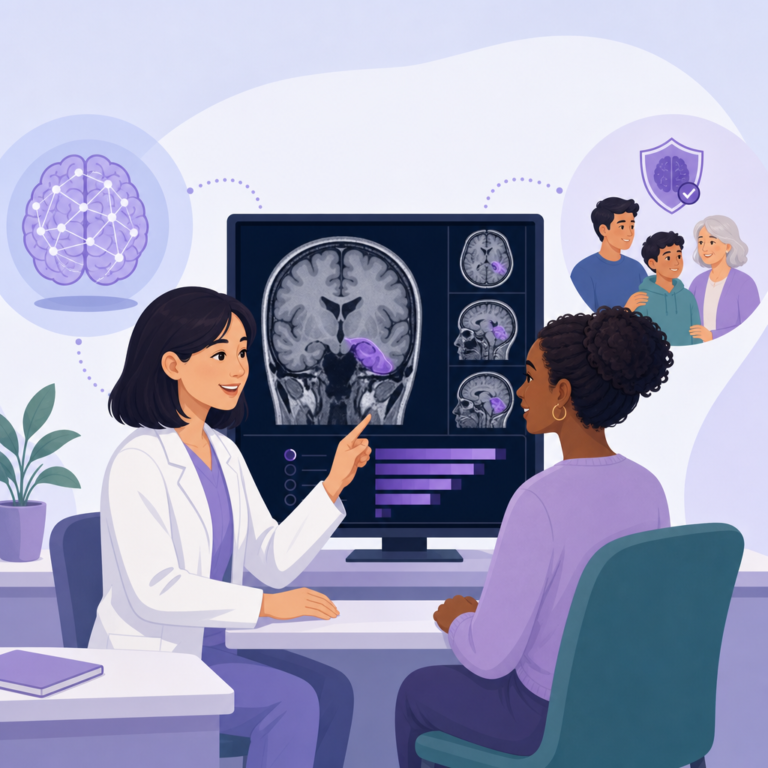
EIMFS Genetic Testing and Treatment: What the Review Found
⚠️ Infant dosing/safety: medication and diet decisions for infants require individualized medical guidance.
This explainer reviews what research has reported about EIMFS genetic testing and related clinical, diagnostic, and treatment evidence.
Source: ScienceDirect
Summary
What was studied
This scoping review mapped published research on epilepsy of infancy with migrating focal seizures (EIMFS), a rare and severe epilepsy syndrome beginning in infancy. It examined clinical features, EEG findings, brain imaging, genetics, and treatments, while identifying gaps and future research priorities.
Researchers searched five medical and clinical-trial databases. They screened 643 articles and included 89, but the abstract does not report the total number of patients represented.
What they found
Genetic testing had a diagnostic yield of about 70% to 80%. KCNT1 variants accounted for about 30% to 50% of cases in which a genetic cause was found, while more than 30 genes have been implicated in EIMFS overall.
Seizures were generally difficult to control. Potassium bromide, the ketogenic diet, cannabidiol, and quinidine in people with confirmed KCNT1 variants showed partial efficacy in published reports. Emerging approaches include sodium channel blockers for SCN2A gain-of-function variants and experimental treatments targeting KCNT1.
Published imaging studies described progressive cerebral atrophy and abnormal myelination. Abnormal connections between the systemic and pulmonary circulation were reported in multiple cases and caused severe heart and lung complications, but there is no agreed screening protocol.
Limits of the evidence
This was a scoping review intended to map available evidence rather than determine whether a treatment works. The abstract does not provide participant totals, study-quality assessments, treatment response rates, or follow-up durations.
The clinical importance of some atypical EEG findings remains unclear. Gene-specific EEG biomarkers are largely lacking, apart from one small KCNT1 study. Imaging studies did not include quantitative brain-volume measurements or diffusion tractography markers and could not attribute the reported changes to seizure burden, medication effects, or the underlying cause. Outcomes by specific gene were also poorly characterized.
For families and caregivers
The review indicates that genetic testing can identify a likely cause in many children with EIMFS and may help guide targeted treatment choices. However, seizures are often difficult to control, and the reported treatments generally showed only partial efficacy. Serious heart and lung circulation complications have been reported, but the review found no consensus about how affected children should be screened.
What to watch next
Priorities include international collaborative registries, standardized outcome measures, studies organized by genetic cause, better EEG and imaging biomarkers, careful evaluation of targeted treatments, and faster point-of-care genomic testing.
Terms in this summary
- EIMFS
- Epilepsy of infancy with migrating focal seizures, a severe epilepsy syndrome involving focal seizures that migrate across both sides of the brain.
- developmental and epileptic encephalopathy
- A severe condition in which epilepsy is associated with significant developmental impairment.
- EEG
- A test that records the brain's electrical activity through sensors placed on the scalp.
- gain-of-function variant
- A genetic change that increases the activity of a gene or its protein.
- genetic diagnostic yield
- The percentage of tested people in whom testing identifies a likely genetic explanation.
- precision therapy
- Treatment selected to address a specific biological or genetic cause.
- ketogenic diet
- A medically supervised diet high in fat and low in carbohydrates that may help reduce seizures.
- antisense oligonucleotide
- An experimental genetic medicine designed to alter how a specific gene's instructions are used.
PubMed abstract used to verify this summary
Free: Seizure First Aid Quick Guide (PDF)
Plus one plain-language weekly digest of new epilepsy research.
Unsubscribe anytime. No medical advice.