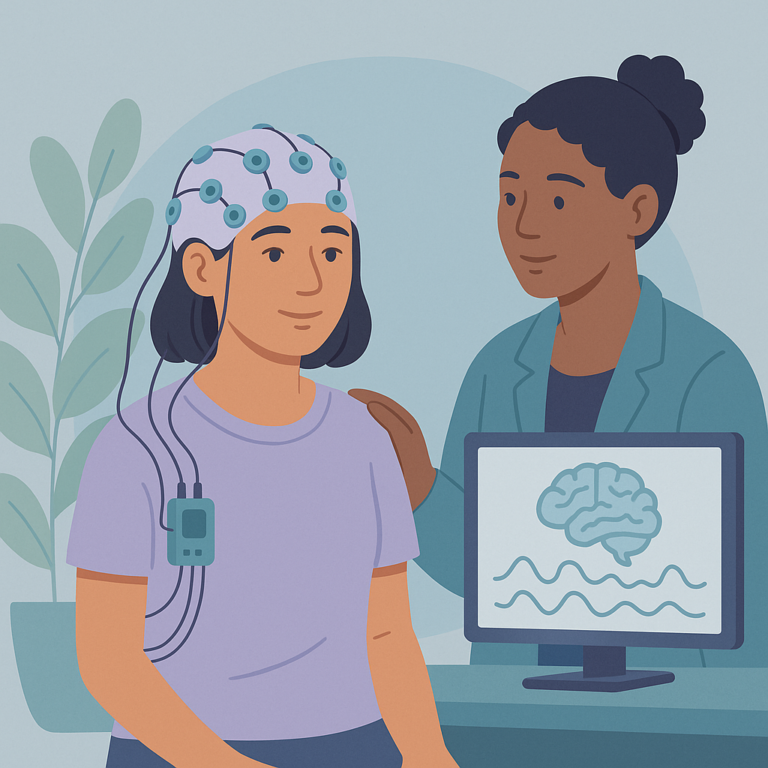
New Device Safely Records Brain Activity for Epilepsy Care
Researchers studied a new device called the EP-01, which is designed to record brain activity from inside blood vessels in patients with drug-resistant epilepsy.
This hub covers epilepsy devices and neuromodulation like VNS, RNS, and DBS, which are treatments that can reduce seizures when meds aren’t enough. Plain-language research summaries plus real-life pros/cons.
Some are used more often in adults, but pediatric use depends on the device, the case, and specialist guidance.
Often gradually. Improvement can build over months as settings are optimized.
Sometimes medication can be reduced, but many people still use meds alongside a device.
Sometimes yes, with device-specific rules. Always check the exact device guidelines first.
Researchers studied a new device called the EP-01, which is designed to record brain activity from inside blood vessels in patients with drug-resistant epilepsy.
Researchers studied different non-invasive neurostimulation treatments for people with drug-resistant epilepsy, which is a type of epilepsy that does not respond well to medications.
Researchers studied brain activity patterns in children with a specific type of epilepsy called self-limited epilepsy with centrotemporal spikes (SeLECTS).
This study looked at the use of vagus nerve stimulation (VNS) to treat children with drug-resistant epilepsy, meaning their seizures did not respond to standard medications.
This study looked at patients with focal drug-resistant epilepsy who could not have surgery to remove their seizure-causing brain tissue.
Researchers studied the use of whole genome sequencing (WGS) for screening newborns for rare diseases.
Researchers studied how antiseizure medications (ASMs) affect the autonomic nervous system (ANS) in children with epilepsy.
This study looked at how well different people agree on measuring seizure frequency in children with epilepsy who are treated with vagus nerve stimulation (VNS).
The STIRUS study looked at how effective stiripentol, a medication approved for Dravet syndrome (DS), is for patients in the United States.