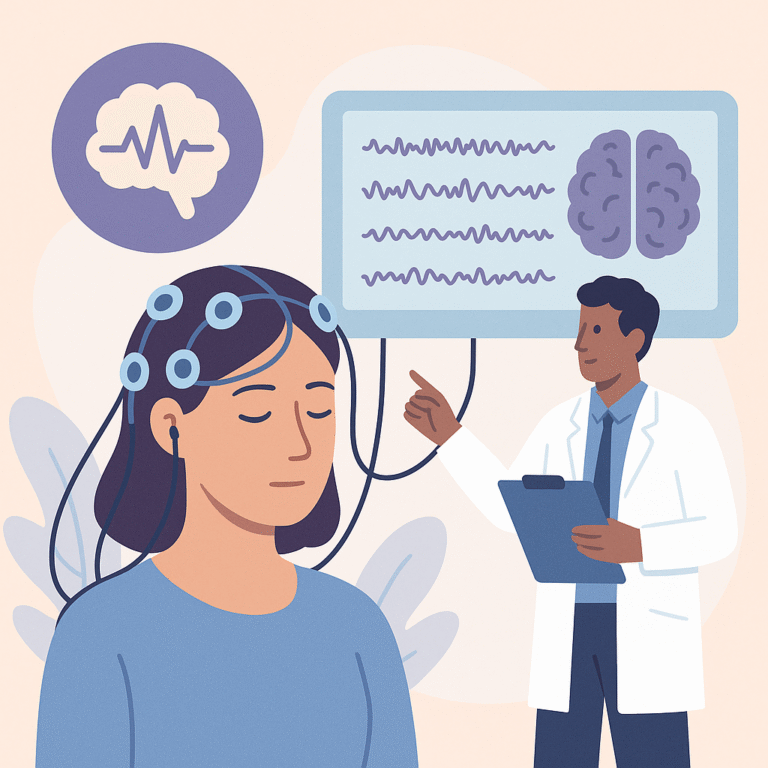
Understanding EEGs: Key Insights for Better Epilepsy Care
Learn how understanding EEGs can lead to better epilepsy care for your child, ensuring accurate diagnoses and effective treatments.

This hub covers epilepsy genetics: how gene changes can contribute to seizures (often in children). We translate studies on testing, results like VUS, and what findings may change for care.
No. It’s common in pediatrics, but adults can benefit from genetic testing, too, especially with unclear diagnosis or family history.
Sometimes. For certain conditions, results can guide medication choice, diet therapies, or referral decisions.
It usually means “not enough evidence yet.” It shouldn’t be treated as a definite cause, but it can be reclassified over time.
Not necessarily. Testing can miss some variants, and new gene links are still being discovered.
Learn how understanding EEGs can lead to better epilepsy care for your child, ensuring accurate diagnoses and effective treatments.
Learn why folate is crucial for pregnant women with epilepsy and how it supports healthy fetal development. Consult your healthcare provider.
A new study reveals the financial and social struggles of adults with epilepsy, highlighting the need for better support and resources.
Discover how cognitive ability affects children with Juvenile Myoclonic Epilepsy and learn ways to support their development and education.
Discover how genetic testing can improve epilepsy diagnosis and treatment for children, offering hope for better care and outcomes.
Discover how a new mouse model aids research on KCNT1-related epilepsy, paving the way for better treatments for affected children.
Discover how new light techniques may improve seizure control in epilepsy, offering hope for better treatments for families affected by this condition.