Genetics May Affect Development In Children Of Mothers With Epilepsy
Source: Oxford Academic (Brain)
Summary
What was studied
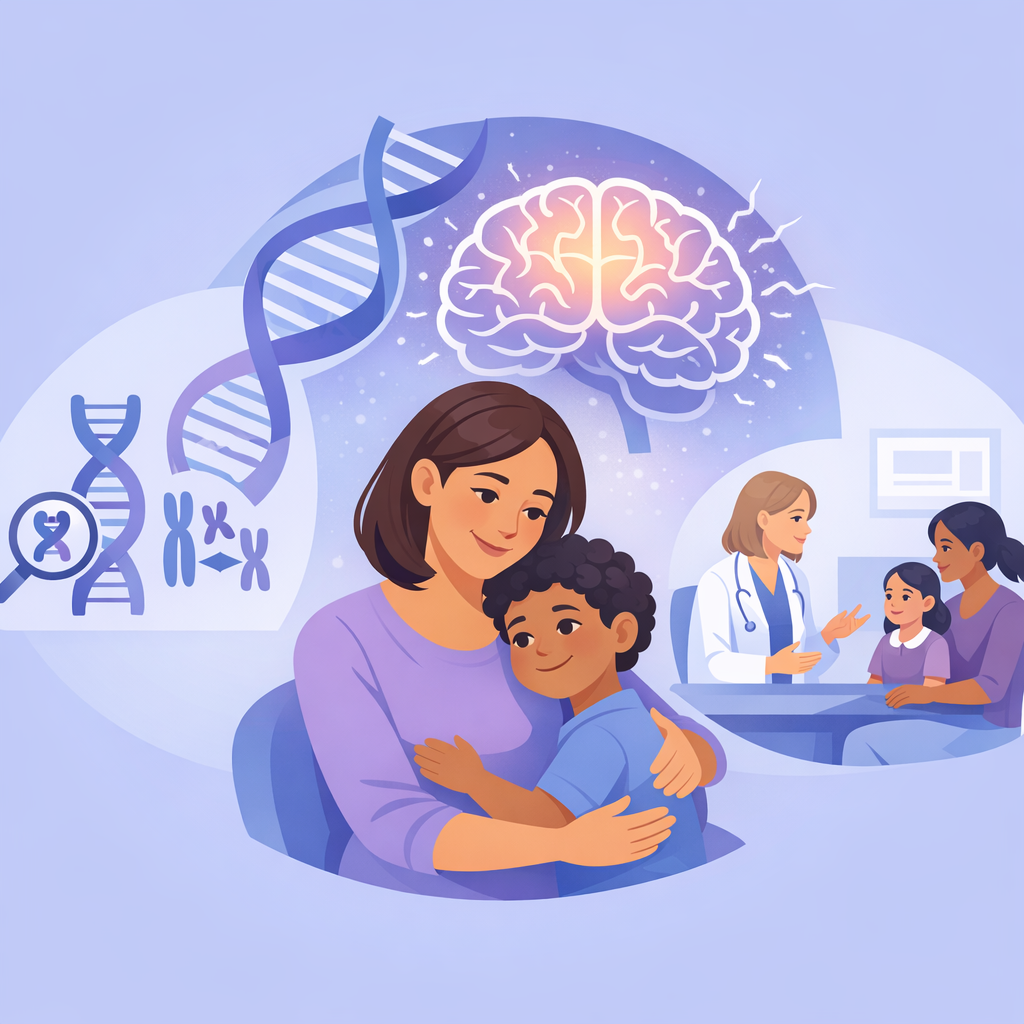
Researchers used data from a large Norwegian pregnancy and child study to examine whether children born to women with epilepsy may carry higher common genetic susceptibility for ADHD or autism spectrum disorder than other children. They studied 422 children born to women with epilepsy and 73,300 children whose mothers did not have epilepsy.
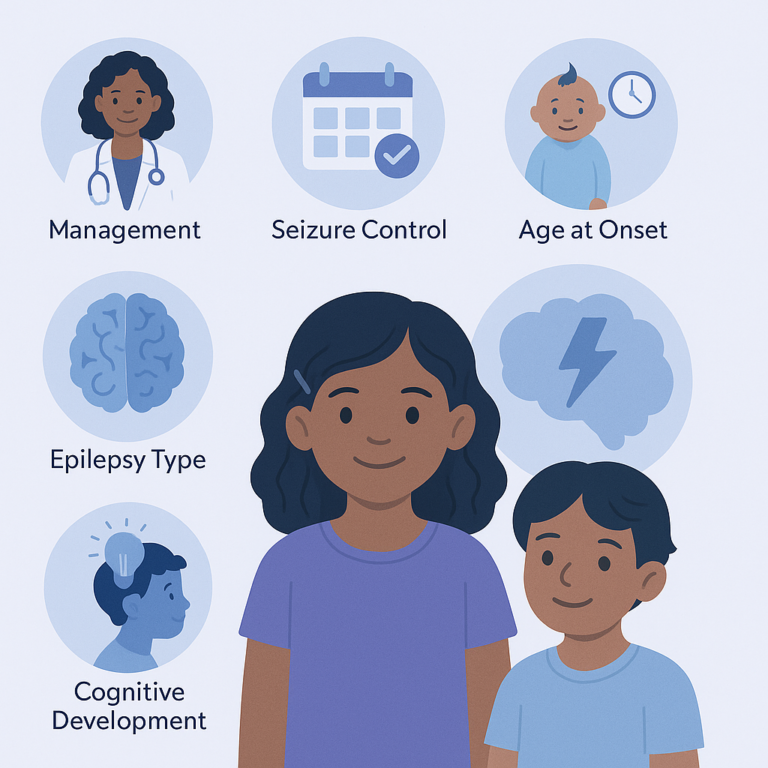
They calculated polygenic risk scores, which estimate inherited susceptibility to a condition based on many small genetic differences. They also examined parent-reported child neurodevelopmental traits over time, including hyperactivity, inattention, social difficulties, language difficulties, repetitive behaviour, and motor difficulties, measured from about 6 months to 8 years of age.
What they found
Children born to women with epilepsy had a slightly higher polygenic risk score for ADHD than children in the comparison group, but this difference did not reach statistical significance. Their polygenic risk score for autism spectrum disorder was not higher.
In children born to women with epilepsy, ADHD polygenic risk scores showed stronger associations with hyperactivity and inattention, especially at age 8. ASD polygenic risk scores showed stronger associations with motor development and language difficulties, particularly at age 5. The authors conclude that genetic predisposition should be considered when assessing neurodevelopmental risk in this group, although some results did not reach statistical significance, likely because the epilepsy group was small.
Limits of the evidence
This study cannot prove that genetic susceptibility causes ADHD, autism, or developmental problems. It mainly shows associations.
The number of children born to women with epilepsy was relatively small, which makes results less certain and may explain why some findings did not reach statistical significance. Child traits were based on parent questionnaires rather than formal clinical diagnoses. Although the abstract discusses genetic susceptibility independent of in utero antiseizure medication exposure as an open question, it does not provide detailed results on specific medication exposures or other pregnancy-related factors.
For families and caregivers
This study suggests that inherited genetic factors may be relevant when thinking about neurodevelopmental differences in some children of women with epilepsy, alongside other possible influences.
It does not mean a child will develop ADHD or autism, and it does not show that genetics is the only explanation. For families, the main takeaway is that both inherited susceptibility and other factors may matter, and developmental monitoring may still be important.
What to watch next
Larger studies in children born to women with epilepsy, with detailed antiseizure medication exposure data and confirmed clinical outcomes, would help clarify these associations.
Terms in this summary
- polygenic risk score
- A number that estimates inherited susceptibility to a condition using many small genetic differences across the genome.
- ADHD
- Attention-deficit/hyperactivity disorder, a condition that can affect attention, activity level, and impulse control.
- ASD
- Autism spectrum disorder, a developmental condition that affects social communication and behavior.
- statistically significant
- A result that is unlikely to be due to chance alone, based on the study's calculations.
- association
- A link between two things seen in a study; it does not prove that one caused the other.
Free: Seizure First Aid Quick Guide (PDF)
Plus one plain-language weekly digest of new epilepsy research.
Unsubscribe anytime. No medical advice.