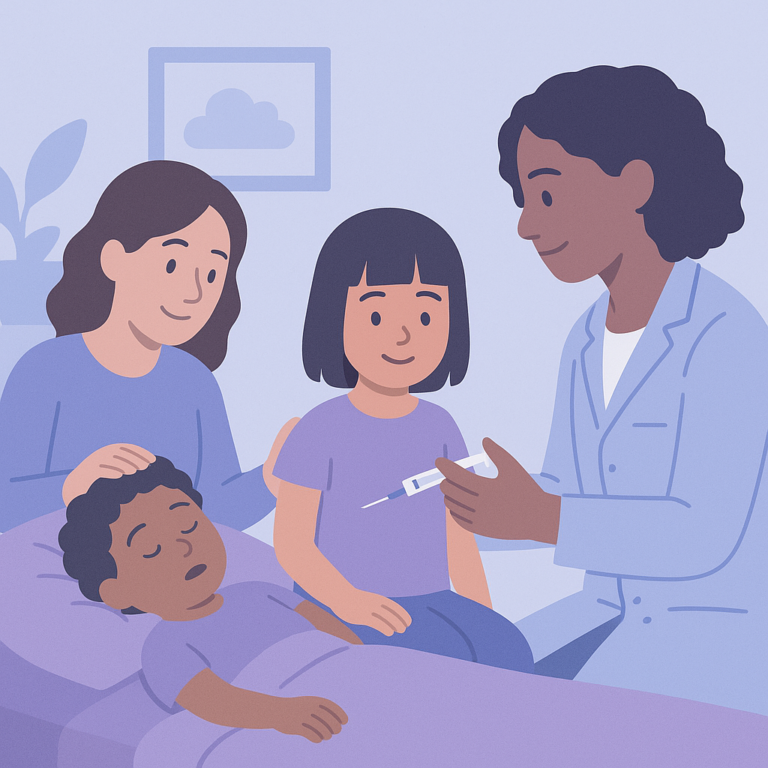
Education Programs Help Families Manage Childhood Epilepsy
Source: Epilepsy & behavior : E&B
Summary
What was studied
This paper combined results from 10 randomized controlled trials that tested educational programs for children with epilepsy and/or their parents or caregivers. The researchers searched eight databases through January 20, 2026, and included studies that looked at whether these programs affected epilepsy management, quality of life, and related outcomes.
The programs were aimed at teaching families about epilepsy. The review looked at outcomes such as seizure frequency, parents' quality of life, anxiety, self-efficacy, knowledge about epilepsy, and epilepsy management.
What they found
Across the 10 trials, educational programs significantly improved knowledge about epilepsy, epilepsy management, and parental quality of life.
The programs showed possible benefits in reducing seizure frequency, decreasing parental anxiety, and increasing self-efficacy, but these results were not statistically significant in this analysis. In simple terms, the direction of the results looked encouraging, but the evidence was not strong enough to be certain about these effects.
Limits of the evidence
A systematic review and meta-analysis can only be as strong as the studies it includes, and this review included 10 trials. Some results showed substantial variation between studies, which makes the findings less certain for outcomes like parental anxiety, self-efficacy, knowledge, and quality of life. The abstract does not give details about the children's ages, seizure types, program content, or how long benefits lasted.
The seizure result did not reach statistical significance, so this study cannot show with confidence that educational programs reduce seizures. It also cannot show which specific type of educational program works best.
For families and caregivers
For families, this review suggests that education-based programs may be a helpful complementary part of epilepsy care. They may help parents become more informed, support epilepsy management, and improve parents' quality of life.
This does not mean education programs replace medicines or other treatment. It means that structured teaching may be a useful part of care for some families.
What to watch next
Future studies could help by using larger trials, clearly describing the educational program, including longer follow-up, and examining whether results differ by child age or epilepsy type.
Terms in this summary
- systematic review
- A study that collects and carefully reviews all relevant research on a question.
- meta-analysis
- A method that combines results from several studies to estimate an overall effect.
- randomized controlled trial
- A study where people are randomly assigned to different groups to compare treatments or programs.
- self-management
- Skills and actions families use to help manage a health condition day to day.
- quality of life
- A person's overall well-being, including daily functioning and emotional health.
- self-efficacy
- A person's confidence in their ability to handle tasks or challenges.
- statistically significant
- A result that is unlikely to be due to chance alone, based on the study's analysis.
- heterogeneity
- Differences between studies in their results, methods, or participants.
Free: Seizure First Aid Quick Guide (PDF)
Plus one plain-language weekly digest of new epilepsy research.
Unsubscribe anytime. No medical advice.