Home Videos May Help Diagnose Seizures After Unclear EEG
Source: Epilepsia
Summary
What was studied
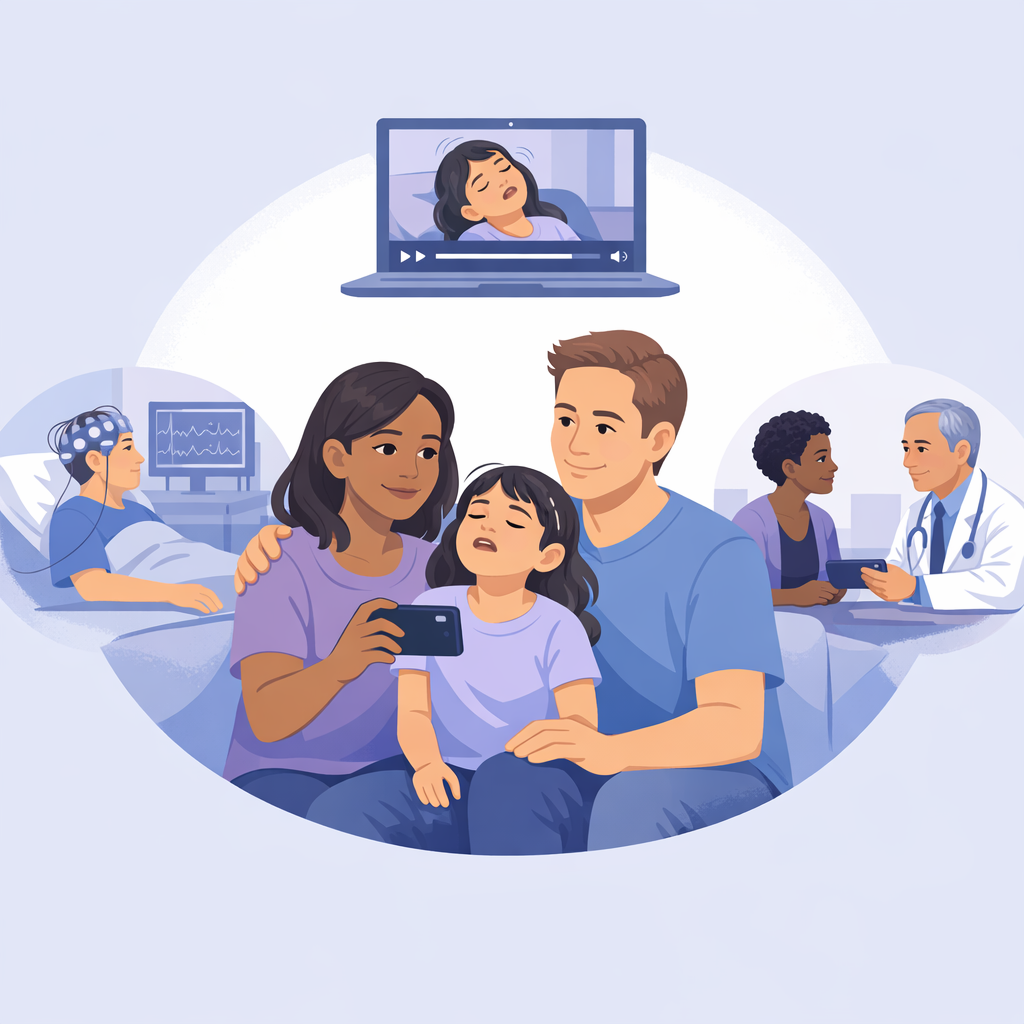
This study looked at whether home or "stand-alone" videos could help after an inpatient EEG-video monitoring stay did not capture the event doctors were trying to diagnose. The researchers prospectively identified patients over 26 months at an epilepsy monitoring unit (EMU).
Out of 619 EMU admissions, 165 (27%) were inconclusive. These patients were instructed to submit videos of their usual events if they happened after discharge. Twenty-seven patients (16% of those with inconclusive admissions) sent in a video. Two epileptologists reviewed each video independently, and a third reviewer helped decide if the first two did not agree.
What they found
Among the 27 patients who submitted a video, doctors reached a definitive conclusion in 23 patients (85%). In 20 patients (74%), the video either established, confirmed, or revealed an additional diagnosis. Agreement between reviewers was substantial overall, and it was perfect for nonepileptic and physiologic events. The authors concluded that stand-alone videos have the potential to be a valuable adjunct after an inconclusive inpatient EEG-video study.
Limits of the evidence
This was a small study, because only 27 patients submitted videos. Most patients with an inconclusive EMU stay did not send in a video, so the results may not apply to everyone. The study suggests that videos may help with diagnosis, but it does not show they are better than repeating EEG monitoring or empirically adjusting treatment. The abstract also does not say much about the patients' ages, seizure types, or whether the results changed long-term outcomes.
For families and caregivers
For families, this suggests that a clear video of a typical event may sometimes help specialists figure out what is happening when a hospital EEG-video stay does not catch the event. It may be a helpful addition in some cases. Still, this is preliminary evidence from a small group, so videos should be seen as a helpful addition, not a replacement for medical evaluation.
What to watch next
Stronger evidence would come from larger studies that include more patients and show whether video use is associated with changes in treatment decisions, repeat testing, health care use, and outcomes.
Terms in this summary
- EEG
- A test that records the brain's electrical activity.
- EEG-video monitoring
- Hospital testing that records both brain waves and video at the same time to study events such as seizures.
- EMU
- Epilepsy monitoring unit, a hospital unit where longer EEG-video monitoring is done.
- epileptologist
- A doctor with special training in epilepsy and seizure disorders.
- nonepileptic events
- Episodes that may look like seizures but are not caused by abnormal electrical activity in the brain.
- physiologic events
- Body events or symptoms caused by non-epilepsy medical processes.
- interrater reliability
- How consistently different reviewers agree when judging the same information.
Free: Seizure First Aid Quick Guide (PDF)
Plus one plain-language weekly digest of new epilepsy research.
Unsubscribe anytime. No medical advice.