Head CT Use Varied By Age, Not Race
Source: Pediatric neurology
Summary
What was studied
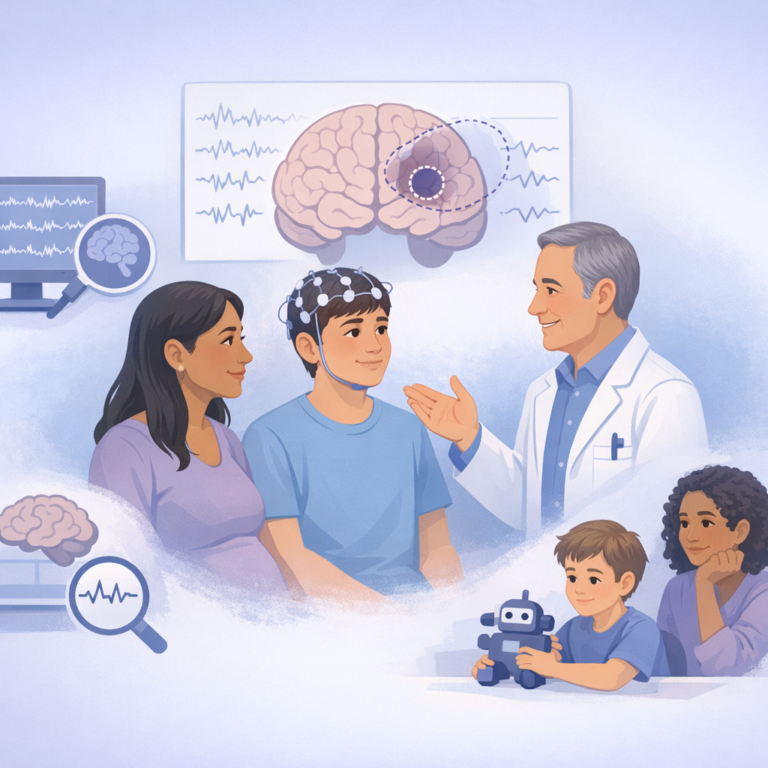
Researchers looked at emergency department visits in the United States from 2016 to 2022 for children 18 years and younger whose first three listed reason-for-visit or diagnosis codes indicated epilepsy or unspecified convulsions.
They used a national survey of hospital visits and examined how often a head CT scan was done, and whether this was associated with age, sex, insurance, race, or ethnicity. The final sample included 479 visits in the dataset, representing an estimated 3.9 million visits nationwide after weighting.
What they found
Head CT scans were done in 23.6% of these emergency visits. Adolescents had CT scans more often than younger children. In the adjusted analysis, adolescents had about 3.3 times the odds of getting a CT scan compared with preschool- and school-aged children. The study did not find a statistically significant association between race or ethnicity and CT use, but these estimates should be interpreted cautiously because they did not meet statistical reliability standards.
Limits of the evidence
This was a retrospective cross-sectional study, so it can only show patterns in past visits and cannot explain why a CT was or was not ordered. The data came from visit codes, which may not perfectly identify all children included in the analysis. The sample for some race and ethnicity groups was limited, and the authors said those estimates did not meet federal standards for statistical reliability. Because of that, the finding of no racial or ethnic difference should be interpreted cautiously.
For families and caregivers
For families, this study suggests that head CT scans were used in about 1 in 4 emergency visits for children with seizure-related codes in this sample. It also suggests that adolescents may be more likely to get a CT scan than younger children. The race and ethnicity results are uncertain, so this study does not rule out disparities.
What to watch next
Larger studies could better examine different racial and ethnic groups and help clarify the clinical factors linked to CT use.
Terms in this summary
- computed tomography (CT)
- A scan that uses X-rays to make detailed pictures of the inside of the body, including the brain.
- unprovoked seizure
- A seizure term used by the authors for the emergency visits they studied.
- emergency department (ED)
- The part of a hospital that treats urgent medical problems.
- retrospective cross-sectional study
- A study that looks back at existing records from a defined time period rather than following people over time.
- odds ratio
- A number that compares how likely one group is to have an outcome compared with another group.
- confidence interval
- A range that shows how uncertain an estimate is; a wider range means more uncertainty.
Free: Seizure First Aid Quick Guide (PDF)
Plus one plain-language weekly digest of new epilepsy research.
Unsubscribe anytime. No medical advice.