Rural Patients With Epilepsy Had Worse Hospital Outcomes
Source: Neurology
Summary
What was studied
This study looked at whether living in a rural area was associated with different hospital outcomes for people admitted with a primary diagnosis of epilepsy and recurrent seizures in the United States. The researchers used a large national hospital database called the National Inpatient Sample and included 841,445 hospital admissions from 2016 to 2021.
They compared patients from the most rural counties with patients from the most urban counties. They examined whether rural patients were more likely to die in the hospital, present in status epilepticus, have a prolonged hospital stay, have a nonroutine discharge, or receive an EEG. The analysis adjusted for demographic, socioeconomic, hospital-related factors, and other health conditions.
What they found
After accounting for other measured factors, patients from the most rural counties had different outcomes than patients from the most urban counties in several ways. They had about 1.9 times the odds of dying in the hospital, 1.3 times the odds of presenting in status epilepticus, and 1.3 times the odds of a prolonged hospital stay. They also had slightly lower odds of receiving an EEG.
The study also found lower odds of nonroutine discharge among the most rural patients. The abstract does not explain why this happened, so it should be interpreted carefully.
In a subanalysis limited to patients with private insurance, the associations between rurality and mortality, presenting in status epilepticus, and prolonged length of stay were no longer observed. The authors suggest this pattern may indicate that modifiable structural barriers contribute to rural-urban disparities, rather than geography alone.
Limits of the evidence
This was an observational study using hospital billing and administrative data, so it cannot prove that rural living directly caused the different outcomes. There may have been other important differences between groups that were not fully measured, even after adjustment.
The database includes hospital admissions, not detailed patient histories, so it has limited clinical detail. The results also apply to people hospitalized with epilepsy and recurrent seizures, not to everyone living with epilepsy.
For families and caregivers
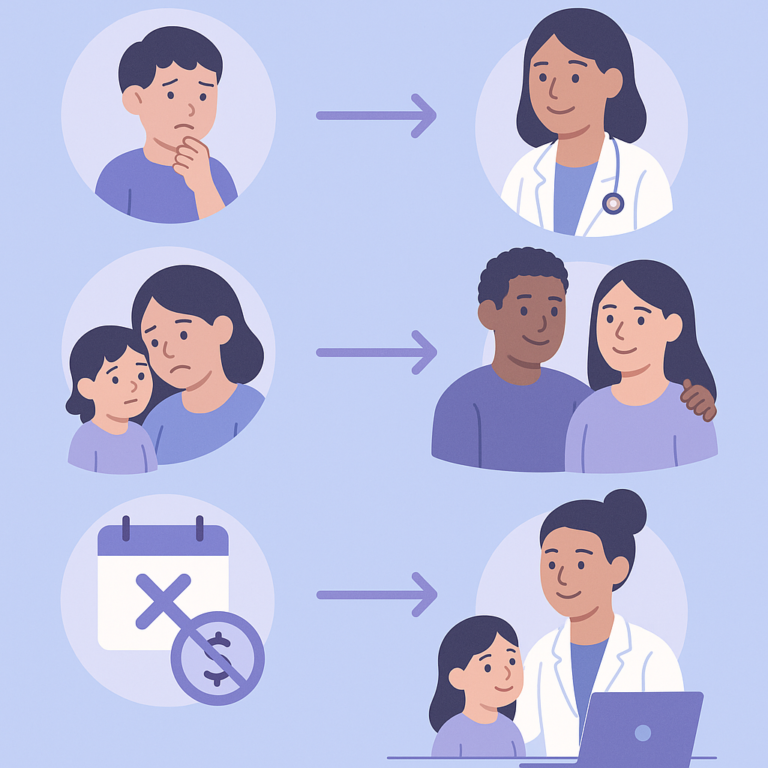
For families, this study suggests that where a person lives may be associated with differences in hospital care and outcomes during a hospital stay for epilepsy. It adds to concerns that people in rural areas may face barriers related to specialty care and testing.
At the same time, this study does not show exactly which barriers matter most or how to address them. It may still help families and clinicians think about access to neurology care, emergency plans, and whether specialty epilepsy services are available when needed.
What to watch next
Useful next studies would include more clinical detail and information on outpatient care, treatment delays, and structural barriers that may help explain rural-urban differences.
Terms in this summary
- status epilepticus
- A seizure that lasts too long or repeated seizures without recovery in between; it is a medical emergency.
- EEG
- A test that records the brain's electrical activity and can help doctors evaluate seizures.
- in-hospital mortality
- Death during the hospital stay.
- prolonged length of stay
- A longer-than-expected hospital stay.
- nonroutine discharge
- Leaving the hospital somewhere other than home, such as a rehab center, nursing facility, or another care setting.
- observational study
- A study that looks for patterns in existing data without assigning treatments, so it can show links but not prove cause and effect.
- odds ratio
- A way to compare how likely an outcome is in one group versus another; above 1 means higher odds, below 1 means lower odds.
Free: Seizure First Aid Quick Guide (PDF)
Plus one plain-language weekly digest of new epilepsy research.
Unsubscribe anytime. No medical advice.