EEG Changes In Autism May Be Linked To Sleep
Source: Frontiers in neurology
Summary
What was studied
This study analyzed medical records from 180 children with autism spectrum disorder (ASD) who were hospitalized at a pediatric neurology center in Katowice, Poland. The researchers compared children based on whether they had epilepsy and based on their EEG results.
EEG findings were grouped into three broad types: normal, non-paroxysmal changes, and paroxysmal changes. The researchers then examined whether these EEG patterns were associated with clinical features such as developmental milestones, level of intellectual disability, sleep disturbances, hyperactivity, sensory integration disorders, aggressive behaviors, and motor deficits.
What they found
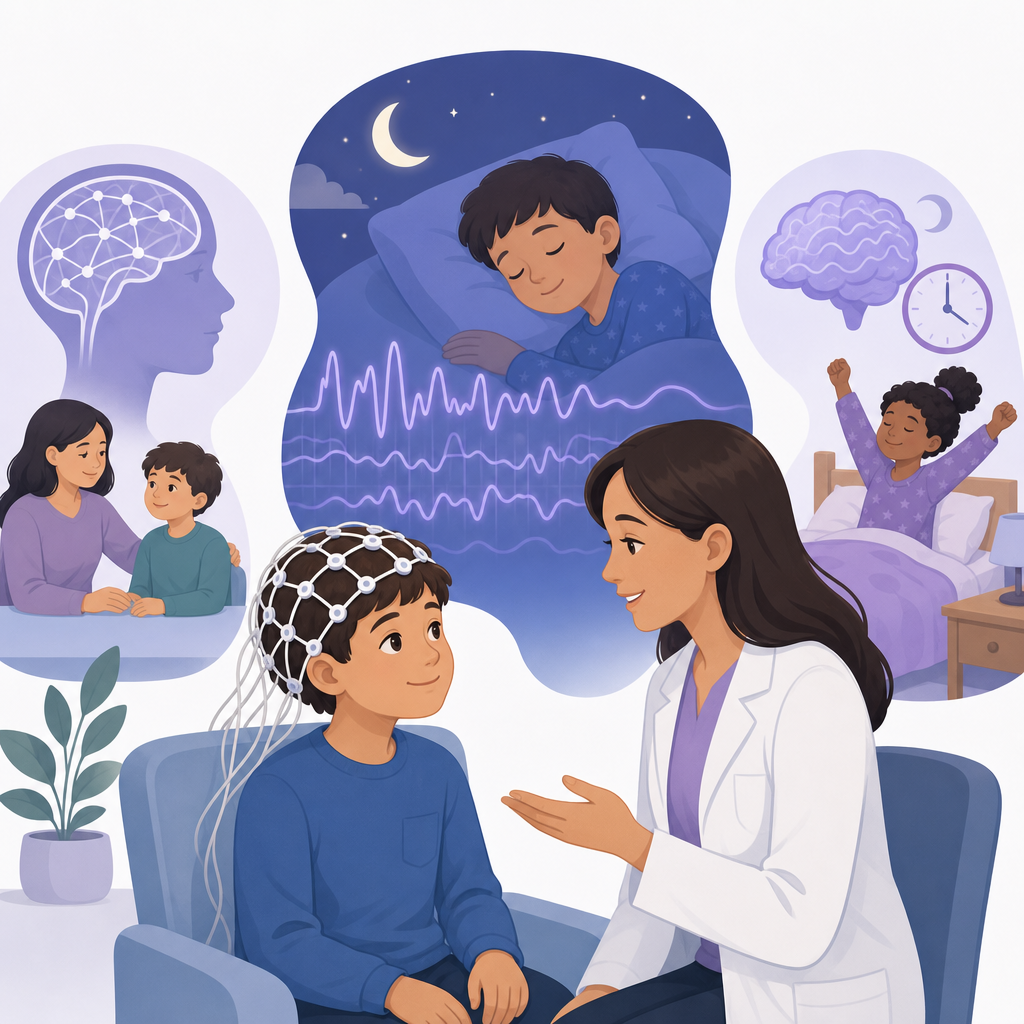
Sleep disturbances were associated with the type of EEG pattern. Sleep disorders were reported most often in children with non-paroxysmal EEG changes (20%), compared with children with paroxysmal changes (5.9%) or normal EEGs (7%).
Children who had both ASD and epilepsy had higher rates of intellectual disability and more severe intellectual disability than children with ASD without epilepsy. Paroxysmal EEG abnormalities were also more common in the epilepsy group.
After taking age into account, the study did not find significant associations between epilepsy or EEG abnormalities and speech delay, aggression, sensory integration disorders, or motor deficits.
Limits of the evidence
This was a single-center study based on chart review, so it can only show associations and cannot show that EEG changes cause sleep problems or other symptoms. The children were all hospitalized at a neurology department, which may mean they are not fully representative of the broader ASD population.
The EEG results were sorted into broad categories, which may have missed more subtle patterns. The abstract does not give details about how sleep disturbances or behavior features were measured, and it does not say whether all children had the same type or timing of EEG testing.
For families and caregivers
For families, this study suggests that in children with ASD, epilepsy was associated with greater intellectual disability, and some EEG changes were associated with sleep problems. It does not mean that every child with ASD needs an EEG, or that an abnormal EEG predicts behavior or development problems.
The main takeaway is that when a child with ASD also has seizures, sleep concerns, or developmental concerns, a careful neurological evaluation may be helpful. The study also suggests that broad EEG pattern categories may not explain many day-to-day ASD features.
What to watch next
Useful next steps would include larger studies in multiple centers that use more detailed EEG analysis and standard ways to measure sleep, development, and behavior.
Terms in this summary
- EEG
- A test that records the brain's electrical activity using sensors placed on the scalp.
- autism spectrum disorder (ASD)
- A developmental condition that affects communication, behavior, and how a person experiences the world.
- epilepsy
- A brain condition characterized by recurrent unprovoked seizures.
- paroxysmal changes
- Sudden EEG patterns that may reflect bursts of abnormal brain activity and were more common in children with epilepsy in this study.
- non-paroxysmal changes
- EEG changes that are abnormal but are not the sudden burst-type patterns usually called paroxysmal.
- intellectual disability
- A condition involving limits in learning, reasoning, and everyday adaptive skills.
Free: Seizure First Aid Quick Guide (PDF)
Plus one plain-language weekly digest of new epilepsy research.
Unsubscribe anytime. No medical advice.