Depression Interventions Epilepsy: What This Review Found
This explainer summarizes research on depression interventions epilepsy.
Source: Frontiers in medicine
Summary
What was studied
This systematic review examined psychological and behavioral interventions for depressive symptoms in people with epilepsy. It included 22 randomized controlled trials or controlled clinical studies published between January 2005 and May 2026; 11 studies provided continuous depression-severity data for meta-analysis. The abstract does not report the total number, ages, or other characteristics of participants.
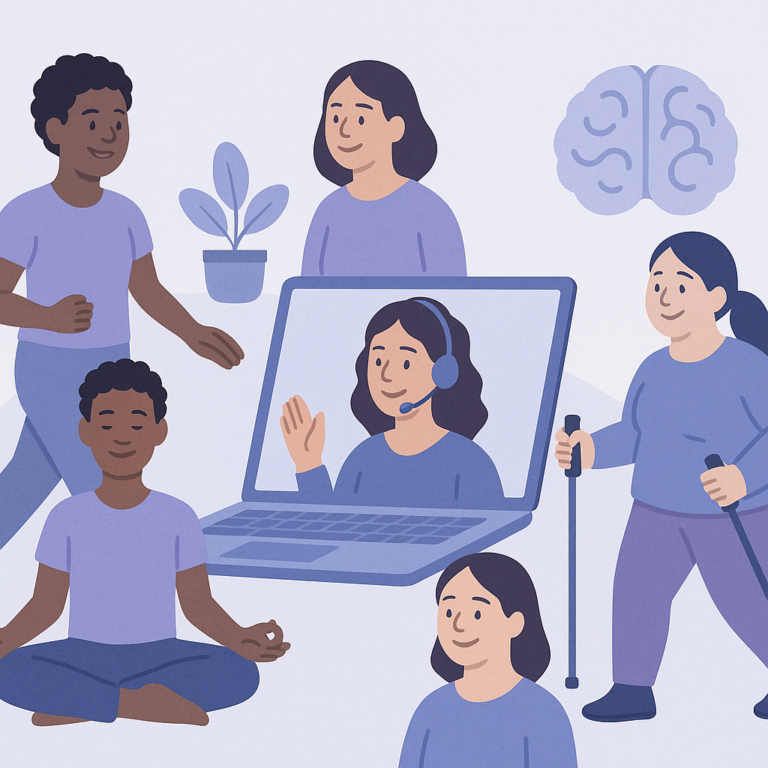
The interventions included cognitive behavioral therapy, mindfulness-based interventions, self-management or collaborative-care programs, and relaxation-based interventions. Researchers compared these approaches with treatment as usual or other control conditions using validated depression rating scales.
What they found
Overall, psychological and behavioral interventions were associated with greater reductions in depressive symptoms than control conditions (SMD -0.63, 95% CI -0.90 to -0.36).
Cognitive behavioral therapy, mindfulness-based interventions, and self-management or collaborative-care programs each showed statistically significant associations with reduced depressive symptoms. Cognitive behavioral therapy and self-management or collaborative care had the most consistent and clinically interpretable evidence. Progressive muscle relaxation showed a large effect, but this finding came from only one small study and remains preliminary.
Limits of the evidence
The certainty of the evidence was rated low to very low across intervention categories. Most studies had some risk-of-bias concerns, mainly because of lack of blinding, reliance on self-reported outcomes, and incomplete outcome reporting. The studies also varied in their clinical and methodological features.
Only 11 of the 22 studies contributed continuous depression-severity data to the meta-analysis, and the relaxation finding came from one small study. The abstract does not provide total participant numbers, age groups, treatment lengths, adverse-effect findings, or detailed long-term results. It therefore remains unclear how durable the possible benefits are or which people with epilepsy are most likely to benefit.
For families and caregivers
Psychological and behavioral programs may help reduce depressive symptoms in people with epilepsy. The evidence was most consistent for cognitive behavioral therapy and self-management or collaborative-care approaches, while mindfulness-based interventions may also be beneficial. However, confidence in these findings is limited, and the review does not establish that these approaches should replace other depression or epilepsy care.
What to watch next
Larger, well-designed randomized trials using standardized depression measures and longer follow-up are needed to confirm the findings and clarify how long any benefits last.
Terms in this summary
- Comorbidity
- A health condition that occurs alongside another condition; here, depression occurring with epilepsy.
- Cognitive behavioral therapy
- A structured therapy that helps people identify and change unhelpful patterns of thinking and behavior.
- Mindfulness-based intervention
- A program that teaches focused, nonjudgmental attention to present thoughts, feelings, and sensations.
- Collaborative care
- Coordinated treatment involving multiple health professionals, often combining medical and mental health care.
- Meta-analysis
- A statistical method that combines results from several studies.
- Standardized mean difference
- A measure used to compare the size of an effect across studies that used different rating scales.
- Confidence interval
- A range showing the uncertainty around an estimated result.
- Risk of bias
- The possibility that study design or reporting influenced the results.
Free: Seizure First Aid Quick Guide (PDF)
Plus one plain-language weekly digest of new epilepsy research.
Unsubscribe anytime. No medical advice.