Hemimegalencephaly in Children: Findings From Published Reports
This explainer reviews what a systematic review reported about hemimegalencephaly in children.
Source: Children (Basel, Switzerland)
Summary
What was studied
This systematic review brought together published reports of 161 children with hemimegalencephaly, a condition in which one half of the brain is abnormally enlarged and develops differently.
The researchers searched PubMed, Google Scholar, and Scopus and followed PRISMA review guidelines. They reviewed clinical features, brain imaging, EEG findings, genetic variants, associated syndromes, treatments, and outcomes. They also conducted a risk-of-bias assessment and a sensitivity analysis.
What they found
Hemimegalencephaly was reported more often in boys. The most common form was isolated hemimegalencephaly, meaning it was not part of a broader syndrome. Syndromic cases were next most common, particularly those associated with hypomelanosis of Ito. The most common seizure type was focal onset with impaired awareness.
Approximately 73.2% of children (118/161) had drug-resistant epilepsy. Genetic analysis identified variants in TSC1, TSC2, NPRL3, and PIK3CA, supporting involvement of the mTOR pathway, which helps regulate cell growth.
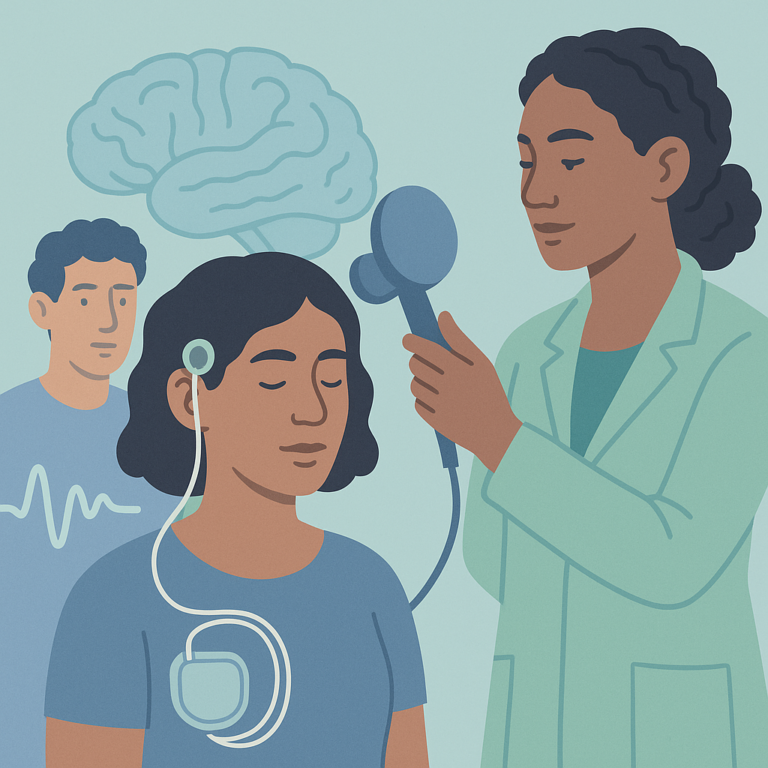
Hemispherectomy was a frequently reported treatment, particularly the functional approach. The limited evidence suggested that functional and anatomical hemispherectomy may offer comparable seizure reduction. Surgical outcomes varied, and the abstract did not report exact seizure-reduction or seizure-freedom rates. Developmental impairment was also described as a frequent concern.
Limits of the evidence
This review summarized published reports rather than directly assigning children to different treatments. The findings may not represent all children with hemimegalencephaly, especially those with milder symptoms. The main stated limitation was a lack of long-term neurological follow-up. The abstract does not give detailed developmental outcomes, surgical complication rates, or the results of the risk-of-bias assessment. The limited evidence does not establish that functional and anatomical hemispherectomy are equally effective or identify the best approach for every child.
For families and caregivers
The review highlights that difficult-to-control seizures and developmental challenges are common among reported children with hemimegalencephaly. Surgery may reduce seizures, but outcomes vary and treatment needs to be individualized. Long-term neurological outcomes remain uncertain. The authors emphasize early diagnosis to support timely intervention and coordinated care involving neurology, genetics, radiology, and neurosurgery.
What to watch next
Broader studies that include children with milder symptoms and provide long-term follow-up are needed to better understand how the condition progresses and guide treatment decisions.
Terms in this summary
- Hemimegalencephaly
- A condition in which one half of the brain is abnormally enlarged and develops differently.
- Systematic review
- A study that uses a planned method to find, assess, and summarize existing research.
- EEG
- A test that records the brain's electrical activity.
- Focal onset with impaired awareness
- A seizure that starts in one area of the brain and reduces awareness of oneself or the surroundings.
- Drug-resistant epilepsy
- Epilepsy in which seizures continue despite treatment with seizure medicines.
- Hemispherectomy
- Surgery aimed at reducing seizures arising from one half of the brain. Anatomical hemispherectomy removes most of that half; functional hemispherectomy mainly disconnects it, with less tissue removed.
- mTOR pathway
- A system of signals inside cells that helps regulate growth and development.
- Hypomelanosis of Ito
- A condition involving patterned patches of lighter skin that can also be associated with brain and developmental differences.
Suggest a correction · Editorial standards
Free: Seizure First Aid Quick Guide (PDF)
Plus one plain-language weekly digest of new epilepsy research.
Unsubscribe anytime. No medical advice.