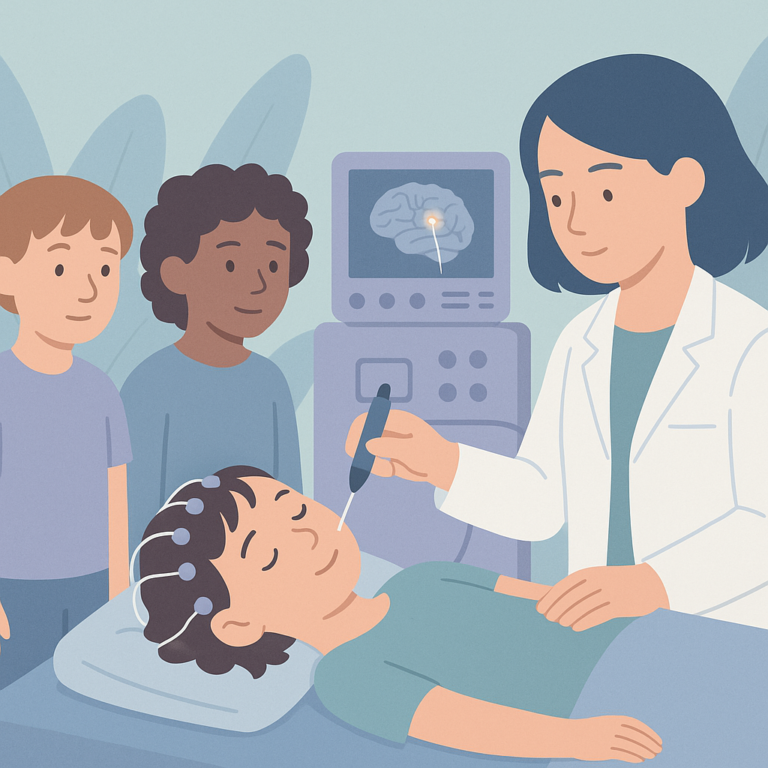
Genetic Testing May Improve Early Detection Of Lissencephaly
Source: Oxford Academic (Brain)
Summary
What was studied
This study looked at lissencephaly, a group of brain development conditions where the brain surface is smoother than usual because nerve cells did not move to the right place during pregnancy. The researchers studied 40 people total: 20 fetuses in whom lissencephaly was suggested on prenatal imaging, and 20 children diagnosed after birth. All had MRI scans and genetic testing.
The researchers wanted to see how often whole exome sequencing (WES) could find a genetic cause and whether certain genes matched certain clinical features. They also reviewed 80 published studies. One was used to compare detection rates, and 79 studies covering 210 cases were used to look at links between genes and symptoms.
What they found
In the prenatal group, 17 of 20 fetuses had other findings along with lissencephaly, most often enlarged brain fluid spaces (ventriculomegaly) and a small head size (microcephaly). In the postnatal group, the most common problems were epilepsy (16 of 20) and global developmental delay (13 of 20). Half of the children diagnosed after birth had no abnormalities noticed during pregnancy.
Genetic testing found a likely cause in 55% of the prenatal cases and 65% of the postnatal cases. Changes involving the PAFAH1B1 gene, including point mutations or a 17p13.3 microdeletion, were the most common findings in both groups. The study also reported DARS2 and NPRL3 as being associated with lissencephaly for the first time in this study.
In the literature review, the overall genetic test yield was 79.04%. The genes most often linked to lissencephaly were PAFAH1B1, DYNC1H1, and DCX. The review also found that prenatal imaging may miss or not clearly show lissencephaly: 48.05% of reviewed cases had no specific prenatal findings, and the most common prenatal clues were ventriculomegaly or hydrocephalus and head circumference anomalies.
Limits of the evidence
This was a small study from only 40 cases, so the results may not represent all people with lissencephaly.
The paper combined its own cases with many published reports, and published cases may be biased toward unusual or genetically solved cases. That can make the reported test yield look higher than it would be in everyday practice. The study examined associations between genes and features, but these findings may not apply to every person.
The report says DARS2 and NPRL3 were associated with lissencephaly for the first time in this study, but newer gene associations usually need confirmation in more patients and other studies.
For families and caregivers
For families, this study suggests that genetic testing, especially WES, may often help find a cause of lissencephaly. It also shows why diagnosis before birth can be hard: some babies later diagnosed with lissencephaly had no clear signs during pregnancy, or only nonspecific findings like enlarged fluid spaces.
A genetic answer may help with counseling, planning care, and understanding possible associated medical issues such as seizures or developmental problems. But this study does not mean every child will get a genetic answer, and it does not predict exactly how any one child will do.
What to watch next
Larger studies and additional reports could help confirm newer gene associations such as DARS2 and NPRL3 and clarify how genetic findings relate to clinical features over time.
Terms in this summary
- lissencephaly
- A group of brain development conditions where the brain surface is smoother than usual because brain cells did not move normally during early development.
- prenatal
- Before birth, during pregnancy.
- whole exome sequencing (WES)
- A genetic test that looks at the parts of genes that contain instructions for making proteins.
- genotype-phenotype correlation
- A link between a genetic change and the symptoms or features seen in a person.
- phenotype lag
- When physical signs of a condition are not obvious yet, even though the condition is already present.
- ventriculomegaly
- Enlargement of the fluid-filled spaces in the brain.
- microcephaly
- A head size that is smaller than expected.
- 17p13.3 microdeletion
- A missing small piece of chromosome 17 in a region that includes important genes such as PAFAH1B1.
Free: Seizure First Aid Quick Guide (PDF)
Plus one plain-language weekly digest of new epilepsy research.
Unsubscribe anytime. No medical advice.