Antipsychotic Use Was Low Among Ugandan Children With Epilepsy
Source: Scientific reports
Summary
What was studied
This study looked at how often antipsychotic medicines were prescribed to children and teens with epilepsy in Uganda, and which medicines were used together. It included 305 patients ages 5 to 17 who were seen during routine visits at two hospitals: Mulago National Referral Hospital and Butabika National Mental Referral Hospital.
Researchers interviewed caregivers and reviewed medical records. They recorded antipsychotic medicines and anti-seizure medicines, and they also assessed intellectual disability using Raven's Progressive Matrices. The study was cross-sectional, meaning it gives a snapshot of prescribing at one point in time.
What they found
About 6.9% of the 305 children and adolescents with epilepsy were prescribed an antipsychotic medicine. Risperidone was the most common antipsychotic, used in nearly half of those who received one. The most common medicine pairings were carbamazepine with risperidone and sodium valproate with risperidone.
There was also a statistically significant difference between the two hospitals. Almost all patients who were prescribed antipsychotics were from Mulago National Referral Hospital, while very few were from Butabika National Mental Referral Hospital. The authors said overall antipsychotic use was relatively low and followed international trends.
Limits of the evidence
This was a descriptive cross-sectional study, so it cannot show whether antipsychotics helped, caused harm, or why one hospital prescribed them more often than the other. It only shows what was being prescribed at the time.
The study was done at two referral hospitals, so the results may not represent all children with epilepsy in Uganda or other countries. Only 21 participants were taking antipsychotics, which limits how much can be concluded about patterns of use. The abstract also does not report details on psychiatric diagnoses, safety outcomes, seizure control, or long-term outcomes.
For families and caregivers
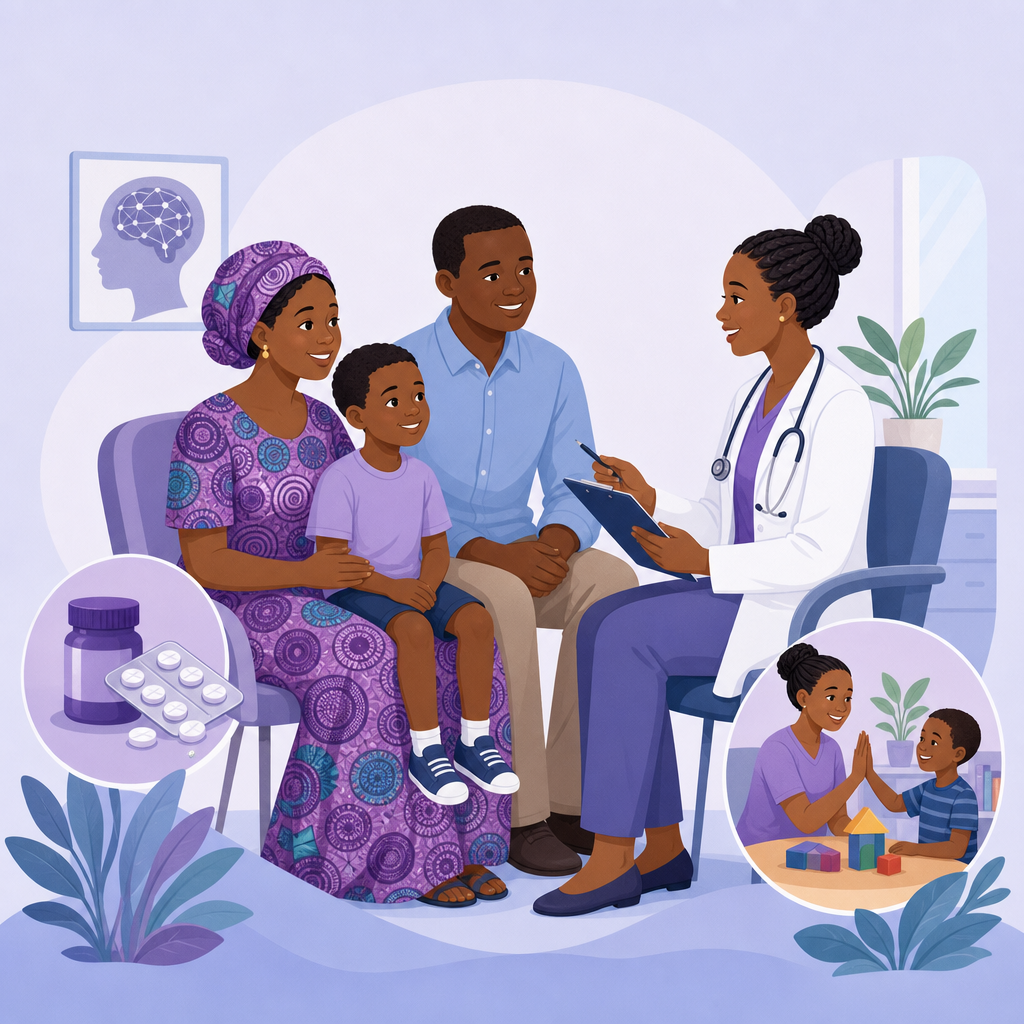
For families, this study suggests that antipsychotic medicines were used in a small minority of children and teens with epilepsy in these Ugandan clinics, usually risperidone. It also highlights that some children were taking antipsychotics together with anti-seizure medicines such as carbamazepine or valproate.
The abstract notes concerns about possible drug interactions and metabolic risks with these combinations, but this study did not measure those outcomes directly. It mainly shows that careful prescribing and follow-up are important, especially when a child has both seizures and behavior or mental health concerns.
What to watch next
Stronger evidence would come from studies that track children over time and report why antipsychotics were prescribed, how well they worked, and whether safety outcomes or drug interactions occurred.
Terms in this summary
- antipsychotic
- A type of medicine used to treat some serious behavior, mood, or thought problems.
- cross-sectional study
- A study that looks at a group at one point in time rather than following them over months or years.
- descriptive statistics
- Basic number summaries, such as percentages, used to describe a group.
- chi-square test
- A statistical test used to check whether differences between groups are likely due to chance.
- risperidone
- An antipsychotic medicine that was the most commonly prescribed one in this study.
- carbamazepine
- An anti-seizure medicine.
- sodium valproate
- An anti-seizure medicine also used for some mood conditions.
- drug interactions
- Changes in how medicines may work or cause side effects when they are taken together.
Free: Seizure First Aid Quick Guide (PDF)
Plus one plain-language weekly digest of new epilepsy research.
Unsubscribe anytime. No medical advice.