Brain Stimulation Reduced Seizures In Hard-To-Treat Generalized Epilepsy
Source: Epilepsia
Summary
What was studied
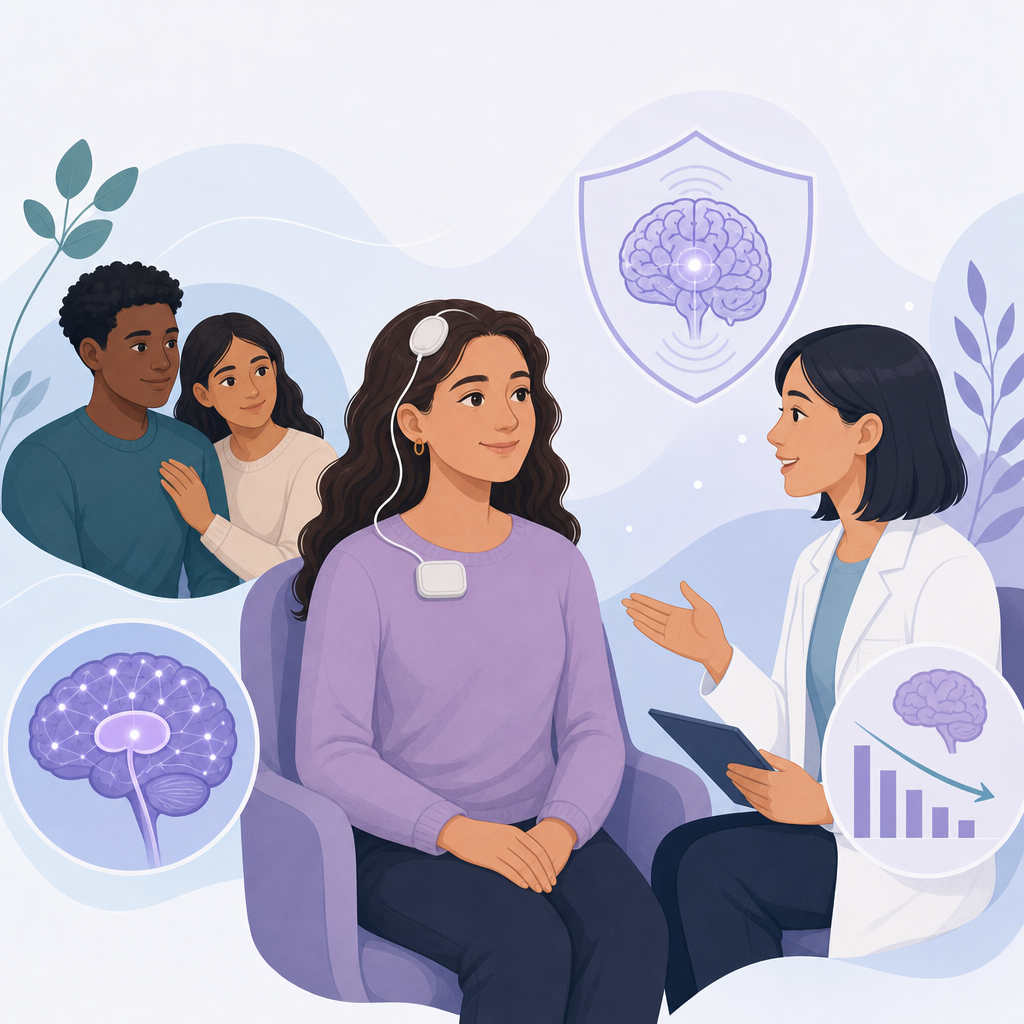
Researchers evaluated a brain device treatment called responsive thalamic stimulation as an add-on therapy for people with drug-resistant idiopathic generalized epilepsy (IGE) who had generalized tonic-clonic seizures (GTCSs). The study included 87 implanted patients, age 12 and older, at 23 centers in the United States. All had at least 2 GTCSs during a 3-month baseline period.
All patients had leads placed in both sides of the centromedian thalamus. One month later, they were randomly assigned to either active stimulation (44 people) or sham treatment with no stimulation (43 people). The trial was single-blind, meaning patients did not know which group they were in. The effectiveness evaluation period began 3 months after implant and continued through 1 year, but if a person had a second GTCS during that period, they then switched to open-label active stimulation.
What they found
The main safety goal was met. Serious adverse device-related events by 84 days after implant occurred in 6.9% of patients, which was significantly below the study's preset safety threshold. The study also reported no adverse effects on cognition, mood, or sleep.
The main prespecified effectiveness result was not statistically significant: the primary endpoint of time to second GTCS during the effectiveness evaluation period was not met. However, in a post hoc analysis that looked at all days in the evaluation period, the group originally assigned to active stimulation had a greater reduction in GTCSs than the group originally assigned to sham (61% vs 49%, p = .030).
By 18 months, after patients could receive active treatment, reported seizure outcomes included a median reduction in GTCSs of 76.8%, a responder rate of 62.5%, 40% GTCS-free at that timepoint, and a median reduction of 77.8% in days with any generalized seizure. More than 90% of patients and 86% of physicians reported improvement on Global Impression of Change scales.
Limits of the evidence
The most important limit is that the study's main prespecified effectiveness endpoint was not met, so the strongest planned test of benefit was not significant. The more favorable seizure result during the blinded period came from a post hoc analysis, which is generally considered less robust than a prespecified primary analysis.
The study included 87 implanted patients. Also, after people had a second GTCS during the evaluation period, they switched to open-label active stimulation, which makes longer-term results harder to compare with the sham group. Because the 18-month results were obtained after this transition to active treatment, they do not provide the same level of randomized comparison as the primary blinded analysis.
The abstract does not give detailed information about all side effects, how different seizure types responded, or which patients benefited most. It also does not show results beyond 18 months.
For families and caregivers
For families dealing with drug-resistant generalized epilepsy, this study suggests that responsive stimulation of the thalamus may become another treatment option when medicines are not enough. The safety results were reassuring in this trial, and seizure reductions were reported over time.
At the same time, the study did not meet its main planned effectiveness goal, so the evidence is promising but not definitive. Families may see this as a potential option for some people with IGE, but the abstract does not show that it will work for everyone.
What to watch next
More evidence would come from additional trials that confirm benefit on prespecified outcomes and help clarify which patients with generalized epilepsy are most likely to improve.
Terms in this summary
- idiopathic generalized epilepsy (IGE)
- A group of epilepsies involving generalized seizure networks, often without a clear structural cause identified.
- generalized tonic-clonic seizure (GTCS)
- A seizure that affects both sides of the brain and causes stiffening, shaking, and loss of awareness.
- responsive stimulation
- A device treatment that delivers electrical stimulation in response to detected brain activity.
- thalamus
- A deep brain structure involved in relaying signals and in brain networks linked to seizures.
- sham-controlled
- A study design in which one group gets an inactive version of the treatment for comparison.
- single-blind
- A study in which the participants do not know which treatment group they are in.
- post hoc analysis
- An analysis done after the main study plan, which can suggest patterns but is usually considered less strong evidence than prespecified analyses.
- responder rate
- The percentage of patients who had at least a 50% drop in seizure frequency.
Free: Seizure First Aid Quick Guide (PDF)
Plus one plain-language weekly digest of new epilepsy research.
Unsubscribe anytime. No medical advice.