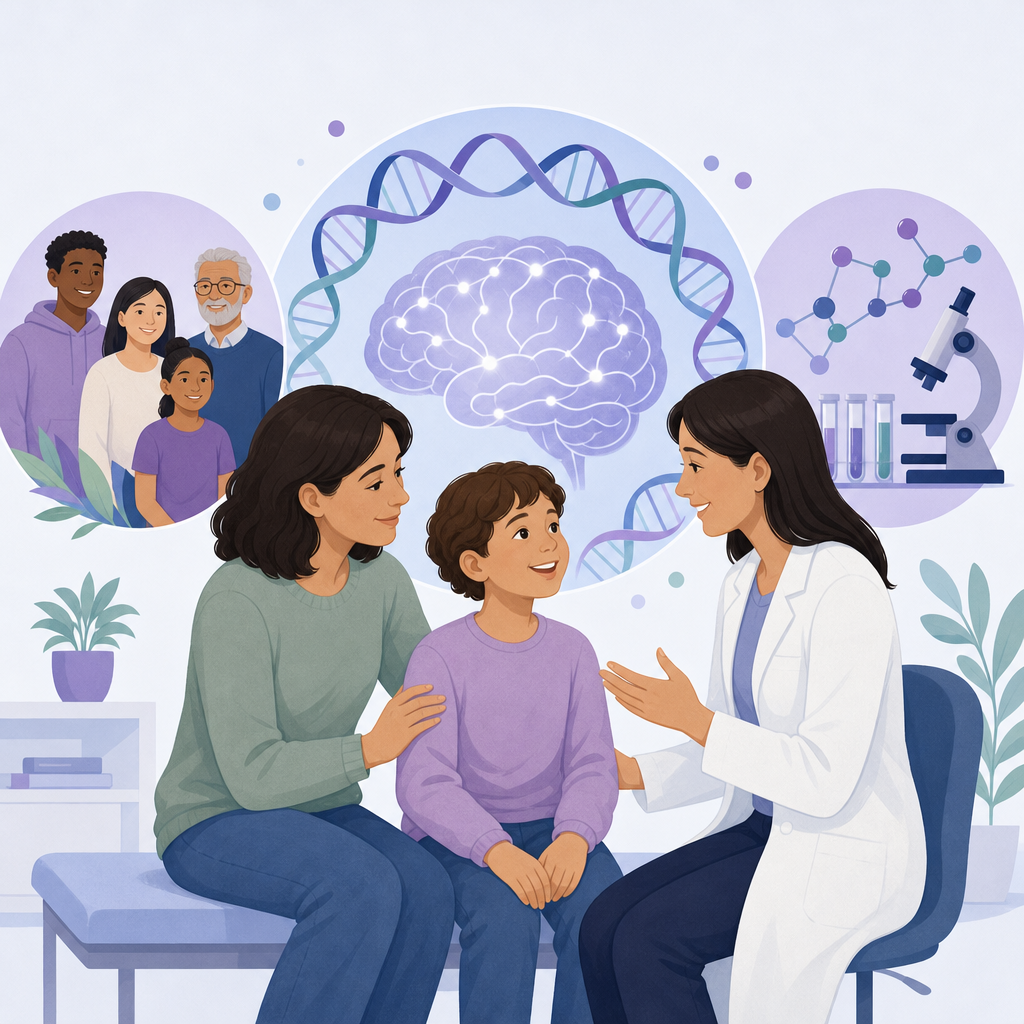
Etiology Epilepsy: What the Study Found
This research summary explains what the study found about Etiology Epilepsy and what the results may mean for people with epilepsy and their families.
Source: Epilepsia
Summary
What was studied
This article proposes a broader way to describe epilepsies linked to a known genetic or acquired cause. It builds on the concept of an etiology-specific epilepsy syndrome, defined in 2022, in which a known cause is associated with a distinctive pattern of seizures and other health or developmental features.
The authors introduce an “etiology-specific spectrum of epilepsy syndromes” (ESSES). The abstract presents a conceptual framework rather than results from a treatment trial or a group of patients.
What they found
The central point is that one etiology, such as changes in a particular gene, can be linked to several different epilepsy syndromes rather than just one. These syndromes may differ in age at seizure onset, seizure types, learning or intellectual difficulties, psychiatric features, and other health problems, including gut and musculoskeletal problems.
Different disease-causing changes in the same gene may affect its function differently. For example, changes affecting an ion channel subunit may reduce its function, increase it, or have mixed effects. These effects can be associated with different epilepsy syndromes that may require different treatment approaches. For some genes, the range of associated syndromes is well established through genotype-phenotype studies even though the functional effects are not yet known.
Limits of the evidence
The abstract does not report participant numbers, numerical results, or treatment comparisons. It proposes a framework rather than testing whether using ESSES improves care or outcomes. It also acknowledges that the functional effects of some genetic changes remain unknown. The framework is intended to develop as more evidence becomes available.
For families and caregivers
Knowing which gene is involved may not be enough to guide care. The authors emphasize considering the particular genetic change and the person's epilepsy syndrome, including seizure, developmental, and other health features, rather than relying on the gene name alone. The abstract does not establish which treatment is best for any individual.
What to watch next
Watch for new findings on the range of epilepsy syndromes linked to particular etiologies and on the functional effects of specific genetic changes. These findings could refine the framework and its implications for care.
Terms in this summary
- etiology
- The underlying origin or explanation for a condition, such as a genetic or acquired factor.
- epilepsy syndrome
- A recognizable pattern of epilepsy features, such as seizure types, age at onset, and associated health or developmental problems.
- ESSES
- Etiology-specific spectrum of epilepsy syndromes: the range of epilepsy syndromes linked to one underlying etiology.
- pathogenic genetic variant
- A genetic change that can contribute to disease.
- ion channel
- A protein that allows charged particles to move across a cell membrane, helping control electrical activity.
- loss-of-function and gain-of-function
- Effects of genetic changes that reduce or increase the activity of the affected protein.
- genotype-phenotype studies
- Studies examining how genetic changes relate to a person's observable health features.
Suggest a correction · Editorial standards
Free: Seizure First Aid Quick Guide (PDF)
Plus one plain-language weekly digest of new epilepsy research.
Unsubscribe anytime. No medical advice.