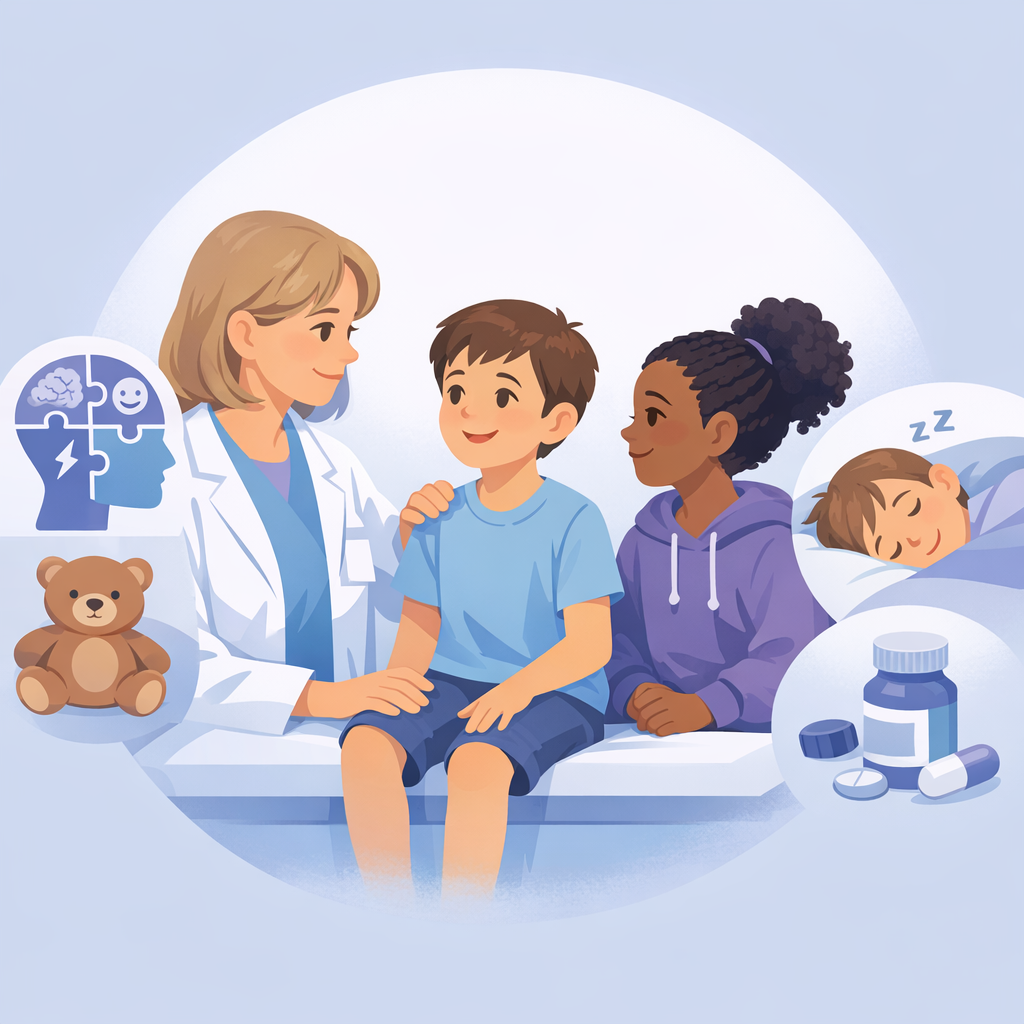
Many Children With Epilepsy Have Other Conditions
Source: Developmental medicine and child neurology
Summary
What was studied
This study looked at how common neurodevelopmental, psychiatric, and sleep conditions were, alone and in combination, among children with "active" epilepsy. It included all children born from 2003 to 2021 in the Västra Götaland region of Sweden who had active epilepsy in 2020 or 2021.
The researchers used health records from hospitals, outpatient specialist care, habilitation centres, and primary care. They examined diagnoses for autism spectrum disorder, intellectual disability, attention-deficit/hyperactivity disorder, cerebral palsy, psychological developmental disorders, psychiatric disorders, and sleep disorders, and also included information on associated dispensed drugs.
What they found
Active epilepsy was identified in 0.56% of children in the region, which was 2,146 out of 383,870 children. Among children with active epilepsy, 70% had at least one comorbidity, and 40% had diagnoses in three or more of the seven included comorbidity domains.
The most frequent comorbidities were in the psychiatric, psychological developmental, sleep, and intellectual disability domains. Associations between comorbidities varied, and some were greater in female children than in males.
Limits of the evidence
This was a population-based cross-sectional study based on medical records, so it describes prevalence and associations but cannot establish causes. It also depends on which diagnoses were recorded in the health system and on available dispensing data.
The study was done in one region of Sweden, so the findings may not be the same in other settings. The abstract does not provide detailed numbers for each comorbidity, information about severity, or explanations for the sex differences observed.
For families and caregivers
For families, this study suggests that many children with active epilepsy also have neurodevelopmental, psychiatric, or sleep-related conditions, and that several of these may occur together. This supports the importance of comprehensive and long-term follow-up, not only seizure care.
It does not mean every child with epilepsy will have these conditions, but it highlights the value of asking about development, attention, behavior, mental health, and sleep during routine epilepsy care.
What to watch next
Future studies that follow children over time could help clarify when these comorbidities are identified, how often specific conditions occur, and how patterns may differ between groups of children.
Terms in this summary
- active epilepsy
- Epilepsy that is currently considered ongoing in the study population.
- comorbidity
- A health condition that occurs along with another condition.
- cross-sectional study
- A study that examines a group at a particular time period rather than tracking changes prospectively over time.
- neurodevelopmental
- Related to brain development and its effects on learning, behavior, movement, and development.
- psychiatric disorders
- Mental health conditions that affect mood, thinking, or behavior.
- intellectual disability
- A condition involving limitations in intellectual functioning and everyday adaptive skills.
- ADHD
- Attention-deficit/hyperactivity disorder.
- habilitation centres
- Services that provide support for children with developmental or physical disabilities.
Free: Seizure First Aid Quick Guide (PDF)
Plus one plain-language weekly digest of new epilepsy research.
Unsubscribe anytime. No medical advice.