How Brain Targeting for Epilepsy Surgery Has Improved
This paper is a review, not a report of new patient results.
This hub covers epilepsy devices and neuromodulation like VNS, RNS, and DBS, which are treatments that can reduce seizures when meds aren’t enough. Plain-language research summaries plus real-life pros/cons.
Some are used more often in adults, but pediatric use depends on the device, the case, and specialist guidance.
Often gradually. Improvement can build over months as settings are optimized.
Sometimes medication can be reduced, but many people still use meds alongside a device.
Sometimes yes, with device-specific rules. Always check the exact device guidelines first.

This paper is a review, not a report of new patient results.

This study looked at outcomes of responsive neurostimulation (RNS) in people with Lennox-Gastaut syndrome (LGS), a severe epilepsy that is often hard to control with medicine.

This paper was a systematic review, which means the authors gathered and combined results from earlier studies.

This study was a systematic review with meta-analysis.

This study looked at cenobamate used as an add-on seizure medicine in children, teens, and young adults with drug-resistant epilepsy.

This paper was a review, not a new experiment.
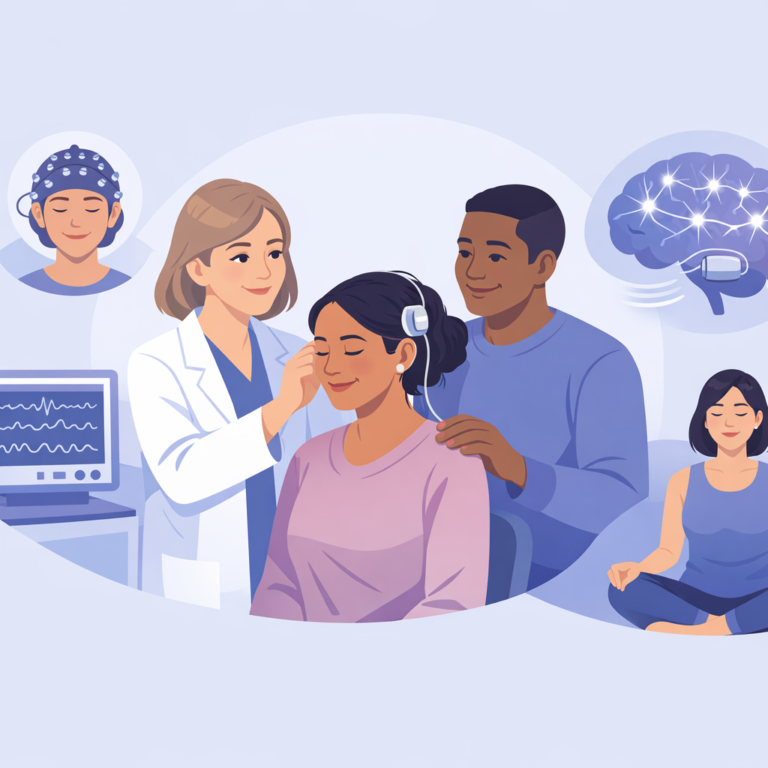
This paper was a systematic review of studies on two neuromodulation treatments for drug-resistant epilepsy: transcranial magnetic stimulation (TMS) and vagus nerve stimulation (VNS).

Researchers built a “brain-age” tool from structural MRI scans.

This study looked at the risk of major congenital malformations in babies born to women who used common antiseizure medicine combinations during the first 12 weeks of pregnancy.