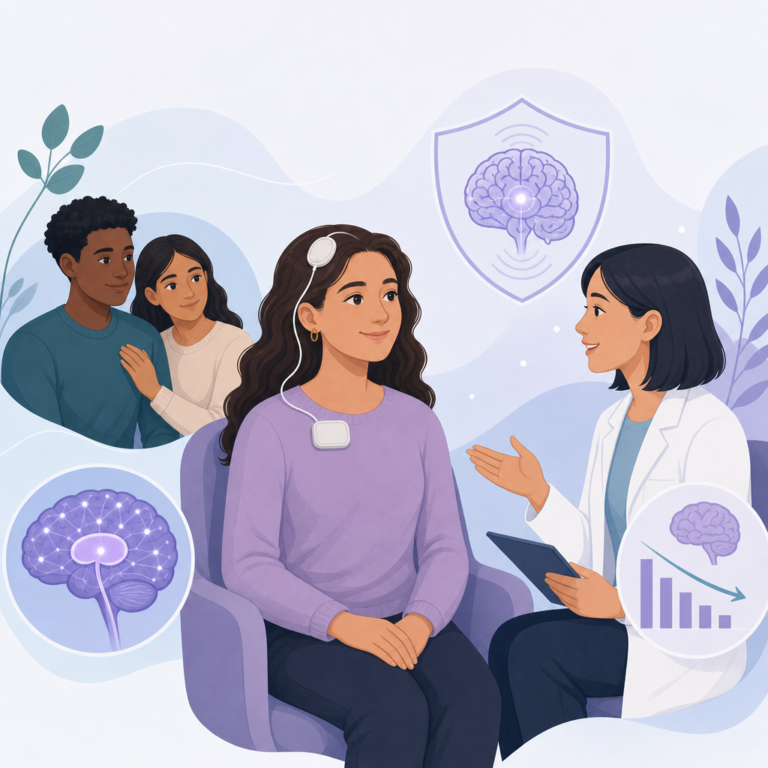
Virtual Brain Models May Help Predict VNS Response
This study looked at whether personalized computer models of the brain could help explain why some children with drug-resistant epilepsy improve with vagus nerve stimulation, while others do not.
This hub covers epilepsy devices and neuromodulation like VNS, RNS, and DBS, which are treatments that can reduce seizures when meds aren’t enough. Plain-language research summaries plus real-life pros/cons.
Some are used more often in adults, but pediatric use depends on the device, the case, and specialist guidance.
Often gradually. Improvement can build over months as settings are optimized.
Sometimes medication can be reduced, but many people still use meds alongside a device.
Sometimes yes, with device-specific rules. Always check the exact device guidelines first.
This study looked at whether personalized computer models of the brain could help explain why some children with drug-resistant epilepsy improve with vagus nerve stimulation, while others do not.
This study looked at a brain device called the RNS System in adults with drug-resistant focal epilepsy, meaning seizures kept happening despite medicine.
This report describes one 8-year-old boy with brain injury from hypoxic-ischemic encephalopathy (HIE) who had both dystonia, which causes abnormal muscle tightness and movements, and epilepsy that did not respond to medicine.
This report looked at one person with hard-to-control temporal lobe epilepsy who had part of the hippocampus removed in surgery.
This study looked at 16 children and young people in southern Turkey who had hyperekplexia, also called hereditary startle disease, a rare condition that is often mistaken for epilepsy.
This paper was a systematic review, which means the authors searched for and summarized earlier studies rather than testing a new device themselves.
This study looked at 30 newborns with epilepsy associated with changes in the KCNQ2 gene.
This report looked at an experimental gene-targeting treatment in two 2-year-old girls with a very severe form of KCNT1-related epileptic encephalopathy called epilepsy of infancy with migrating focal seizures.
This article is a roadmap or policy-style review about epilepsy care in the United Kingdom.