MRI and PET Scans Help Identify Epilepsy in Children
This study looked at two brain imaging techniques, Arterial Spin Labelling MRI and [18F]FDG-PET, to see how well they can identify the area of the brain causing seizures in children with epilepsy.
This hub covers epilepsy EEG and MRI: how EEGs and brain imaging help doctors understand seizure patterns and possible causes. Clear explanations of common findings and what research suggests.
Yes. EEGs are a snapshot. Some people need repeat EEGs, sleep-deprived EEGs, or long-term monitoring.
Not always. It raises suspicion and risk, but diagnosis still depends on the full story.
To look for structural causes like scars, malformations, tumors, and stroke-related changes, which can guide treatment.
An inpatient or extended study that records EEG and video together to match symptoms to brain activity.
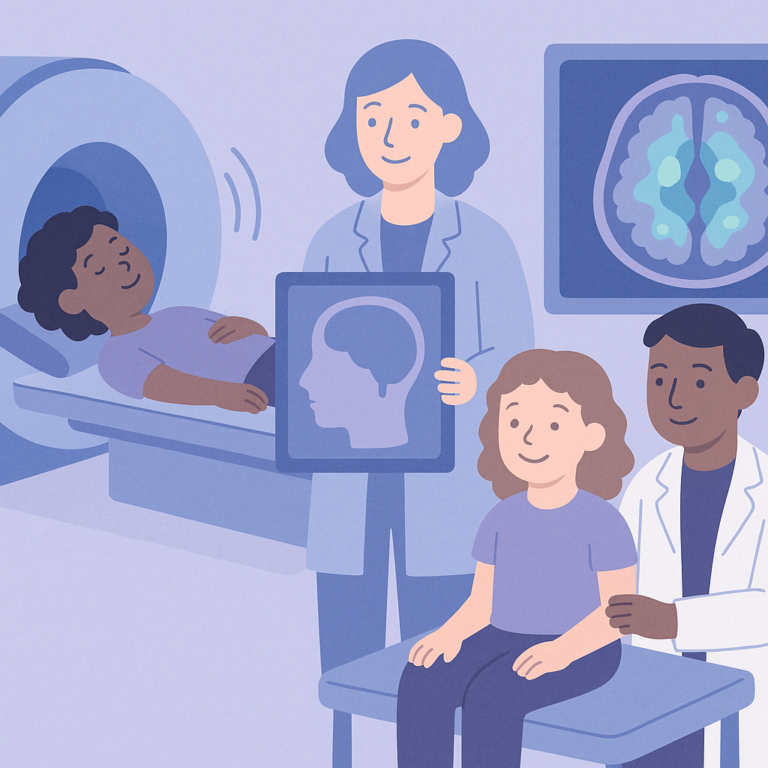
This study looked at two brain imaging techniques, Arterial Spin Labelling MRI and [18F]FDG-PET, to see how well they can identify the area of the brain causing seizures in children with epilepsy.

Researchers studied the timing of a technique called transcranial magnetic stimulation (TMS) in two children with a specific type of epilepsy known as self-limited epilepsy with centrotemporal spikes.
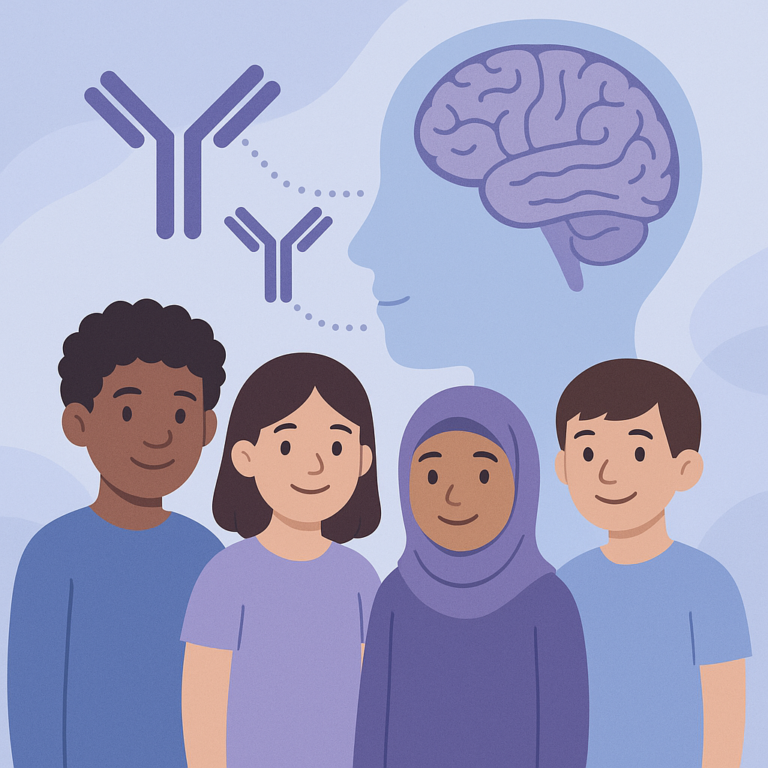
Researchers studied pediatric autoimmune encephalitis-associated epilepsy (AEAE), which is a type of epilepsy linked to problems in the immune system.
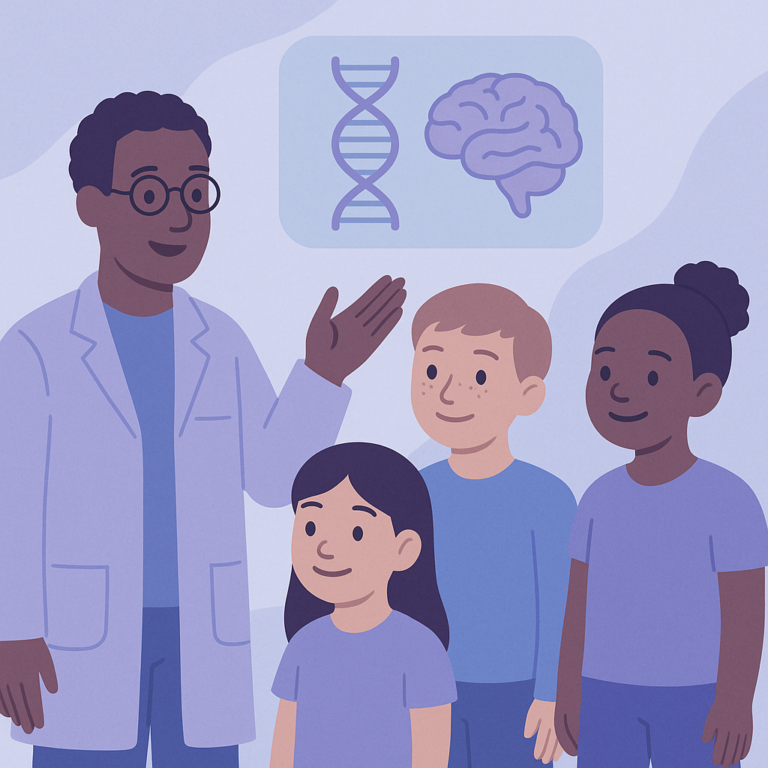
This study looked at five patients with a specific genetic condition related to epilepsy called NUS1-related disorder.
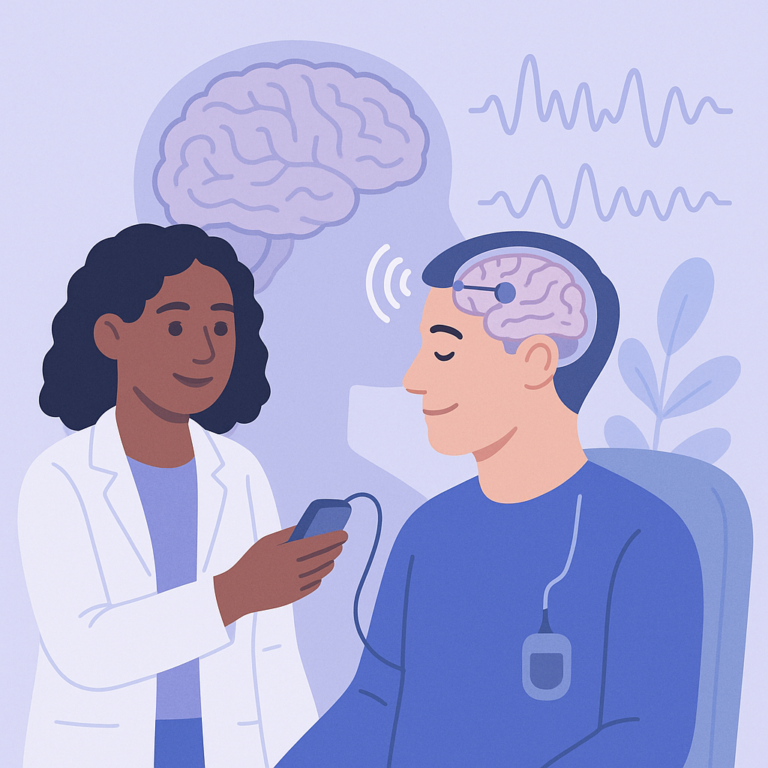
Researchers studied deep brain stimulation (DBS) as a treatment for people with epilepsy who do not respond to medication and cannot have surgery.
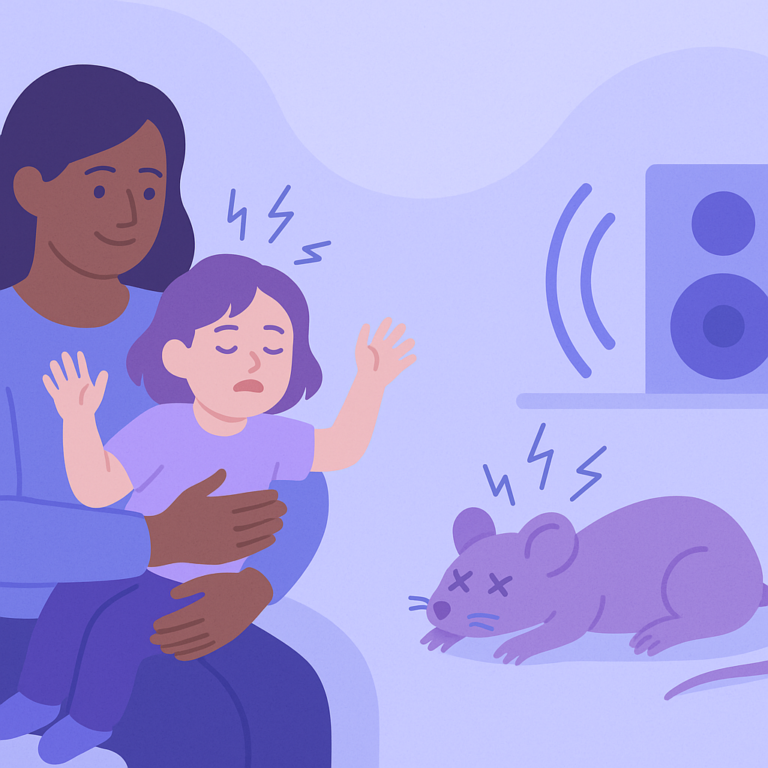
Researchers studied a genetic condition called CDKL5 deficiency disorder (CDD) using mice that lack the CDKL5 gene.
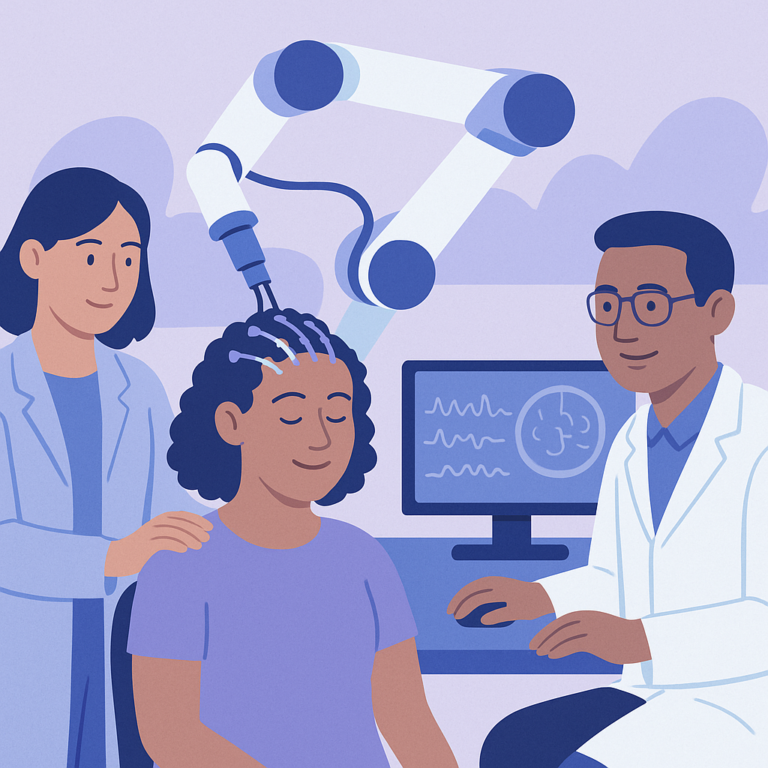
Researchers studied two methods of placing electrodes in the brain for patients with drug-resistant epilepsy: robot-assisted stereoelectroencephalography (sEEG) and frame-based sEEG.
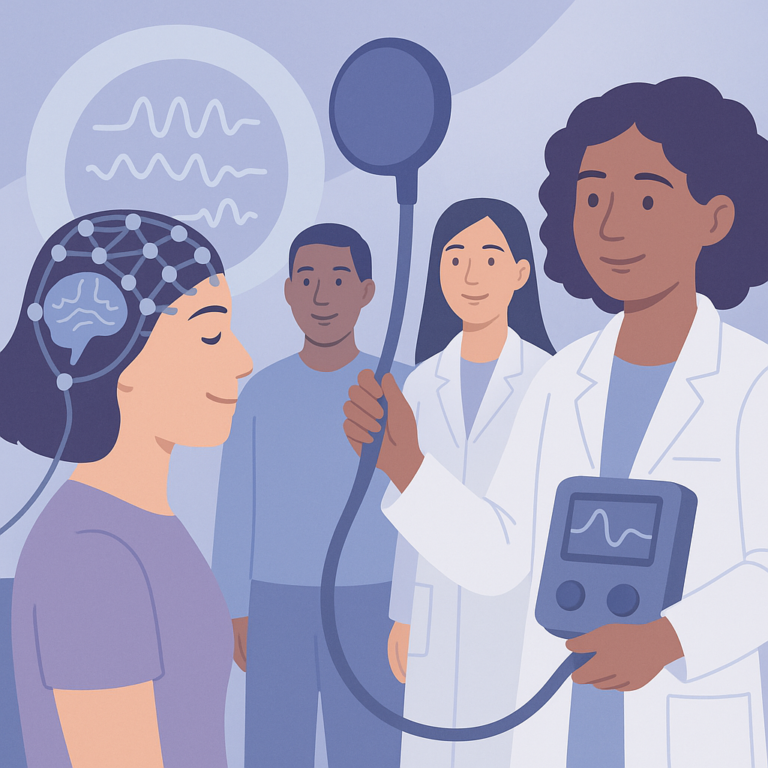
Researchers studied a method called transcranial magnetic stimulation (TMS) to see if it could be effectively timed to occur during specific brain activity known as interictal epileptiform discharges (IEDs).
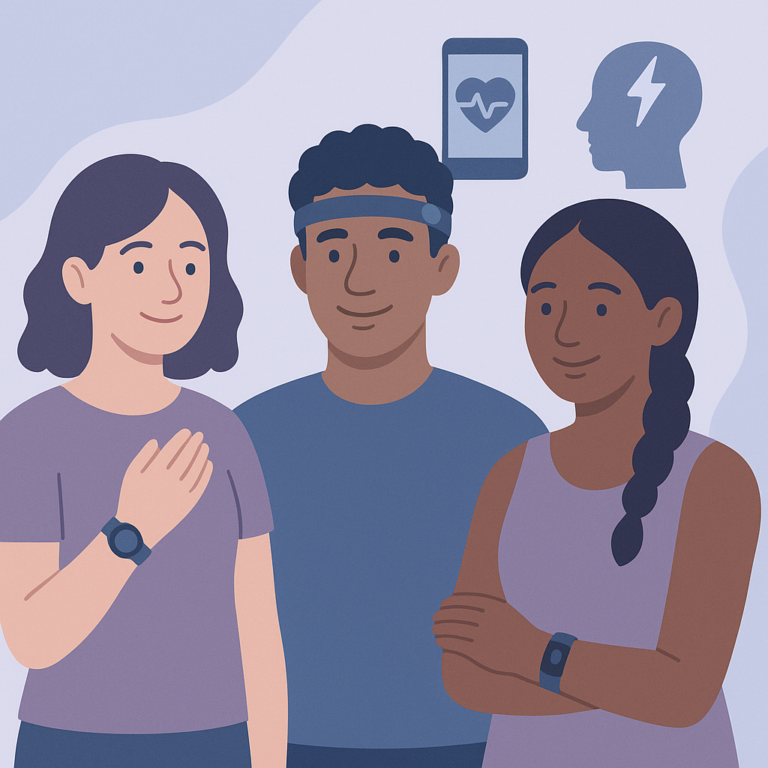
Researchers studied different ways to detect and predict generalized tonic-clonic seizures (GTCS), which are severe types of seizures that can lead to serious health risks.