New Insights Into Epilepsy Through Metabolomics Research
Researchers studied the metabolic profiles of people with epilepsy to see if there are common patterns among different groups.
This hub covers epilepsy EEG and MRI: how EEGs and brain imaging help doctors understand seizure patterns and possible causes. Clear explanations of common findings and what research suggests.
Yes. EEGs are a snapshot. Some people need repeat EEGs, sleep-deprived EEGs, or long-term monitoring.
Not always. It raises suspicion and risk, but diagnosis still depends on the full story.
To look for structural causes like scars, malformations, tumors, and stroke-related changes, which can guide treatment.
An inpatient or extended study that records EEG and video together to match symptoms to brain activity.

Researchers studied the metabolic profiles of people with epilepsy to see if there are common patterns among different groups.

Researchers studied how pediatric hospitals in Canada use imaging methods, like MRI and CT scans, to evaluate children who have new-onset seizures.

This study looked at different methods used to create consensus-based recommendations (CBRs) for epilepsy care.

Researchers studied how to better locate epileptogenic tubers (ETs) in patients with tuberous sclerosis complex (TSC), a condition that can cause epilepsy.

This study looked at the effects of a treatment called transcutaneous auricular vagus nerve stimulation (taVNS) on patients who have both epilepsy and migraines.
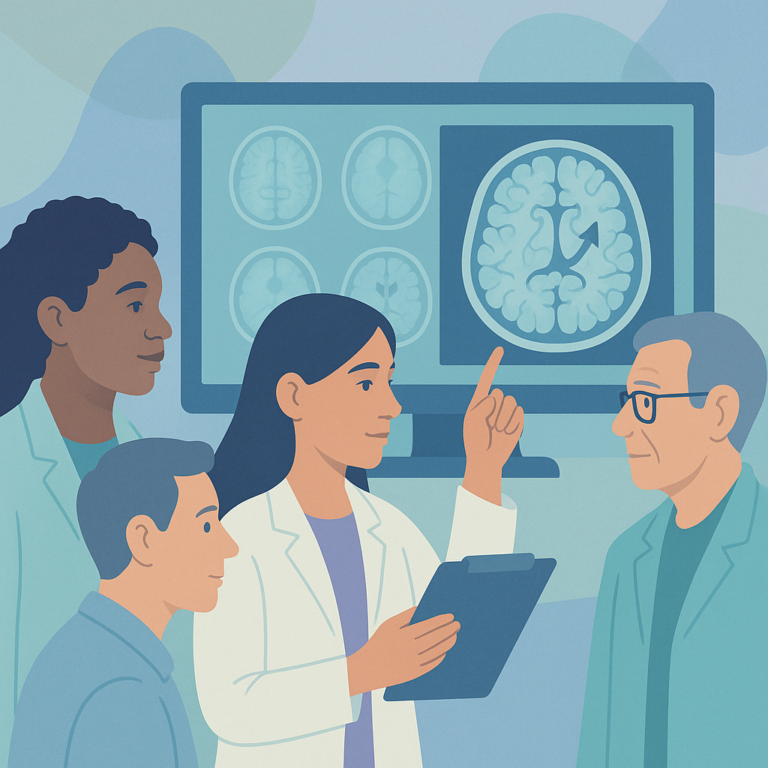
This study looked at how brain scans can help predict which patients with temporal lobe epilepsy (TLE) will become seizure-free after a specific type of surgery called laser interstitial thermal therapy (LITT).

A recent study focused on the management of functional seizures, which are seizure-like episodes that do not have a clear neurological cause.
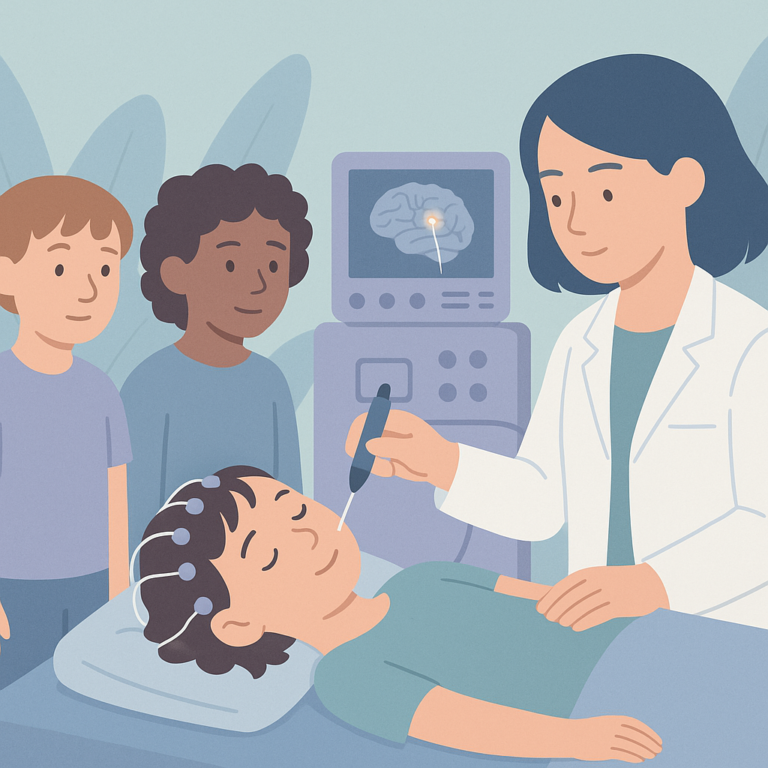
This study looked at the effects of a treatment called stereotactic MRI-guided laser ablation (SLA) on children with tuberous sclerosis complex (TSC) who have epilepsy that does not respond to medication.

This study focused on Jordan syndrome, a rare condition caused by changes in the PPP2R5D gene.