AI Tools Show Promise In MRI For Epilepsy
Source: Epilepsia
Summary
What was studied
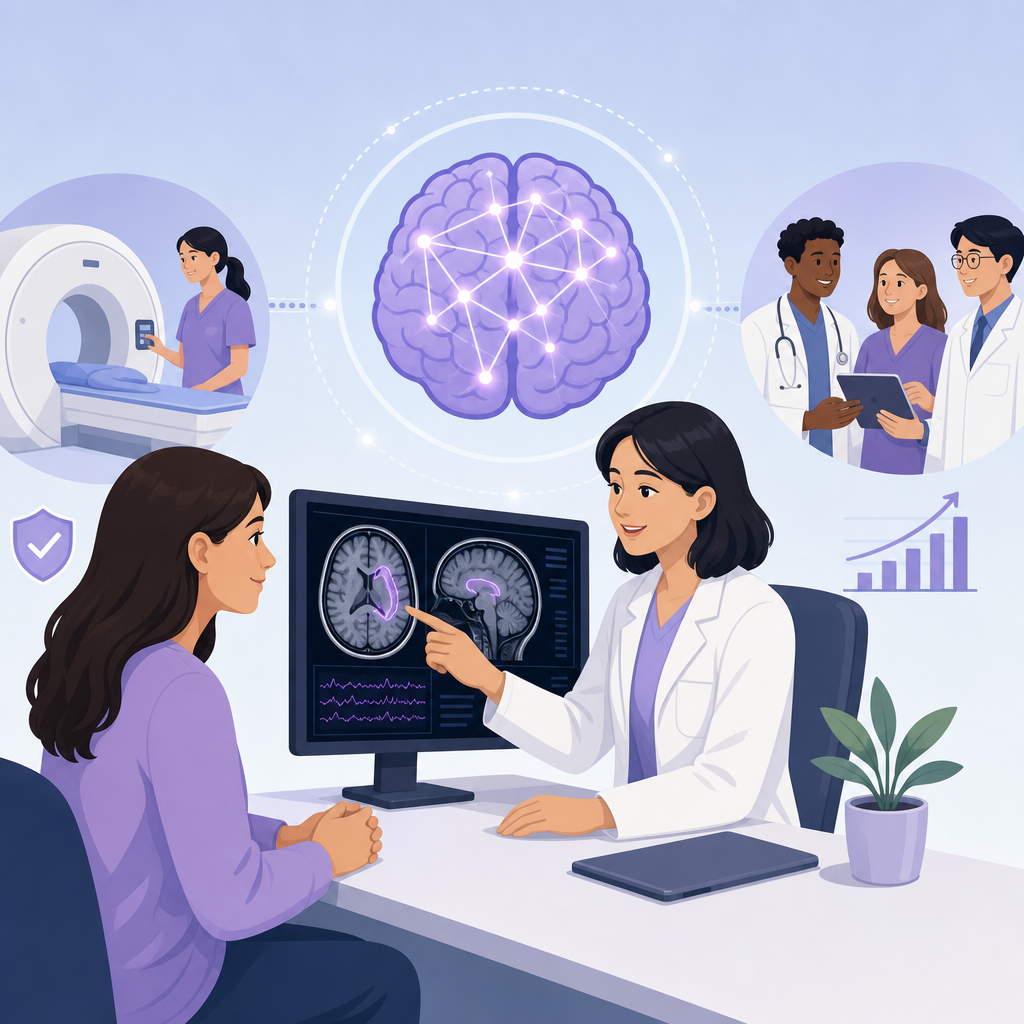
This study systematically reviewed research on using artificial intelligence and machine learning with MRI scans to support clinical decision-making in epilepsy. The authors examined four applications: distinguishing epilepsy patients from healthy controls, determining which side of the brain is involved in temporal lobe epilepsy, localizing epileptogenic lesions such as focal cortical dysplasia, and predicting postsurgical seizure freedom.
The researchers searched the medical literature and identified 159 studies for qualitative review, covering 26,732 participants. Of these, 127 studies with 20,456 participants reported accuracy data and were included in a meta-analysis. The authors also assessed each study model for risk of bias, meaning features of study design that could make results appear better than they really are.
What they found
When results from many studies were combined, AI/ML models using MRI showed high overall accuracy. They distinguished epilepsy patients from healthy controls with an accuracy of 0.87, lateralized temporal lobe epilepsy with an accuracy of 0.90, localized epileptogenic lesions with an accuracy of 0.82, and predicted postsurgical seizure freedom with an accuracy of 0.83. At the same time, the review found a very high risk of bias in the literature, suggesting that these performance estimates may be overly optimistic.
Limits of the evidence
This paper is a meta-analysis of published studies, so it depends on the quality of the original research. The authors found a very high risk of bias across the literature, especially in participant recruitment and validation methods. Many models also relied on strict, nonstandard MRI acquisition and processing protocols, which may not be easy to use in routine clinical implementation. Because of this, the study does not show that these AI tools are ready for routine patient care or that they will perform the same way in real-world settings.
For families and caregivers
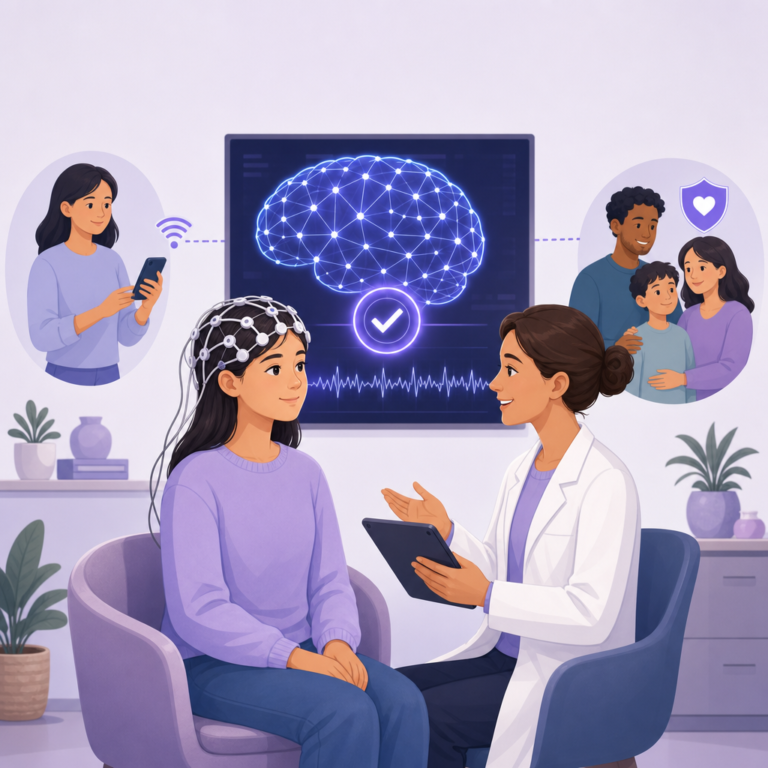
This review suggests that AI tools applied to MRI may eventually help support epilepsy diagnosis, identify problem areas in the brain, and estimate surgery outcomes. But the current evidence has important weaknesses, and these tools are not yet established for regular clinical use based on this literature alone. For families, this means AI is promising but still being studied, and it should not be viewed as a replacement for expert epilepsy care.
What to watch next
The authors encourage closer collaboration between clinical and scientific groups to improve validation studies, along with better future study design, analysis, and reporting.
Terms in this summary
- meta-analysis
- A study that combines results from many earlier studies to look for overall patterns.
- artificial intelligence (AI)
- Computer systems designed to perform tasks that usually need human judgment, such as finding patterns in images.
- machine learning (ML)
- A type of AI in which computers learn from data to make predictions or decisions.
- MRI
- A scan that uses magnets and radio waves to make detailed pictures of the brain.
- temporal lobe epilepsy lateralization
- Figuring out whether seizures are mainly coming from the left or right temporal lobe.
- focal cortical dysplasia
- A brain development difference that can cause seizures and may sometimes be seen on MRI.
- postsurgical seizure freedom
- Having no seizures after epilepsy surgery.
- risk of bias
- Problems in study design or analysis that can make results seem more accurate or certain than they really are.
Free: Seizure First Aid Quick Guide (PDF)
Plus one plain-language weekly digest of new epilepsy research.
Unsubscribe anytime. No medical advice.