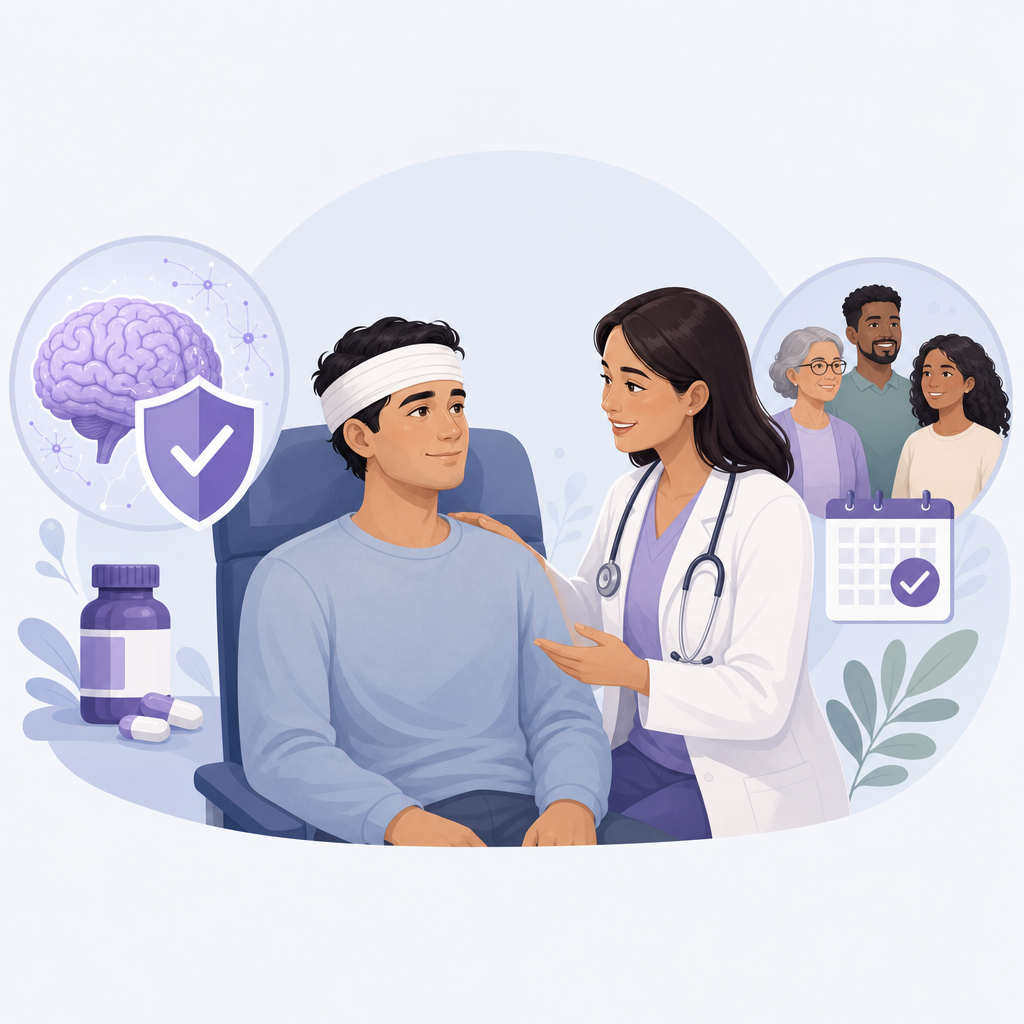
Levetiracetam May Help Prevent Early Seizures After Severe Brain Injury
Source: Annals of neurology
Summary
What was studied
This study looked at whether giving levetiracetam after a traumatic brain injury (TBI) was associated with preventing epilepsy. It used a large health record database and included 51,263 adults with a first TBI who had a Glasgow Coma Scale score recorded.
The researchers excluded people who already had epilepsy, had a seizure on the day of the injury, or had used levetiracetam before. They grouped patients by injury severity, including mild TBI and severe TBI, and compared people who did and did not receive levetiracetam as seizure prevention.
What they found
About 30% of patients received levetiracetam. After statistical adjustment, levetiracetam was associated with lower risk of early epilepsy within 7 days in people with severe TBI, but not in people with mild TBI. It did not lower the risk of late epilepsy within 1 year in either mild or severe TBI. The study also found that older age, cerebral edema, and subdural hemorrhage were consistent risk factors. Adverse outcomes evaluated included impaired memory and awareness, metabolic disorders, and psychiatric symptoms.
Limits of the evidence
This was a retrospective cohort study based on medical records, not a randomized trial, so it cannot prove that levetiracetam caused the differences seen. Some important details may not have been fully captured in the database. The abstract gives results for mild and severe TBI, but it does not clearly describe the moderate TBI group. Adverse outcomes were evaluated for up to 5 years, but the abstract does not show how often they happened or how strongly they were tied to levetiracetam rather than other factors.
For families and caregivers
For families, this study suggests that preventive levetiracetam may lower the chance of early epilepsy after severe TBI, but it did not appear to prevent late epilepsy over the following year. The study also reported adverse outcomes that may need to be weighed against possible short-term benefit. This supports more selective use after TBI rather than routine use for everyone, but treatment decisions still depend on the person’s injury severity and other risk factors.
What to watch next
Future studies could help clarify benefits and adverse effects across severe, moderate, and mild TBI, especially with designs that better address differences between treated and untreated patients.
Terms in this summary
- traumatic brain injury
- An injury to the brain caused by a blow, bump, or other trauma to the head.
- levetiracetam
- A medicine used to prevent or treat seizures.
- seizure prophylaxis
- Treatment given to try to prevent seizures before they happen.
- epilepsy
- A condition in which a person has repeated unprovoked seizures.
- Glasgow Coma Scale
- A scoring system doctors use to measure how awake and responsive a person is after a brain injury.
- subdural hemorrhage
- Bleeding between the brain and its outer covering.
- cerebral edema
- Swelling in the brain.
- retrospective cohort study
- A study that looks back at existing records to compare outcomes in different groups.
Free: Seizure First Aid Quick Guide (PDF)
Plus one plain-language weekly digest of new epilepsy research.
Unsubscribe anytime. No medical advice.