How Doctors In Japan Guide Seizure Rescue Medicine
Source: Brain & development
Summary
What was studied
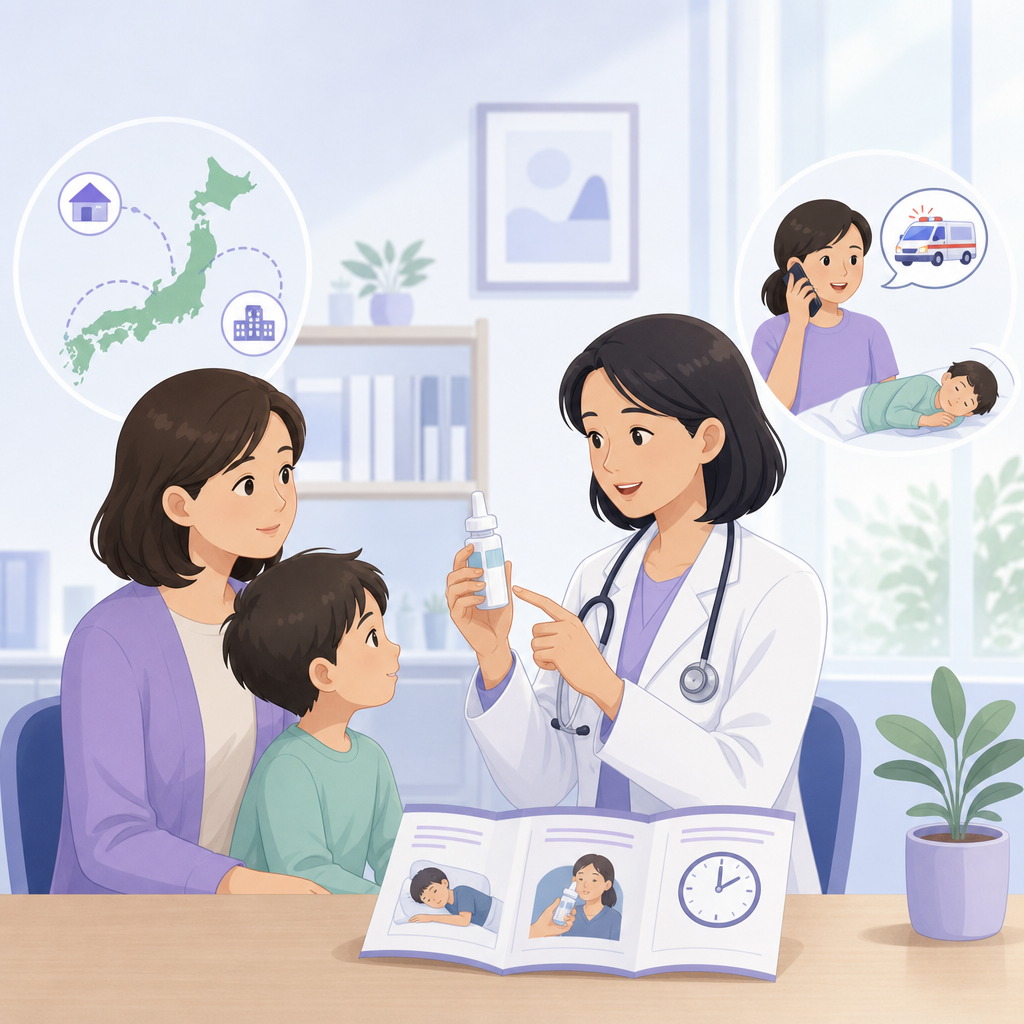
This study looked at how pediatric neurologists in Japan report using and prescribing rescue medicine before a child reaches the hospital for status epilepticus, which is a seizure emergency. The researchers used a nationwide web-based survey from January to March 2025. One representative from each institution answered questions about when they would prescribe buccal midazolam and what instructions they give caregivers about seizure care before reaching the hospital.
There were 136 survey responses. The main analysis included 134 respondents who were aware of buccal midazolam, and 118 of them had prescribing experience. The survey asked about indications for buccal midazolam, scenario-based recommendations, and what doctors tell families after giving the medicine, including when to contact emergency services.
What they found
Respondents mainly based prehospital rescue medication prescribing on seizure duration rather than on diagnosis alone. A history of prolonged convulsive seizures, especially 30 minutes or more, was most often identified as a high-priority indication for buccal midazolam. Seizures lasting 5 to 30 minutes were also often considered appropriate, but there was more variability in how strongly respondents prioritized that. Frequent seizures by themselves were often regarded as appropriate only as a lower-priority indication and were rarely considered high-priority. Epilepsy or febrile seizures as diagnostic categories alone were generally not regarded as appropriate indications.
Respondents also considered environmental factors such as distance from medical facilities. Similar patterns were seen in scenario-based recommendations for both epilepsy and febrile seizure scenarios. Instructions to caregivers varied widely, especially about when to activate emergency services. In-hospital management was generally unchanged whether or not rescue medication had been given before reaching the hospital.
Limits of the evidence
This was a survey of doctors, not a study of children’s health outcomes. It describes reported practice patterns, but it cannot show which approach is best or safest. The answers came from one representative at each institution, so they may not reflect every clinician’s practice. The study was done in Japan, so results may not match care in other countries or health systems.
The abstract does not provide details about the types of institutions, response rate compared with all eligible centers, or whether answers matched real-world behavior. It also does not show whether different instructions were linked with differences in seizure control, emergency service use, or safety.
For families and caregivers
For families, this study suggests that doctors often focus on seizure length when deciding whether a child should have rescue medicine available before getting to the hospital. It also shows that advice about when to call emergency services may differ from one clinic or hospital to another.
The study does not show that one set of instructions is best, but it highlights the need for clearer and more consistent guidance for families.
What to watch next
Future studies could examine real-world outcomes and compare different caregiver instructions and rescue medication plans.
Terms in this summary
- status epilepticus
- A seizure that lasts too long or repeated seizures without recovery in between; it is a medical emergency.
- prehospital
- Care given before a person reaches the hospital.
- rescue medication
- Medicine used quickly during a seizure emergency to try to stop the seizure.
- buccal midazolam
- A seizure rescue medicine placed inside the cheek so it can be absorbed.
- convulsive seizure
- A seizure with shaking or jerking movements.
- febrile seizure
- A seizure linked with fever, usually in young children.
Free: Seizure First Aid Quick Guide (PDF)
Plus one plain-language weekly digest of new epilepsy research.
Unsubscribe anytime. No medical advice.