Heart Tumors Before Birth May Signal Tuberous Sclerosis
⚠️ Pregnancy-related topic: medication, diet, and testing decisions must be made with your obstetrician and neurology team.
⚠️ Infant dosing/safety: medication and diet decisions for infants require individualized medical guidance.
Source: Ultrasound in obstetrics & gynecology : the official journal of the International Society of Ultrasound in Obstetrics and Gynecology
Summary
What was studied
This study looked at 80 fetuses found before birth to have one or more cardiac rhabdomyomas, which are heart tumors often linked with tuberous sclerosis complex (TSC). The cases came from one tertiary center between 2016 and 2024. Researchers compared fetuses who were later confirmed to have TSC with those who were not.
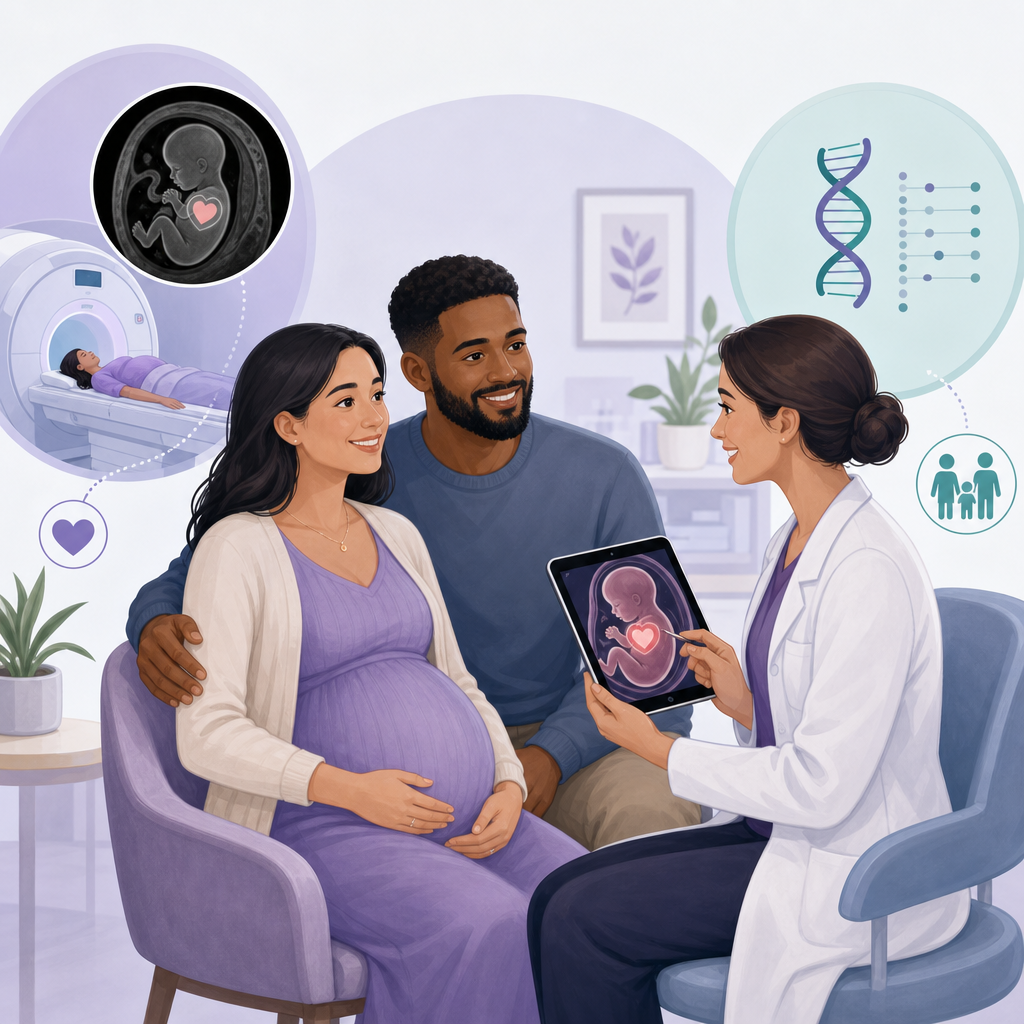
All fetuses had detailed fetal heart ultrasound. Some also had fetal brain MRI and trio whole-exome sequencing, which tests the fetus and both parents for gene changes, especially in TSC1 and TSC2. The researchers wanted to see how well multiple heart tumors, brain MRI findings, and genetic testing helped predict TSC before birth, and they also described pregnancy and newborn outcomes.
What they found
Of the 80 fetuses, 48 (60%) were diagnosed with TSC and 32 (40%) were not. Having multiple heart tumors was common in TSC and was fairly sensitive for predicting TSC, but it was not very specific, meaning it also happened in some fetuses without TSC.
Brain MRI was very specific in the 70 fetuses who had it: when MRI showed major brain lesions, this strongly pointed to TSC. MRI identified central nervous system lesions in about 89% of the TSC cases that had MRI, and many of these lesions had not been seen on ultrasound. Genetic testing was done in 31 cases and found pathogenic variants in 20, most often in the TSC2 gene. Genetic testing identified 5 TSC-positive cases even when brain MRI was normal, while MRI found structural brain changes in 4 trio-WES-negative cases. This suggests MRI and genetic testing provided complementary information.
The study also reported severe perinatal outcomes in this group. Pregnancy termination was common, especially in the TSC-positive group. Among the 18 liveborn infants, the 6 with TSC had lower birth weight than the 12 without TSC, even though delivery timing was similar. All liveborn infants with TSC developed epilepsy after birth. TSC2 variants were associated with more severe phenotypes than TSC1 variants in this study.
Limits of the evidence
This was a retrospective study from a single specialized center, so the results may not apply the same way in other hospitals or in the general population. Not every fetus had the same tests: 70 had brain MRI and only 31 had trio-WES, which can affect how well the test results reflect all cases.
The study included only fetuses with a definitive diagnosis, which may select for clearer or more severe cases. The number of liveborn infants with TSC was very small, so findings such as all liveborn TSC-positive infants developing epilepsy should be interpreted cautiously. Because many pregnancies were terminated, the study cannot fully show the range of outcomes for children who continue the pregnancy.
This study can show which findings were associated with TSC, but it cannot show that one test alone is enough for diagnosis in every case.
For families and caregivers
For families, this study suggests that when a fetus has a cardiac rhabdomyoma, the likelihood of TSC may be higher if there are multiple heart tumors or if fetal brain MRI shows major brain lesions. It also suggests that MRI and genetic testing can each identify cases the other may miss, so using both may improve prenatal diagnosis.
This may matter because a clearer diagnosis before birth can help with counseling, delivery planning, and early follow-up for neurological problems after birth. Still, test results do not answer every question, and this study does not show what will happen in every individual pregnancy.
What to watch next
Stronger evidence would come from larger, multi-center studies in which all fetuses receive the same imaging and genetic testing and are followed after birth.
Terms in this summary
- cardiac rhabdomyoma
- A usually noncancerous tumor in the heart that can be seen before or after birth.
- tuberous sclerosis complex
- A genetic condition that can cause growths in the brain, heart, skin, kidneys, and other organs, and can be linked with seizures and developmental problems.
- fetal MRI
- A scan done during pregnancy that uses magnets to make detailed pictures of the fetus, including the brain.
- trio whole-exome sequencing
- A genetic test that looks at many genes in the fetus and both parents to find disease-causing changes.
- TSC1/TSC2
- The two main genes known to cause tuberous sclerosis complex when they have harmful changes.
- specificity
- How well a test avoids falsely labeling people as having a condition when they do not have it.
- sensitivity
- How well a test finds people who truly have a condition.
- subependymal giant cell astrocytoma
- A type of brain tumor linked with tuberous sclerosis complex.
Free: Seizure First Aid Quick Guide (PDF)
Plus one plain-language weekly digest of new epilepsy research.
Unsubscribe anytime. No medical advice.