New Genetic Findings May Improve Care In RHOBTB2 Disorders
Source: Epilepsia
Summary
What was studied
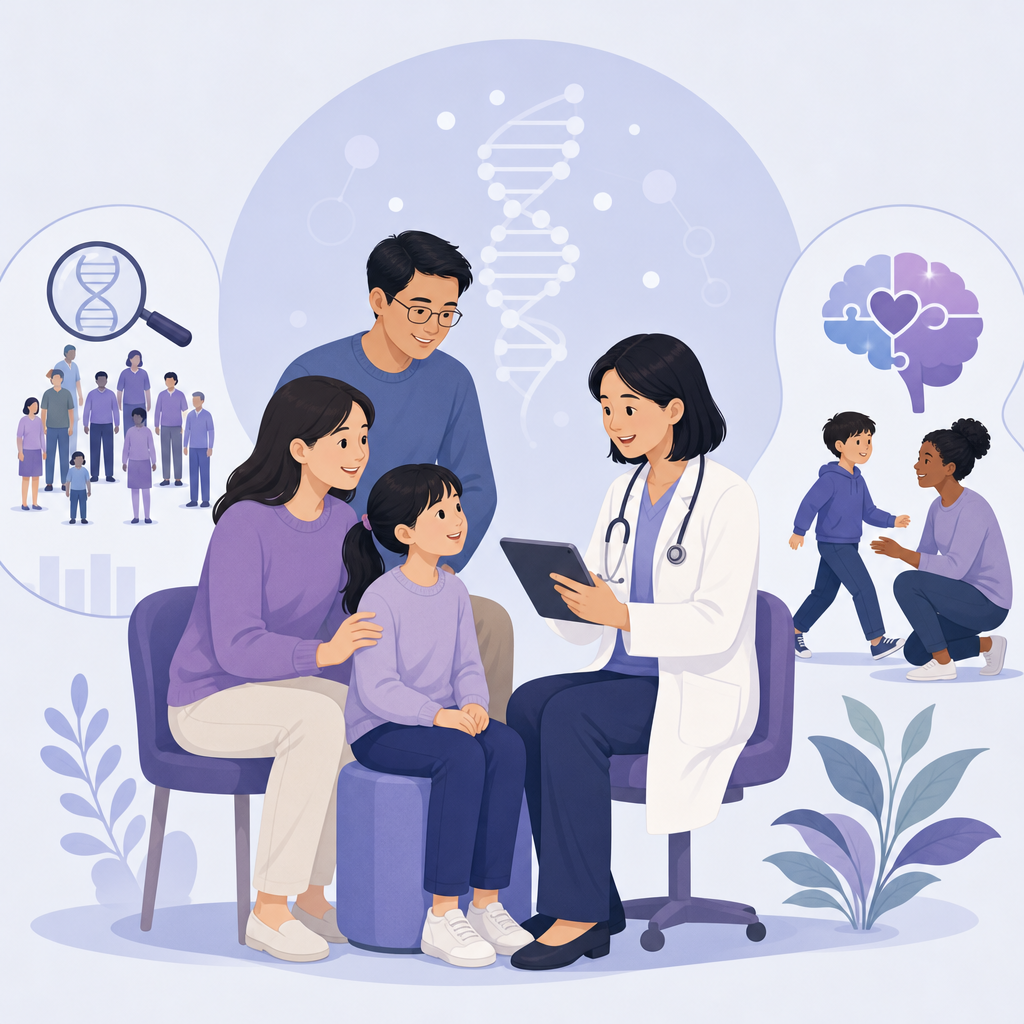
This study looked at RHOBTB2-related disorders, which are rare genetic conditions linked to developmental problems, epilepsy, and movement symptoms. The researchers combined information from 12 Chinese patients with 79 previously published patients from other countries, for a total of 91 people.
They reviewed the genetic changes in the RHOBTB2 gene and compared them with each person's symptoms. They also looked for patterns that might connect certain types of gene changes with certain clinical features, and they proposed a way to group these disorders into subtypes.
What they found
In the Chinese group, all reported RHOBTB2 changes were de novo missense variants, meaning they were not inherited and changed a single building block of the protein. Seventy-five percent were in the BTB domain, including a conserved hotspot such as p.Arg483His.
Across all 91 patients, the disorder showed a wide range of symptoms. As an exploratory proposal, the authors introduced a possible new symptom cluster called "paroxysmal encephalopathy with weakness (PEW)," which they reported was strongly associated with BTB domain variants. They also proposed 4 clinical subtypes: a BTB subtype with more severe developmental and epileptic encephalopathy and prominent paroxysmal features, often needing aggressive seizure management; a truncating/splicing subtype with mainly intellectual disability or developmental delay, movement disorders, and epilepsy; a guanosine triphosphatase subtype with mixed symptoms and a generally more favorable neurodevelopmental course; and an interdomain subtype often associated with PEW along with developmental and epileptic encephalopathy or paroxysmal movement disorders.
Limits of the evidence
This was mainly a combined review of a small number of rare cases, many taken from published reports. That means the data may be incomplete or uneven, and some symptoms may have been described differently across studies. The Chinese group was especially small.
The subtype system and the PEW cluster are exploratory proposals, not proven categories. Because this was not a controlled study, it cannot show that a certain variant determines a certain course in every child, and it cannot establish that the proposed subtypes improve treatment outcomes.
For families and caregivers
For families, this study suggests that RHOBTB2-related disorders can look quite different from one person to another, and that the exact gene change may help doctors think about possible symptom patterns. It may also help explain why some children have more severe epilepsy or sudden episodes, while others have more developmental or movement problems.
Still, these findings are early. The proposed subtypes may help doctors organize care and watch for certain problems, but they should not be taken as firm predictions for any one child.
What to watch next
Stronger evidence would come from larger, carefully followed groups of patients to test whether these proposed subtypes and the PEW pattern are consistently seen and are useful for diagnosis and management.
Terms in this summary
- de novo
- A genetic change that is new in the child and was not inherited from either parent.
- missense variant
- A DNA change that swaps one protein building block for another.
- BTB domain
- A specific part of the RHOBTB2 protein that may be important for how the protein works.
- developmental and epileptic encephalopathy
- A severe condition with epilepsy and developmental problems, where seizures and brain dysfunction both affect development.
- truncating variant
- A genetic change that cuts the protein short so it may not work normally.
- splicing variant
- A genetic change that can disrupt how the gene's instructions are put together.
- genotype-phenotype correlation
- A possible link between a specific genetic change and a person's symptoms.
- hotspot
- A place in a gene where disease-causing changes are found again and again.
Free: Seizure First Aid Quick Guide (PDF)
Plus one plain-language weekly digest of new epilepsy research.
Unsubscribe anytime. No medical advice.