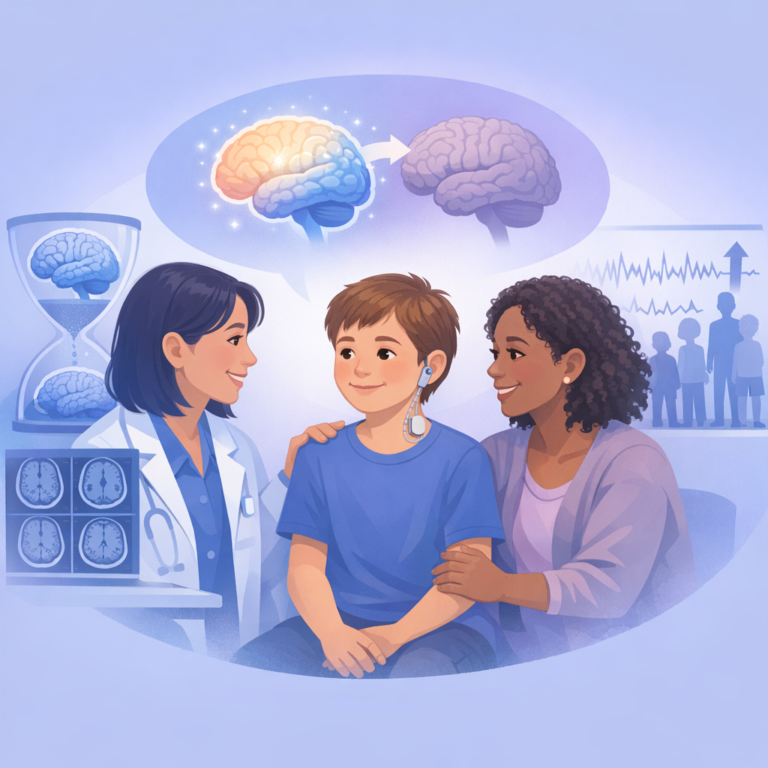
Barriers to Pediatric Epilepsy Surgery and Solutions
This study looked at the reasons why children with drug-resistant epilepsy (DRE) often experience delays in getting surgery that could help them.
This hub covers drug-resistant epilepsy: When seizures aren’t controlled after trying two appropriate medicines. Research-backed next steps on diet therapies, devices, surgery evaluation, and safety.
If seizures aren’t controlled after two meds, it’s worth at least an evaluation at an epilepsy center.
Not necessarily. Some familiar consider it earlier depending on seizure type and goals.
Yes. Treatment response can change over time, and combinations/approaches matter.
Seizure frequency, triggers, sleep, missed meds, side effects, and rescue med use.
This study looked at the reasons why children with drug-resistant epilepsy (DRE) often experience delays in getting surgery that could help them.
This study looked at how well a method called intracranial electroencephalographic (iEEG) connectivity analysis can help locate the areas in the brain responsible for seizures in adults with focal drug-resistant epilepsy.
This study looked at two brain imaging techniques, Arterial Spin Labelling MRI and [18F]FDG-PET, to see how well they can identify the area of the brain causing seizures in children with epilepsy.
This study looked at pediatric patients with drug-resistant epilepsy (DRE) who were being evaluated for epilepsy surgery.
This study focused on developing a set of common data elements (CDEs) specifically for children with epilepsy in Korea.
This study looked at the potential of certain microRNAs as biomarkers for pediatric epilepsy, which is a common neurological disorder in children.
Researchers studied a young patient with a specific type of epilepsy linked to a gene called DLG3.
Researchers studied pediatric autoimmune encephalitis-associated epilepsy (AEAE), which is a type of epilepsy linked to problems in the immune system.
Researchers studied deep brain stimulation (DBS) as a treatment for people with epilepsy who do not respond to medication and cannot have surgery.